Thursday, December 29, 2011
'Auld Lang Syne' - Happy New Year
'Auld Lang Syne' (YouTube video)
The Anglicized version of 'auld lang syne' means old long-since,
old long-ago, old long past, or times gone by.
The best-known use of the phrase is Robert Burns' poem Auld lang
syne, the words of which are sung in English-speaking countries
around the world each New Year's Eve, to a tune that Burns said he
transcribed from an old man's singing of it. (The Phrase Finder)
The theme of 'auld lang syne' is the past. It is a nostalgic, bittersweet,
loving song, which calls upon us not to forget the old times past, but
to cherish them as wonderful and sweet memories.
Beautiful Version Of Auld Lang Syne (YouTube video)
Happy New Year!
Robert Burns' poem "Auld Lang Syne" (1788):
Should auld acquaintance be forgot,
And never brought to mind?
Should auld acquaintance be forgot,
And auld lang syne?
For auld lang syne, my dear,
For auld lang syne,
We'll tak a cup o' kindness yet,
For auld lang syne.
And surely ye'll be your pint-stowp,
And surely I'll be mine!
And we'll tak a cup o' kindness yet,
For auld lang syne.
For auld lang syne, my dear,
For auld lang syne,
We'll tak a cup o' kindness yet,
For auld lang syne.
We twa hae run about the braes,
And pu'd the gowans fine;
But we've wandered mony a weary fit
Sin' auld lang syne.
For auld lang syne, my dear,
For auld lang syne,
We'll tak a cup o' kindness yet,
For auld lang syne.
We twa hae paidled i' the burn,
Frae morning sun till dine;
But seas between us braid hae roared
Sin' auld lang syne.
For auld lang syne, my dear,
For auld lang syne,
We'll tak a cup o' kindness yet,
For auld lang syne.
And there's a hand, my trusty fiere,
And gie's a hand o' thine!
And we'll tak a right guid-willie waught
For auld lang syne.
For auld lang syne, my dear,
For auld lang syne,
We'll tak a cup o' kindness yet,
For auld lang syne.
Yeh Tze

Sunday, December 25, 2011
Star Wars
Star Wars Theme Song (YouTube video)
No matter what holiday we celebrate, it’s always nice to have a family
tradition.
The Christmas holiday season is a special time when family come
together to celebrate, create memories, and recall Christmas's past.
For us this year, we are able to have all our children and their families
come home to cerebrate, create new memories and recall Christmas's
past.
Three generations together watching the original Star Wars trilogy:
Star Wars, The Empire Strikes Back, and Return of the Jedi, is one
of the new memories for us this year.
In the early 1980s, the Star Wars films were among those we watched
together with our children during the Christmas holiday season.
This Christmas Eve, our son introduced the original Stars Wars trilogy
films to our grandsons, who are 4 and 6 years old respectively.
While they were together watching the movies, the two youngsters
periodically raised questions for their uncle as they were often so
curious and eager to know the outcome of certain story events in
advance. They believed their uncle must have watched the films
hundred times and remembered very well every sequence of events in
all these tall tales.
Yeh Tze
Tuesday, December 20, 2011
Winter Solstice
Winter Solstice (YouTube video)
冬”至”, the “Arrival” of Winter
The shortest day and the longest night of the year, the winter solstice,
or “冬至”, falls on December 22 this year. In the old days, it is the
day when everyone tried to get together with their families, "冬至團圓吃湯圓".
Although it has often been marked as First Day of Winter, it is actually
the middle of winter. In my opinion, 冬至 means "winter (冬) extreme
(至)", instead of "the arrival of winter".
《後漢書》禮儀志:「冬至前後,加子安身靜體,百官絕事,不聽政,擇吉辰而後省事。」
The ancient Chinese poets had also noticed the seasonal significance
of this particular 時節:
杜甫, in his poems “至後", said: “冬至至後日初長”, and in "小至",
"冬至陽生春又來".
In the poems about “冬至夜”, 白居易 wrote: “一年冬至夜偏長”, and
“何堪最長夜 俱作獨眠人”。
Yeh Tze
Sunday, December 18, 2011
故鄉
念故鄉 (YouTube video)
Hometown is the city or town where one grew up. It can also be one’s
birthplace.
It is a place where one cherished good memories and spent part or
most of one’s life time.
Many people also have so called "第二故鄉", but they often don’t feel
the same affinity as they do for their original hometown.
Taipei is my hometown as well as my birthplace. For many of my
classmates from high school, however, it is their "第二故鄉". As most
of them grew up there, if not born there, Taipei might have been
their primary hometown as well.
In her book, "大江大海一九四九", the author (龍應台) stated:
“所有的顛沛流離,最後都由大江走向大海;所有的生離死別,都發生在
某一個車站、碼頭。上了船,就是一生。從1949年開始,帶著不同傷痛
的一群人,在這個小島上共同生活了六十年。.............. 六十年來,我們
從來沒有機會停下腳步,問問對方,你痛在什麼地方?........................ ."
I recall, while I was stationed in 馬祖 island during my military service
in 1969, I had the opportunity to work with a "老士官" who happened to
be assigned to my Medical Office. One day, I asked him where his
hometown was. He replied, and bursting into tears, he further described
his unforgettable ordeal. He told me that one day he was happily playing
as usual in the front yard of his home, two armed soldiers came to the
village and took him away by forth (捆挷) in front of his grandparents
while his parents were working in the field. He was only 12 years old
then. He hoped one day he could go back to his 故鄉 and see his parents
again.
That was more than 40 years ago. I hope he had the chance to fulfill his
"一生的心願".
Yeh Tze
Friday, December 16, 2011
曉霧晨霜
霧の朝 (YouTube video)
The early morning scene in our area during this time of year is often
misty and murky, especially after a rain overnight, and when 天色將
曉, I see "曉霧妝成野外".
Occasionally, when the ground surface temperature falls below
freezing point during the night, I wake up to a crispy and frosty
morning the next day, and 到來朝, 天色已曉, I notice "晨霜染就荒郊".
Once a week at dawn, we drive to our neighboring town to pick up our
granddaughter and bring her to our place to stay with us for a couple
of days. Cruising through the lovely countryside on the rolling hills
is always a pleasant experience.
We enjoy the picturesque scenes of "曉霧妝成野外" and "晨霜染就荒郊" .
Yeh Tze
Sunday, December 11, 2011
萬事到秋來,都搖落。
YouTube video (Uploaded by Karishen890)
The recent bitter, cold and gusty winds had shaken autumn down.
The falling leaves drifted down and covered the ground with their
multi-colored splendor, red, orange, gold, brown,……. . They are
nature's blankets with delicate texture, crisp and crackling.

It is that time of year again. The autumn days are almost over.

覺人間,萬事到秋來,都搖落。 (宋 辛棄疾)
Yeh Tze
Saturday, December 3, 2011
“Beyblade”, What is that?
“Beyblade”, What is that?
As the Holiday Season draws near, people start to find the perfect
gifts for their friends, family and loved ones.
The other day, I called my daughter on the phone and asked her
what would be the best gifts we as the grandparents should buy for
our grandsons. She said: “Beyblade.” I asked again: “What is that?”,
thinking that I did not hear it well.
When our children were young at our grandchildren’s age, we had
no problem buying any gift for them as we knew well what they
wanted, or what the popular items were then.
For the boy, during the “Star Wars Era”, we bought our son's
favorite figures, such as “Luke Skywalker”, Han Solo”, “R2D2”,
……........…….......... .

Obviously, we have not kept up to date of the young children’s toys
for more than a quarter century.
Yeh Tze
Friday, December 2, 2011
"此秋聲也"
YouTube video - Autumn Wind (Giovanni Marradi)
I woke up this morning to a gusty autumn wind.
The north wind seemed to be trying to shake autumn down. The
falling leaves drifted by the window. The rushing wind swept the
heaps of orange and brown fallen leaves on the ground in such a
hurry that it sounded “淒淒切切, 呼號憤發”.
In his “秋聲賦, 歐陽修 in the 宋 Dynasty wrote:
歐陽子方夜讀書,聞有聲自西南來者,悚然而聽之,曰:「異哉!」
初淅瀝以蕭颯,忽奔騰而砰湃;如波濤夜驚,風雨驟至。其觸於物也,
鏦鏦錚錚,金鐵皆鳴;又如赴敵之兵,銜枚疾走,不聞號令,但聞人
馬之行聲。 余謂童子:「此何聲也?汝出視之。」童子曰:「星月皎
潔,明河在天,四無人聲,聲在樹間。」
余曰:「噫嘻,悲哉!此秋聲也,胡為而來哉?蓋夫秋之為狀也,其色
慘淡,煙霏雲斂;其容清明,天高日晶;其氣慄冽,砭人肌骨;其意
蕭條,山川寂寥。故其為聲也,淒淒切切,呼號憤發。................ 。」
The autumn air is crisp and the wind can be "淅瀝" and "奔騰". The
acoustics of autumn are often “淒淒切切” and “呼號憤發”.
Yeh Tze
Tuesday, November 29, 2011
"敬老讓座" vs “Ladies First”

Taipei 101
"敬老讓座" vs "Ladies First"
A few years ago, we took a trip back to our homeland. One day, while
in Taipei, a friend of my wife’s invited us to tour "Taipei 101", one of
the world’s tallest buildings, where we enjoyed a spectacular 360-
degree view of the Greater Taipei from the top floor.
After the tour, we took the city bus to a restaurant for lunch. As soon
as we got into the bus, a young girl instantly stood up looking at me to
offer me her seat. However, I let my wife and her friend take it
instead, and I continued to stand holding onto the bar overhead. The
young girl, with a puzzled expression, seemed to be 不以為然 and 頗有
意見. She kept pointing at me, because she had meant that I was the
one to have the seat.
For the young girl, she had been taught to "敬老讓座". But, as a man
and also as a gentleman, I thought “Ladies First”.
After all, I should also admit to being old, being old to be recognized.
Yeh Tze
Monday, November 28, 2011
Icy Sweet Experience.

大碗公水果剉冰
Icy Sweet Experience
I recall that the last time I had the Taiwanese 剉冰, or 刨冰, was nearly
half a century ago.
Early this month, while staying in 高雄, my wife’s hometown, we came
to this 冰店 called "大碗公剉冰", where I refreshed my almost
forgotten memory.
It was already late autumn, but the climate there remained warm and
humid. One early morning before dawn, we took a long walk strolling
along the bank of the "Love Canal" (愛河) and came to the ocean bay.
We took the ferry to 旗津 and climbed up to the lighthouse, where we
had a great view of 高雄港 and the beautiful 西仔灣 from top of the hill.
Upon return to the ferry terminal, we were all 汗流挾背. There we saw
the “大碗公剉冰". We stopped there to rest and refresh ourselves. We
ordered a double portion of 剉冰 with various delicious fruit toppings.
It was cool and enjoyable.
We had a memorable icy, sweet experience.
Yeh Tze
Sunday, November 27, 2011
東坡肉
YouTube video (東坡肉)
In one of his posts on our NTUMC class website a few years ago, our
classmate D.J. mentioned that while he was in Taipei, he had the best
東坡肉 he ever had tasted in a restaurant called “上海鄉村”.
This reminds me of his another post “蘇軾是個老饕嗎?", in which he
also attached one of the 蘇東坡’s poems, the famous "老饕賦". In this
poem, 蘇軾 had actually confessed to being a 老饕. He said “.......蓋聚
物之夭美,以養吾之老饕。..............”
According to 台灣教育部國語字典, 老饕 is:
1.貪吃的人 宋˙蘇軾˙老饕賦:蓋聚物之夭美,以養吾之老饕。
2.講究美食的人。如:他這個老饕,一聽到那裡有好吃的東西就馬上跑去
品嚐一番。
I believe that my NTUMC classmate D.J. is also a 老饕.
Although I am not, and have never been, a "老饕", I had long said to
my wife that, "百聞不如一試”, we should give it a try the next time we
are in Taipei.
During our recent homeland tour a few weeks ago, we did have the
opportunity to 品嚐 this dish at “上海鄉村”. It has the aroma and the
tenderness. It is oily but not greasy. The fat of the meat would simply
“melt” in your mouth without the feeling of greasiness.
While I was tasting the 東坡肉 with great pleasure, my wife reminded
me three times, not just once, that I was not to consume too much of
it, and that something I should not try too often, obviously for good
healthy reason.
Yeh Tze
Friday, November 25, 2011
Thanksgiving
YouTube video (George Winston - Thanksgiving )
A day for expressing thanks for all of the wonderful things in our lives.
Yeh Tze
Wednesday, November 16, 2011
我見青山多嫵媚
YouTube video (大鵬灣大武山日出之美)
In the 16th century, while passing Taiwan and after seeing the
luxuriant green forests on the island, 連綿的青山百里長, the
Portuguese sailors exclaimed, “Ilha Formosa!”, which means
beautiful island.
During our recent trip to the homeland, we had the opportunity to
enjoy viewing many magnificent mountain sceneries on the road
tours. I found them not only 雄偉, but also 嫵媚. We saw the softer
side of the mountains on the island.
YouTube video "阿里山之鶯-1957"
After driving through the "Snow Mountain" tunnel (雪山隧道), the
longest tunnel in Taiwan, the splendid 雪山山脈 instantly stood
behind us. In 南投, we witnessed the majestic grand Central
Mountain Range, known as 中央山脈. On the way to 瑪家鄉 down
in the southland, we came within the sight of this mystic 大武山,
"Kavulungan, (大姆指 per 排灣語), which was said to have the
meaning of 俊美、豐富 and 神秘.
我見青山多嫵媚,料青山見我應如是。情與貌,略相似。
(宋‧辛棄疾)
In the homeland, 我見青山多嫵媚.
Yeh Tze
Saturday, November 12, 2011
小巷內的小醫師
It is more blessed to give than to receive, 小巷內的小醫師.
安泰 was a sentimental and poetic man, besides being a physician.
On my first visit to him in his room at 台大醫院 a few days before
he passed away, his wife said to him that I was there to see him.
He replied in a soft voice staring at me and said:" 我知道, 田園農夫."
Before I left, his wife reminded him that I was leaving. He said:
"吾睡欲眠卿可去." I then said to him: “明朝有意抱琴来” in reply.
陳安泰 醫師 was one of my classmates in the NTUMC (台大醫學院)
class (1961-1968). He was an extremely shy student from Southern
Taiwan. In school, he often tried to shun away from the crowd.
He considered himself as to suffer from “社會人群恐懽症”, and he
did have some tough time during the school years. He however
had made every effort to overcome it.
After graduation, he went into the specialty training in psychiatry
at NTU Hospital, and later started his own solo private practice in
a small alley in Taipei City. He called himself a "小巷內的小醫師",
but his patients were coming from all different parts of Taiwan,
that had certainly boosted his confidence and made him work
even harder. He then began to think that there was an obligation
for him to give back (回饋) to the society.
He had once said “ 我覺得 give (施) 比 gain (receive) (受) 還快樂.”,
or in Christian words, “施比受更有福”,
For more than a quarter of century, he had set up a scholarship for
the undergraduate students at National Taiwan University. One
student was selected from each college together to receive a total of
eight hundred thousands NT dollars scholarship each year.
Numerous students have been benefited by his scholarship aids,
many of them are doing very well and some of them even are now
college professors.
I am so proud to be one of his classmates.
Yeh Tze
Friday, November 11, 2011
走入大安森林公園
(YouTube video uploaded by chsidney)
擠在台北大街小巷, 感到我們不再年青.
走入大安森林公園, 發覺咱倆也不很老.
I have heard about 大安森林公園, also known as “Taipei Central
Park”, for years and always wanted to visit it one of these days.
On my very first day in Taipei, my NTUMC classmate CWL
thoughtfully left us two “悠遊卡” for the "Taipei Rapid Transit and
Muni" at the NTUMC Alumni mansion where I stayed. With these
two" 卡”, we 悠遊, 趴趴走 in the City of Taipei.
We got up one morning before dawn and came to visit this “Taipei
Central Park” for the first time. We were quite impressed with this
rare “綠地” located at the center of this crowded city. It was said to
be “台北都心樂章的休止符”.
Although we felt we were no more young and active while walking
down the busy Taipei streets, we, while strolling through the park,
found ourselves actually not that old.
Yeh Tze
Thursday, November 10, 2011
日月潭
(YouTube video uploaded by marcokkyip)
For years I have been saying to my wife that we should take another
trip to 日月潭 the next time we are in Taiwan.
During my childhood, I often saw the picture of 日月潭 on the wall
hanging calendar. 日月潭, to me then, was a remote and sacred place
that only the rich people, or "偉人", could go and enjoy.
It would never occur to me until 1971, when I got married and we
were supposed to take a brief “蜜月旅行“ on the way back to Taipei
from my wife’s hometown. After 阿里山, and before 太魯閣, we
stopped at 日月潭 . It was however only 蜻蜓點水, “到此一遊 “.
The other day, during our stay in Taiwan, we made another tour to
日月潭 . It was a cloudy, misty day with light rain.
Its unique scenery gives the impression of a Chinese landscape
painting"水墨山水畫" with mist-laden water and murky layered
mountains. It was truly breathtaking. We took a leisurely stroll along
its shores to enjoy the tranquility and peace of nature, and appreciate
the glories of waters and mountains.
It was an extremely pleasant revisit, 40 years later.
Yeh Tze
Tuesday, November 8, 2011
Old Place Revisited
(Youtube video uploaded by phototyped)
Today is the last day of our Taiwan's homeland visit.
Over the past two weeks or so, we had a great time with our family
members, friends, and classmates from both high school and college.
We also had the opportunities to visit many places that we have not
seen for decades, or places that we did not have the chance to see
before.
My last visit to Taipei Botanic Garden was more than 40 years ago.
The garden is next to National History Museum, Science Museum
and Art Museum, as well as our middle and high school campus.
It is part of the fond memories of my youth as I used to stroll
through it before and after the school during those school days.
It was also our hangout place during the noon hour recess.
The feelings of revisiting the garden are both familiar and strange.
After all, my memory of the Taipei Botanical Garden is half a
century old.
Yeh Tze
Sunday, October 23, 2011
Total Recall
Book TV: Gordon Bell, Jim Gemmell, "Total Recall"
http://youtu.be/kDyLEyNX_vU

Bill Gates, in 1990, spoke about “Information at your fingertips.”
In his book ‘The Road Ahead” of 1995, he stated “Someday we
will be able to collect everything we see and hear.”
While waiting for the flight at Fort Meyers Airport the other day,
this book “Total Recall” caught my eye in a store. I picked up a
copy and glanced through the book on the airplane back to San
Francisco through Chicago. I was amazed by the “E-Memory”
revolution. It will change what it means to be human. Obviously,
it has already begun.
Yeh Tze
Sunday, October 16, 2011
揮一揮衣袖 , 不帶走一片雲彩
“再別康橋” (Uploaded by allenlinnz on Jan 30, 2010)

再別康橋 徐志摩 1928
輕輕的我走了,
正如我輕輕的來;
我輕輕的招手,
作別西天的雲彩。
那河畔的金柳,
是夕陽中的新娘;
波光裏的豔影,
在我心頭盪漾。
軟泥上的青荇,
油油的在水底招搖;
在康河的柔波裏,
我甘心做一條水草﹗
那榆蔭下的一潭,
不是清泉,是天上虹,
揉碎在浮藻間,
沈澱著彩虹似的夢。
尋夢?撐一支長篙,
向青草更青處漫溯,
滿載一船星輝,
在星輝斑斕裡放歌。
但我不能放歌,
悄悄是別離的笙蕭,
夏蟲也為我沈默,
沈默是今晚的康橋。
悄悄的我走了,
正如我悄悄的來,
我揮一揮衣袖,
不帶走一片雲彩。
The English version:
“Saying Good-bye to Cambridge Again”
Very quietly I take my leave,
As quietly as I came here;
Quietly I wave good-bye
To the rosy clouds in the western sky.
The golden willows by the riverside
Are young brides in the setting sun;
Their reflections on the shimmering waves
Always linger in the depth of my heart.
The floating heart growing in the sludge
Sways leisurely under the water;
In the gentle waves of Cambridge
I would be a water plant!
That pool under the shade of elm trees
Holds not water but the rainbow from the sky;
Shattered to pieces among the duckweed
Is the sediment of a rainbow-like dream?
To seek a dream? Just to pole a boat upstream
To where the green grass is more verdant;
Or to have the boat fully loaded with starlight
And sing aloud in the splendor of starlight.
But I cannot sing aloud
Quietness is my farewell music;
Even summer insects keep silence for me
Silent is Cambridge tonight!
Very quietly I take my leave
As quietly as I came here;
Gently I flick my sleeves
Not even a wisp of cloud will I bring away.
When we are interpreting a poem, we try to figure out what the
poet intended in the poem, but we can not always be sure. We can
only come up with the feelings the poem gives us when we read.
We try to understand the meaning, think what was implied, unsaid
or suggested, and then speculate.
A couple of years ago, some of my NTUMC1968 ( 台大醫學院)
classmates, D.J., Wei and Wy etc, tried to work collaboratively to
translate 徐志摩's poem “再別康橋” into English. They had to stop after
several attempts due to the fact that, at some point, they had hard
time figuring out or speculating what 徐志摩 intended to say, or
unsaid. One of them, after having discussion in her former high school
( 北一女) classmates’ poetry club, thought there was deeper layer of
meaning in the poem.
They believed, on the surface, 徐 was talking about Cambridge, but
deep in his heart, he was lamenting his unrequited love. They thought
the “金柳” reminded him a slender girl “林”, who always lingered in
the depth of his heart. 徐 remembered their good old time as he
described in his poem. He could not have her and he was alone there,
even the critters, 夏蟲 felt his pain and kept silent for him. He took his
leave as quietly as he came, and could not bring away even a wisp of
cloud. What else could he do but 揮一揮衣袖,不帶走一片雲彩, and
quietly leave, according to their speculation and conclusion.
Yeh Tze
Friday, October 14, 2011
“白牡丹”
“白牡丹” is one of the popular old Taiwanese folk songs (台語流行歌謠).
The song was composed by 陳秋霖 and its lyrics were written by 陳達儒.
A few days ago, a family friend of ours from Taiwan sent me an e-mail
and asked me to translate the second verse of the lyrics into English:
請幫我譯"白牡丹",中翻英,謝謝!
白牡丹 白花蕊 春風無來花無開
無亂開 無亂美 不願旋枝出牆圍
以上 請通俗化 祝秋安 (Mike)
As I am not good at it, instead, I asked my NTUMC1968 classmates,
D.J. and Wei, who have often translated Chinese poems into English
and vice versa. I thank them for their kind contributions:
白牡丹,白花蕊,春風無來花無開。
無亂開,無亂美,不願旋枝出牆圍。
D.J.
White peony, white bud,
No blossoms without spring breeze.
The flowers do not bloom at random,
So they will not flaunt their beauty beyond the fence.
Wei
Peony, peony, so pure and white,
Only in spring breeze she blossoms wide.
Her blooms not casual, for she
shuns flaunting her beauty outside.
Wei's 北一女 classmate
Peony flowers white and pure,
Blooming only in spring breeze.
A few blossoms here and there,
Not to flaunt outside the fence.
Shaoyeh, my 建中 classmate, could not help to chime in the translation:
Oh, wild peonies you look so pure and white!
Only in spring breeze you blossom wide.
Do not overdo it and bare yourself all,
I'll keep your beauty inside my garden wall
Yeh Tze
Wednesday, October 12, 2011
A Gift I Treasure
Memory (Youtube music video)
Ever since I took this state government job as a physician and
surgeon more than three decades ago, my spouse had never visited
me in my office until two years ago when she was invited to attend
my “retirement” party at my work place. While she was in my office
for the first time during that visit, she noticed that the coffee cup on
my desk was old and discolored with coffee and tea stains. She asked
me if I had ever had it cleaned. I said to her that I washed it every
time.
It is a pottery mug that my children bought me for Father’s Day 25
years ago. Over the entire mug is printed an essay by Barbara
Smallwood and Glen Taylor entitled “Dad”. The essay begins with
“Becoming a father is easy enough, but being one can be rough. On
top of being a provider, protector, and playmate, it is a father’s job
to be …………………………………………………......................................... .”
It is a gift I treasure.
I have been coming back to work half-time as a rehired annuitant
since my “retirement”. Every morning on my workday, I fill my
“Dad” cup with coffee and place it on my desk. The wordings of the
essay on the mug are still clearly visible, and once in a while, I
glanced at part of, or through the entire text of this thoughtful essay.
The ending of the essay says:
“Being a dad is one of the things you do best. Thanks for everything.
We love you dad.”
Yeh Tze
Saturday, October 8, 2011
Season Of The Soul
Youtube video (Uploaded by szikszaiferenc52)
Autumn is a season of change, change of sights, sounds and smells.
It is also a season of sensation and season of the soul.
Autumn has long inspired poets. For some of the ancient poets,
it is a season of loneliness, sadness and sorrow.
懷君屬秋夜,散步詠涼天。空山松子落,幽人應未眠。(韋應物)
覺人間,萬事到秋來, 都搖落。 落時西風時候,人共青山都瘦。(辛棄疾)
多少綠荷相倚恨,一時回首背西風 。 (杜牧)
秋陰不散霜飛晚,留得枯荷聽雨聲。(李商隱)
孤村落日殘霞,輕煙老樹寒鴉,一點飛鴻影下 。 (白樸)
Yeh Tze
Thursday, October 6, 2011
Walking The Dinosaur Path
Located in Colorado, the Garden of the Gods has the outstanding
geologic features with its unique red rock formation which has been
millions of years in the making.
Ancient prehistory can be viewed at Garden of the Gods as people
walk the same path as the dinosaurs walked making it a living history
book. Within the park, there are dinosaur tracks that lead the way
including a new species of dinosaur which was discovered in 1887.
In early October 2008, we had the opportunity to visit Garden of the
Gods. While we were looking upward at the stately red sandstone
rocks, we were also viewing an ancient prehistory. As we were
strolling through the trails, we were walking the same path where
dinosaurs heavy trod once walked.
Walking the Dinosaur Path, Garden of the Gods (October 2008)
We were walking in nature, and at the same time we were walking in
history as well.
Yeh Tze
Tuesday, October 4, 2011
空山新雨後,天氣晚來秋.
Raindrop - Prelude Opus 28 Number 15 - Chopin
Autumn often conveys a melancholic or nostalgic mood,
especially when it is also accompanied with rain.
The first autumn rain has finally arrived in the Valley.
空山新雨後,天氣晚來秋.
The night breeze is cool and fresh.
While walking on my yard lawn, I felt the soft, crunchy texture
beneath my feet. I loved it.
Rain inspires thought and literary.
"片雲頭上黑 便是雨催詩"
Autumn rain had inspired the ancient poets.
“涼風吹夜雨 蕭瑟動寒林”
“細雨濕衣看不見 閒花落地聽無聲”
"三秋細雨愁楓葉 一夜扁舟宿葦花"
“澗底松搖千尺雨 庭中竹撼一窗秋"
Yeh Tze
Sunday, October 2, 2011
"天宫一号" and "America The Beautiful"
【文匯網訊】據鳳凰衛視報道,美聯社稱發現9月29日央視現場直播
天宮一號升空時, 播放的背景音樂是America The Beautiful 美麗的亞
美利加,號稱美國的第二國歌.
Music choice during broadcast raises eyebrows
"America the Beautiful" is an American patriotic song.
It reminds me of a writing that I once posted on my blog:
America the Beautiful
America the Beautiful (from Youtube)

"America the Beautiful" plaque atop Pikes Peak
"America the Beautiful" is an American patriotic song. The lyrics
were written by Katharine Lee Bates and the music composed by
church organist and choirmaster Samuel A. Ward. Bates wrote her
song "America the Beautiful" after visiting Pike's Peak during the
summer of 1893.
She recalled "It was then and there, as I was looking out over
the sea-like expanse of fertile country spreading away so far under
those ample skies, that the opening lines of the hymn floated into
my mind." The song is one of the most beloved and popular of the
many American patriotic songs.
In early October 2008, while visiting our younger daughter in
Colorado, we had the opportunity to drive up to the summit of
Pikes Peak, where is at an elevation of 14,115 feet(4,302 m).
We saw what Bates had seen, the beauty and majesty of nature
landscape, and, of course, the "America the Beautiful" plaque atop
Pikes Peak as well.
Yeh Tze
Thursday, September 29, 2011
“飯後百步走,活到九十九“
“飯後百步走,活到九十九“
There are both mental and physical health benefits of walking.
In an English proverb, it says:
”After dinner sit awhile, after supper walk a mile.”
I assume that dinner is a heavy meal, while supper is a light one.
Our evening meal is normally a light one, and it is called “supper”
accordingly. Therefore, instead of sitting awhile, we go out for a walk
after supper. We usually walk around our neighborhood. It can be a
mile or more, or half an hour to one hour time each.
It has been said that if you are seeking creative ideas, go out walking
and all truly great thoughts are often conceived by walking.
The moment my legs begin to move, my thoughts begin to flow, just
as the American naturalist Henry David Thoreau used to say.
As thoughts come clearly while I walk, “靈感 “ and idea often start to
float in my mind.
The old Chinese 養生諺語: “飯後百步走,活到九十九“ tells you the
physical benefit of walking. “活到九十九”, in its true sense, should be
“走到九十九”, which means fully living to 九十九 (and beyond), instead
of merely “existing”.
Walking is the easiest, most enjoyable and affordable exercise one can
undertake for total mental and physical health and well being.
Yeh Tze
Saturday, September 24, 2011
A Change Of Season, A Change Of Color
Youtube video uploaded by elsalaura80
On this second day of autumn, we did a pleasant early morning hiking
on our neighborhood hills, Westwood Hills Park. While the landscape in
the valley has yet to show the “fall color”, the cool weather does spell
the end of warm summer season.
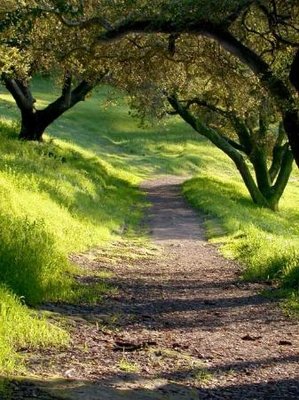
Westwood Hills Park Trail
A change of season, a change of color.
It has been said that Autumn is a second spring when every leaf is
a flower.
In the poem “山行”, the ancient poet 杜牧 wrote:
遠上寒山石徑斜,白雲生處有人家。
停車坐愛楓林晚,霜葉紅於二月花。
It reminds me of a “作文” about “Season” written by a classmate during
my high school years:
“……… 當楓葉染紅了大地不久, 北風又已在呼呼地長嘯. ……….”
It must be a rare experience for him, and I am sure for most of the
people living in Taiwan as well, back then.
I had not had the chance to personally experience “楓葉染紅了大地”
until I came to the United States. It was in the fall of early 1970s when I
and my wife were taken by family friends to Letchworth State Park in
Western New York for an autumn sightseeing tour. It was the first time
that I had the opportunity to really appreciate the colorful fall foliage.

Change of seasons at Letchworth State Park, NY
Several years ago in late September, we had another breathtaking fall
foliage experience when we took a trip with our daughter to the New
England states. We again appreciated the meaning of “楓葉染紅了大地”
while driving through New Hampshire and Vermont.

Google Image
Yeh Tze
Saturday, September 17, 2011
A Morning Walk Along The Inspiration Trails.
Uploaded by YoWangdu
My NTUMC1968 classmate LJN, or better known by the classmates
as “先 ㄟ”, came to the Bay Area again with his lovely spouse from
Taiwan to see their grandbaby.
LJN is a semi-retiree and seems to have more time now to enjoy the
life and practice the ancient poet 王維’s “Old Age Philosphy”,
" 晚年惟好靜,萬事不關心。行到水窮處,坐看雲起時。"
His daughter once said to him that he had two expensive hobbies,
which were playing golf and drinking good wine. As a matter of fact,
he and his wife played golf almost daily since they came to the Bay
Area just a few days ago. He was proud to show me a pair of golf caps
they received while playing on the prestigious Presidio golf course.
It was a cool, pleasant morning. We together did a gentle hiking, or
more correctly, a walk, along the Inspiration trails at Tilden Park on
the Berkeley Hills. As usual, we "笑談古今事". Among many things,
he also talked about the joy of wine.
He mentioned another classmate of ours, HJS, who had recently
visited him in Taiwan. They both love wine very much and are the
real wine-drinkers. One night, they had a wonderful time together
drinking good wine. “兩人對酌山花開,一杯一杯復一杯”, they all got
drunk at the end. He said to me that he did not even remember how
HJS, the other drunker, got back home that night. Obviously, like
李白, he was in a state of “我醉欲眠卿且去”.
Yeh Tze
Saturday, September 10, 2011
月到中秋分外明
"Moonlight Sonata" from youtube.
The ancient poets appreciated and celebrated the beauty and enigma
of the moon. They wrote beautiful and sentimental poems:
李白
床前明月光,疑是地上霜。
舉頭望明月,低頭思故鄉。
杜甫
露從今夜白,月是故鄉明。
蘇軾
明月幾時有 ? 把酒問青天。
但願人長久,千里共嬋娟。
張九齡
海上生明月,天涯共此時。
李煜
春花秋月何時了,往事知多少。
王維
明月松間照,清泉石上流。

There were also English moon poems and moon themes by famous
poets:
From The Rime of the Ancient Mariner
The moving Moon went up the sky.
And nowhere did abide;
Softly she was going up,
And a star or two beside-
By Samuel Taylor Coleridge (1772-1834)
To the Moon
Art thou pale for weariness
Of climbing heaven and gazing on the earth,
Wandering companionless
Among the stars that have a different birth,
And ever changing, like a Joyless eye
That finds no object worth its constancy?
By Percy Bysshe Shelley (1792-1822)
秋月春風
My NTUMC1968 classmate D.J. Lee once did an English translation
of the prologue poem of "Romance of the Three Kingdoms".
There was also mention of autumn moon (秋月):
三國演義 (羅貫中) 卷首詞"臨江仙" (楊慎)
滾滾長江東逝水,
Rolling water of the Yangtze River flees to the east.
浪花滔盡英雄,
Sprays of waves wash away heroes of the past.
是非成敗轉頭空,
Right, wrong, glory and defeat all soon vanish in the end.
青山依舊在, 幾度夕陽紅。
The same green mountains abide. How many times did the crimson
sun descend?
白髮漁樵江渚上,
There come to the sand bar a fisher and a woodcutter with gray hair.
慣看秋月春風,
They used to witness the coming and going of the autumn moon and
spring air.
一壺濁酒喜相逢,
Happily they meet and carry a kettle of dark wine; and with that
古今多少事, 盡付笑談中。
Many events, past and passing, are subjects of their laughter and chat.
Yeh Tze
Monday, September 5, 2011
Life In The Valley
"Youtube" video uploaded by bluemoon093, Oct 29, 2008
I once had a writing printed in our NTUMC Alumni Bulletin
“景福醫訊” years ago.
The article was entitled: “杏林外記”, which I wrote about my life in
the valley.
It began with the following "卷頭詞" :
詞曰:
楓城幾度美夢,杏林多少奇才;
不必計較與安排,領取而今現在。
朝朝園圃花開,夕夕小調清唱 ;
自歌自舞自開懷,且喜無拘無礙。
While the morning scenery in the valley during the winter was
depicted as:
曉霧妝成野外, 晨霜染就荒郊。
Yeh Tze
PS
“楓城” is the nickname of NTUMC campus.
"詞曰": Modified a poem from 章回小說 “拍案驚奇”:
日日深杯酒滿, 朝朝小圃花開。
自歌自舞自開懐, 且喜無拘無礙。
青史幾番春夢, 紅塵多少奇才。
不须計較與安排, 領取而今現在。
"曉霧妝成野外, 晨霜染就荒郊。", also from a poem in “拍案驚奇”.
Sunday, September 4, 2011
Goodwin Liu (劉弘威) 台灣人第二代
(Goodwin Liu's inauguration speech)

Goodwin Liu, Associate Dean and Professor of Law at the UC
Berkeley School of Law (Boalt Hall), is confirmed to the California
Supreme Court.
Liu's nomination to the United States Court of Appeals, Ninth
Circuit, was previously derailed in the U.S. Senate.
The parents of Justice Goodwin Liu, 劉文彬 and 蔡洋清 夫婦, are
both NTUMC (台大醫學院) alumni, who came to the US from
Taiwan in 1967.
Yeh Tze
Defending Their People And The Way Of Their Life
賽德克.巴萊 (Seediq Bale – Heroes of the Tribe)
Native American The Sioux
There are some similarities between Taiwan's "霧社事件"of 1930 and
American " Black Hills War", or the "Great Sioux War", of 1876–77.
Both stories are about defending their people and their way of life.
霧社事件是發生於1930年日治台灣的抗日行動,地點在台中州能高郡
霧社(今屬南投縣仁愛鄉)。事件是由於當地賽德克族(馬赫坡社),
因為不滿台灣總督府與地方政府的壓迫而發起,犧牲人數近千人,
僅次於西來庵事件。事件領導人莫那魯道自殺外,參與行動的部落幾遭
滅族,被強制遷至川中島(今清流部落)。
霧社事件是台灣受日本統治期間最後一次武裝抗日行動。台灣總督府於
此事件之處理方式遭日本帝國議會強烈質疑,總督石塚英藏與總務長官
人見次郎等人遭撤換。
多年來,臺灣有許多以霧社事件為題材的藝文與影視作品,以紀念這場
戰役的人們。(Wikepdia)
莫那魯道 ( 台灣原住民賽德克語: Mona Rudao) reminds me of the
American Indian, Tashunka Witko (Sioux name), also known as
'Crazy Horse'.
Crazy Horse was born on Rapid Creek in the Black Hills of South
Dakota in about 1842. He defended his people and their way of life
in the only manner he knew.
Only after he saw the treaty of 1868 broken, he took up arms against
the U.S. Federal government to fight against encroachments on the
territories and way of life of the Lakota people. This treaty, signed by
the President of the United States, said:
"As long as rivers run and grass grows and trees bear leaves,
Paha Sapa - the Black Hills of Dakota - will forever be the sacred
land of the Sioux Indians."
While at Fort Robinson, Nebraska, under a flag of truce, he was
stabbed in the back by an American soldier and died September
6, 1877.
Crazy Horse died at age of 35. 莫那魯道 die at age of 48. One was
stabbbed, one committed suicide.
Yeh Tze
Monday, August 29, 2011
Cypress On The Cliff, Uncompromising.

Lands End
In one of his poems entitled “Point Lobos Outlook”, Jim Powell,
an American modern day poet, had his poetic description of the
Monterey Cypress at Point Lobos on the California Central Coast
that is known to be one of the most beautiful coastlines in the
world:
“Persistent at the brink, the cypresses
lean away backward to receive the winds
prevailing on this spot, balancing
resistance and compensation in the open-weave
basketwork of their limbs:
weight braced facing a single way
against an invisible pressure from ahead
in veering weather and when the air falls quiet
steadfast in the same stance, a posture of defense
by success, then habit,
……………………………………………… “
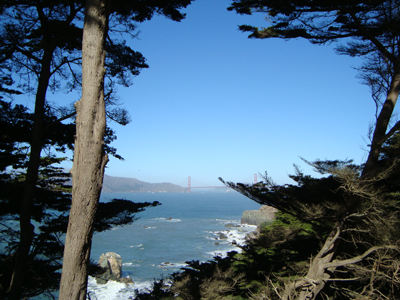
There is also a place called Point Lobos, which is at the tip of Lands
End, the outermost reach of San Francisco Peninsula. It has been
one of our favorite scenic places to visit since we moved to the Bay
Area three decades ago. It is the grove of cypress trees on its cliff
that has impressed me the most all these years.
Only the past year or so, we have made a total of four trips to this
place with our visitors (classmates or family friends, from out of state
or abroad). During each visit, I particularly drew their attention to
the stern, uncompromising gestures of those cypress trees on the
cliff, “leaning away backward to receive the winds, balancing
resistance and compensation in the open-weave basketwork of their
limbs .................... .”, as nicely depicted by Powell.
Yeh Tze
Saturday, August 27, 2011
It Is All In Your Mind.
Getting old ?
It is all in your mind.
The fundamentals of getting old:
Chronological Age
Your chronological age is based on the passage of time, or your age
in years. Chronological age has financial and legal implications, such
as getting your Social Security benefits.
Biological Age
Your biological age refers to the subtle or drastic changes that your
body undergoes as you are getting old. You assume a more “mature”
look.
Psychological Age
Your psychological age is how you feel about getting old. It is all in
your mind.
Old age is a gift, and getting old is a blessing.
Yeh Tze
Sunday, August 21, 2011
酒入豪腸,七分月光.
In his “春日憶李白”, the ancient poet 杜甫 wrote:
渭北春天樹,江東日暮雲。
何時一樽酒,重與細論文。
何時一樽酒,重與細論文。
With the same title “憶李白", the modern day poet 余光中 said:
我輩此中惟飲酒先生在上莫題詩,
酒入豪腸七分化作月光,
剩下的三分嘯成了劍氣,
繡口一吐就是半個盛唐。
酒入豪腸七分化作月光,
剩下的三分嘯成了劍氣,
繡口一吐就是半個盛唐。
Yeh Tze
Friday, August 19, 2011
Joys of Babysitting Grandbaby
Lately, we have been babysitting our one year old granddaughter,
the first baby of our younger daughter. As both of her parents
are working, her mom brings her to our house on Sunday evening
and we take her back on Tuesday evening. It is a half hour drive
each way on the country roads lined with rolling hills.
After some thirty years, our house is again filled with baby stuff.
They however are somewhat different from those of her mother’s
generation. The toys are mostly “battery-operated”, not the kind
of “wind-up” stuff. Most importantly, the playpen, the stroller and
the high chair are much more appealing and comfortable than those
her mom used to have.
We have fun with our grandbaby. Babysitting her makes us feel
young and gives us boundless joy. Her every cute smile and action
remind us of her mother when she was a baby. One moment we are
just like a parent. The next we are all-wise and prehistoric.
She loves to be sitting on my lap and watching the baby music videos
on the computer screen. She often responds with a happy smile and
tiny body movements. This music video “Twinkle Twinkle Little Star”
is one of her favorites.
Yeh Tze
Saturday, August 13, 2011
小城故事
Small Town Story
Our children had been raised in this small town. Ever since they
left for college, they came home only during their school breaks,
but now, with their families, they come home during the holidays,
or when there are family events.
Until recently, they had not had the chance to revisit the old town
where they had their memorable childhood years. During the
Christmas holiday season last year when our older daughter made
Until recently, they had not had the chance to revisit the old town
where they had their memorable childhood years. During the
Christmas holiday season last year when our older daughter made
a home visit from the East Coast with her family, she spent one
afternoon with us strolling through the old town where she had not
seen since her high school years. It was like the good old days.
Our younger daughter and her family had recently relocated to our
Our younger daughter and her family had recently relocated to our
neighboring town from the Midwest. Last week, she, with her baby
in the stroller, had also enjoyed the moment with us together touring
the old town. While strolling along the river bank, she was surprised
to see that the town had undergone much change since the year she
left for college.
Touring this small old town with our daughters refreshed our old
sweet memories. It also reminded me of the old song, “Small Town
Story” or “小城故事”, sung by Teresa Teng.
Yeh Tze
Sunday, July 17, 2011
Land of Promise
Land of promise
中國時報【侯俐安、游婉琪/台北報導】
「堅持土地正義、力抗搶水圈地!」由全台十四個地區自救會,數十個農運、社運團體發起的
「七一六農民重返凱道」,................... 。
Land of Promise
"The land is our mother, the rivers our blood.
Take our land away and we die."
- Mary Brave Bird -
"Man's heart away from nature becomes hard. "
- Chief Luther Standing Bear -
“One does not sell the earth upon which the people walk.”
- Crazy Horse -
"They made us many promises, more than I can remember. They
never kept but one; they promised to take our land, and they took it!"
- Red Cloud, Lakota, 1891 -
Yeh Tze
Saturday, June 18, 2011
霧失庭園 月迷小徑
山在虛無飄渺間 (長恨歌) 韋瀚章詞,黃自曲.
Poetry Scenes
霧失樓台,月迷津渡。 (秦觀 踏莎行)
I am sure many of us in our life time have seen and experienced
scenes that reminded us of poems written by the ancient poets.
In our valley, during the spring and early summer, there is often
dense fog at night and in the early morning. When I raised the window
blind at dawn, I saw the garden and yard scenes all in “虛無瓢渺間”.
And at night, while walking along the garden paths, I could easily
miss them, even there was a full moon. Therefore, being inspired by
秦觀, I came to this self-promoted poem:
霧失庭園 ,月迷小徑 。 (葉子 覓園行)
Video Credits:
山在虛無飄渺間 (長恨歌) 韋瀚章詞,黃自曲
華崗合唱團第十屆公開演唱會
黃自與韋瀚章合作的〈長恨歌〉
八、山在虛無縹緲間(女聲合唱)
香霧迷濛,祥雲掩擁,蓬萊仙島清虛洞,瓊花玉樹露華濃,卻笑他,紅塵碧海,幾許恩愛苗,多少癡情種?離合悲歡,枉作相思夢,參不透,鏡花水月,畢竟總成 空。
1984台北國父紀念館
Yeh Tze
Saturday, May 28, 2011
Frog Chorus, “聽取蛙聲一片”
Frog Chorus, “聽取蛙聲一片”
Frog chorus is one of the nature’s richest orchestra plays.
For those who had lived in the Taiwan’s countryside, especially
where there were rice fields or ponds nearby, the nightly frog calls
during their mating season was a nice auditory experience. During
my childhood, as our house was partly surrounded by the rice
paddies and there was a pond behind, the croaking of the male rice
field frogs (or "水雞" in Taiwanese) was a sweet memory.
黃梅時節家家雨,青草池塘處處蛙。(宋 趙師秀 約客)
稻花鄉裡說豐年,聽取蛙聲一片。 (宋 辛棄疾 西江月)
Sigurd Olson had written the best essay on “Frog Chorus”, a piece of
wilderness music, in his book “The Singing Wilderness”:
“….. But a real music of a bog is the frog chorus. If they are in the full
swing when you approach, they stop by sections as though part of the
orchestra was determined to carry on in spite of the faintheartedness
of the rest. One must sit quietly for some time before they regain their
courage. At first there are individual piping notes, a few scattered
guttural croaks, then a confused medley as though the instruments
were being tuned. Finally in a far corner a whole section swings into
tremulous music, hesitant at the start but gradually gathering
momentum and volume. Soon a closer group begins, and then they all
join in until there is again a sustained and grand crescendo of sound....”
Only those, like Olson, who appreciate the beauty of nature and
closely observe its minutiae, can write such a delightful essay.
Yeh Tze
Tuesday, May 24, 2011
El Condor Pasa
Los Incas El condor pasa 1963 (version originale)
El Condor Pasa (the Flight of the Condor)
~ Music of Peru ( Inca Music )
This is a song I never get tired of listening to.
I heard this song for the first time in the late 1960s in Taipei. I have
loved this song ever since, especially when I happened to come
across a group of Peruvian musicians playing it at a street fair
(San Fracisco, Boston, Munich, ..... etc).
History (from Wikipedia)
In 1913 Alomía Robles composed "El cóndor pasa" and the song was
first performed publicly at the Teatro Mazzi in Lima.
The musical group, "Los Incas" performed the song in Paris in 1960s
where it was heard by Paul Simon of Simon and Garfunkel."Los Incas"
told Simon, perhaps through ignorance, that the song was a 19th
century musical composition by an anonymous composer. Simon
became interested in the song and composed new lyrics for the
melody. The song appeared on Simon and Garfunkel's 1970 album
Bridge over Troubled Water.
In 1970 Alomía Robles' son, Armando Robles Godoy, filed a
copyright lawsuit against Simon and demonstrated that the song
had been composed by his father and that his father had copyrighted
the song in the United States in 1933. Godoy said that he bears no
ill will towards Simon for what he considers a misunderstanding.
"It was an almost friendly court case, because Paul Simon was very
respectful of other cultures. It was not carelessness on his part",
says Robles Godoy. "He happened to hear the song in Paris from a
vernacular group. He liked it, he went to ask them and they gave him
the wrong information. They told him it was a popular tune from the
18th Century and not my father’s composition. It was a court case
without further complications."
Simon & Garfunkel : El Condor Pasa (1970)
Yeh Tze
Sunday, May 15, 2011
Let's talk about ......... .
Let's talk about........... .
Once there was a young Infectious Disease instructor at UCSF. One
day, his boss, the chief of ID (Infectious Disease), called him and
asked him to give a talk on "Antiviral Therapy" to the medical
students. For him, Antiviral Therapy was such a boring subject with
uninteresting and complicated molecular structures. He did not
really want to lecture on it.
In the early morning on the following Monday, there he was in the
classroom. Facing those already somewhat lethargic-looking medical
students, he began his lecture by saying "Let's talk about antiviral
therapy !" Sure enough, not before long, he noticed 1/3 of the
students were already somnolent, 1/3 were half way there, and the
remaining 1/3, although were still alert, only God knew what was in
their minds.
Yeh Tze
Friday, April 29, 2011
Turning Point
For years I have kept a folder (binder) where I preserve many of my
old documents, which include personal paper items that I consider
to be of historical significance. Once in a great while, I would
take it down from the shelf and randomly flip through it.
The other day, for some reason, the two old airline oneway tickets
inside the folder dated June 22, 1972 particularly caught my
attention. They were a CAL (China Airlines)#002 ticket from Taipei
to San Francisco and AA (American Airlines) ticket with the final
destination to Buffalo, N.Y.
In our life, there are always many turning points. Each turning point
involves a choice, a decision to be made. It is a decisive moment,
although it may or may not be at our best. These are times and places
where we can make a choice that will affect the rest of our life.
There have been many turning-points in my life and I consider most
of them were at my best. The choice I had made back on June 22,
1972 was one of them.
Yeh Tze
Friday, April 8, 2011
妾似朝陽又照君 蓬門今始為君開
(Women in Art)
妾似朝陽又照君 蓬門今始為君開
ZWC is one of my NTUMC1968 classmates. He is multi-talented.
Besides being a physician, he is also a guitarist, music composer,
song writer and singer. His natural good humor often accompanied
his talent.
During our internship year at NTUH, he had a large picture print
placed on the wall in front of his study desk in his dorm room.
It was a 美女照, totally nude! He wrote a 對聯 and attached them
on each side of the picture:
右聯 妾似朝陽又照君
左聯 蓬門今始為君開
"妾似朝陽又照君", every day and night, in front of this "美女", he did
his study, played his guitar, composed piece of music, or sang his
favorite songs. He was a happy man, and a multi-talented medical
student.
Yeh Tze
Sunday, April 3, 2011
我手寫我口
Write what you think, “想什麼, 寫什麼”
During my middle school years at 建中, 王藍, a Chinese writer, author
of the novel "藍與黑", was once invited to our school to give us a talk
on “writing”. He spoke to more than 3000 students in the school's
大操場 under the bright sun. Honestly, I did not get much of what he
had said except the first sentence in his opening statement. He said
that writing was very easy, you just “write what you think”, or in his
own real words “想什麼, 寫什麼”.
After that talk, I thought it should not be hard to write if we just
write what we think, not what we are told to, or what we need to,
or how we are instructed to, like writing an essay according to
what the teacher would expect, such as "起承轉合"
Then, in the high school, we had this 國文 teacher 王瓊珊, who was
said to be the top one graduate in his class from 師大 Chinese
Literature. He wanted us to write a good essay and recommended
to us a book called “東萊博議”. I bought one copy from 正中書局, but
then noticed the sample writings were too "八股". There were too
many "子曰", "嗚呼" and, of course, "之乎者也". I thought I would
rather write with the new free style that 胡適 had long promoted.
黃遵憲, a writer and poet of 晚清 and 民初 period, had also encouraged
people to “write what you think”. He once wrote a poem, which has
been quite popular:
我手寫我口, 古豈能拘牽.
即今流俗語, 我若登簡編.
五千年後人, 驚為古爛斑.
In "我手寫我口", 口 means heart, mind or thought.
So, I write what I think in my "The Yehtze File”
Yeh Tze
Saturday, April 2, 2011
It's A Man's World After All
漢樂府 〈上山採蘼蕪〉
上山採蘼蕪,下山遇故夫。長跪問故夫:「新人復何如?」
「新人雖言好,未若故人姝,顏色類相似,手爪不相如。」
「新人從門入,故人從閣去。」 「新人工織縑,故人工織素。
織縑日一疋,織素五丈餘。將縑來 比素,新人不如故。」
I came across this poem a few times in the past, and each time after
reading it, I feel the need to say something and “打抱不平” for the
woman in the poem.
The women in ancient Chinese culture had tough life. They were
humbled and often humiliated before men. They were told to follow
the Confucius rule, “三從 四德 “.
As you can see in this ancient Chinese classical poem, this woman was
likely “divorced” or “休了” by her husband and became a “ 棄婦 “,
due to the fact that she was unable to bear an offspring for him.
Sadly enough, she was still trying to seek the “fertility” remedy
“ 蘼蕪 “in the mountain in order to become a “real woman” and thus
to be accepted by the society again.
More sadly, when she happened to bump into her ex-husband (故夫)
on her way home (冤家路狹), she even had to “ 長跪 “ in front of him,
and humbly asked about his “ 新人 “. And this man, who had
obviously treated his spouses like slave labers and indulged his
selfish “pride”, and compared their work skills and work products
instead of thinking about their souls and feelings.
The following are my suggestions to the woman in the poem:
1). There was no need for her to make effort to “上山“ for the purpose
of seeking “ 蘼蕪 “.
2). She could have just avoided the direct contact with him, or simply
said “ Hi “ to him as a courtesy.
Or
3). She could, like some of the modern women nowadays, slap his face
( 嘗個大巴掌 ) and teach him a lesson. “長跪問” 不如 “賞巴掌”
After all, in the ancient man’s world,
“ 但見新人笑,哪聞舊人哭。”
It was a man's man's world after all.
It was a sad culture then !
Yeh Tze
Friday, March 25, 2011
From Being The Youngest To Becoming The Oldest
Thirty three years ago, I moved from the East Coast and took a job
in Northern California. Even though I retired one and a half years ago,
I am now still staying with this job, working two to three days a week.
I came back to work for one simple reason, and that is: I love my job
and my co-workers, and they want me to stay working there with
them as well. We have maintained excellent working relationship and
have shared mutual trust throughout the years.
When I started my job there, I was the youngest physician, and
almost half of the staff (nurses, secretary, etc ) were older than me.
Now, thirty three years later, I have become the oldest physician
there, and the staff are all much younger than me. As a matter of fact,
some of the staff were not even born when I first came to the job, and
I often remind my young co-workers, joking and saying, “Janice (or
John), you were not even born yet when I started working here.”
Yeh Tze
Monday, March 21, 2011
Class Directory
Class Directory
Confucius once said "人焉廋哉,人焉廋哉", which, in modern terms,
could also mean “You can run, but you can't hide”. He probably did
not expect that his words of wisdom would still hold very true two
thousand years later. What I am trying to say is that the internet,
with all the search engines like Google and Yahoo!, has proven his
wisdom "人焉廋哉 ". Internet technology has played a role in helping
our high school class to complete a class directory in just a matter
of 2-3 weeks.
Fifty years after our graduation, some of our "建中" high school
classmates started to think about creating a class directory. We, the
former "建中 高三 4 班 ", graduated in 1961. Most of us have lost
contact since that time owing to numerous reasons, which, of course,
included a common one, " 忙 “. Now, half a century later, many of us
are either retired or semi-retired. We are now referring to ourselves
as the group called L.K.K., "老 庫 庫", or "老 酷 酷 ", depending upon
whether you want to consider yourself to be "庫" or "酷 ".
Accordingly, "庫" means storage places, like "車庫" or "倉庫", and "酷"
means “cool”. So, are we old “storage places”, or old “cool” persons ?
Regardless, when you start to think of your old classmates of half a
century ago, you are old, and believe me, you are pretty old.
With the hard work of a few of our classmates, "承渝 ", "遠通 "(You
would already know his ability by just looking at his name), "正俊"
(who is good at "人肉搜索“ and has earned a title "四班的007", given by
遠通 ), and others , the class directory is almost completed. Then, I
believe, the phone will start to ring, the e-mail box will be crowded
with warm greetings, and, of course, our newly created class website
is going to be lively. We will probably be able to see the photos of
the classmates on our class website, and start to guess "Hey, who is
that old man, or who is that young man in the old photos, he looks familiar, ..............."
Yeh Tze
Monday, March 14, 2011
Traveling With Old Classmates
Power of Nature - Iguazu Falls
(The Most Spectacular Waterfalls in the World)
Traveling with old classmates makes me feel young and energetic.
While traveling with our old classmate friends, we spoke the same
way with those familial voices, tones, gestures, interests, humors
and laughs, exactly the way as we used to during our college days
of some forty plus years ago.
Over the years, we have travelled together so frequently that we
even don’t pay attention to each other’s greys and wrinkles.
Many of our NTUMC1968 classmates in the US have travelled
together around the world, at least once a year, over the past
eight years. Initially, we had a regular “gang of six” plus their
spouses, then, a few more couples, from both the US and Taiwan,
joined us on different trips. We call each gathering a “Mini Class
Reunion”.
We have even noticed that our spouses have since become good
friends, some are like sisters in the family. During each trip, they
shared with one another their life experiences and tales of their
grandchildren. They exchanged ideas and opinions, and consulted
with each other before making purchases in the souvenir shops and
stores. More importantly, they shared information when they had
something “bad”, as well as something “good”, to say about their
husbands, although we did the same among our own classmates
regarding our wives as well.
We love to travel together in the company of our spouses, and do so
as frequently as we can. During each trip, we would even discuss,
vote and make a plan for our next travel destination. Classmate
Shin-Fu has been our main trip organizer and has done a great job
over the years.
Yeh Tze
Saturday, March 5, 2011
A Walk On the Falkland Islands
Many people found that taking a cruise to the Antarctica was a high
point in their life.
Last year, some of our classmates heard the news that starting August
2011, most large cruise ships will no longer be regulated to sail
Antarctic waters. The International Maritime Organization, a special
agency of the United Nations, will restrict vessels carrying heavy oil
from intruding on the Antarctic environment. Heavy fuel oil is slow
to break down, especially in cold water, making it more
environmentally hazardous than other marine fuel oils. Cruise ships
carrying more than 500 passengers will no longer be able to sail in
Antarctica.
In view of the above, our NTUMC1968 classmates, a total of ten
couples, decided to join the Celebrity Infinity Antarctica Cruise
sailing on Feb. 13, 2011, which would likely to be the last cruise
ever to Antarctica given its magnitude.
We started with a 4 days’ “pre-tour” to the South American countries,
mainly Brazil and Argentina. The visit to the Iguazu Falls was a
memorable one and it was actually the main purpose we took the “pre
-tour”. The scenery was magnificent. The views before our eyes were
simply beyond words to describe. In the new "Seven Natural Wonders
of the World" contest, Iguazu Falls was selected among the finalists.
The cruise ship departed from Buenos Aires, Argentina. Although we
spent many days on the open sea, we had a few shore excursions.
One of them was Port Stanley, in the Falkland Islands.
The Falkland Islands (pronounced /ˈfɔːlklənd/; Spanish: Islas
Malvinas) are an archipelago in the South Atlantic Ocean, located
approximately 250 nautical miles (460 km; 290 mi) from the coast of
mainland South America. Ever since the re-establishment of British
rule in 1833, Argentina has claimed sovereignty. In pursuit of this
claim, which is rejected by the islanders, Argentina invaded the
Falkland Islands in 1982. This precipitated the two-month-long
undeclared Falklands War between Argentina and the United
Kingdom and resulted in the defeat and withdrawal of the Argentine
forces. (Wikipedia)
While most of our classmates and their spouses preferred to do
sightseeing and shopping around Port Stainley, six of us (two
spouses included), and as a matter of fact, probably the very few
of the entire cruise passengers, chose to have a walking tour to
Gypsy Cove, which was a total of 8 miles round trip journey, or a
half-day out. It was a sunny day with a light breeze. We walked
over the soft native flora, and along the shoreline where the old
battlefield used to be. We enjoyed seeing various seabirds, wildlife,
and passed by many shipwrecks. Finally, along the Gypsy Cove trail,
we saw the Magellanic penguin colonies, the most lovely creatures
on earth.
During the half-day nature walk on the Falkland Islands, I realized the
true meaning of “ 路遙知馬力“ and admired our classmate Michael Lai
for his “箭步如飛“. He had recently stepped down from the 成功大學
校長 position. He has been well known to be a daily jogger (每天清晨5
時就會到校內操場慢跑, 每次約跑6公里), and once requested the
students to ”跑完3千公尺” as one of the NCKU college graduation
requirements. He was always way ahead of us on this road trip.
Yeh Tze
Thursday, January 27, 2011
In A Faraway Land and The Jasmine Flower
"In A Faraway Land" by John Denver
“在那遙遠的地方”and "茉莉花" are among the best known popular
Chinese folk songs.
Inspired by a Kazakh folk song, 王洛賓 (1913-1996), a Chinese song
writer and ethnic music researcher, wrote this song “在那遙遠的地方”
in the fall of 1939, when he took up residence in northwestern China .
His lyrics described about a pretty girl who lived in a faraway land,
and when people passed by her tent, they always stopped and took
a double glimpse.
Half a century later, John Denver (1943-1997), an American singer-
songwriter, sang the song in Beijing when he visited there in 1992.
His Chinese pronunciation was almost perfect.
"茉莉花" was said to be created during the 乾隆 period of 清 Dynasty.
The melody has been well known among Western listeners as it was
included by Giacomo Puccini (1858-1924), an Italian composer, in his opera "Turandot".
"Muo Li Hua" has often been the known English translation of "茉莉花",
or "The Jasmine Flower".
"The Jasmine Flower" by Vienna Boys Choir
Their mandarin pronunciations are just amazing.
Yeh Tze
Saturday, January 22, 2011
月出驚山鳥,時鳴春澗中
Debussy Clair de Lune (YouTube video)
“I have listened to loons go into ecstasies on wilderness lakes,
have heard them call the whole night through ......................."
- Sigurd Olson -
Different phases of the moon can bring about physiological and
psychological responses in animals and humans.
In the chapter “Moon Magic” of his book “The Singing Wilderness”,
Sigurd Olson, an American naturalist, wrote:
“When the (full) moon shines, I am filled with unrest and the urge to
range valleys and climb mountains. I want vistas of moonlit country
from high places, must see the silver of roaring rapids and sparkling
lakes.”
If humans in all their sophistication permit moonlight to affect them,
then how much more does it affect animals? Olson had also seen what
it did and how animals in the wild responded to its charm:
“I have listened to loons go into ecstasies on wilderness lakes, have
heard them call the whole night through and dash across the water as
though possessed. I have heard sleepy birds begin to sing at
midnight, wolves, foxes, frogs and owls respond to the same inherent
urge.”
王維, the ancient Chinese 山水詩人, had also observed the same
phenomenon as written in his famous poem :
【鳥鳴澗 】
人閑桂花落,夜靜春山空。
"月出驚山鳥",時鳴春澗中。
In his 千古名句:【楓橋夜泊】, 張繼 wrote:
"月落烏啼"霜滿天,江楓漁火對愁眠。
姑蘇城外寒山寺,夜半鐘聲到客船。
"明月光" has often made people, 李白 included, homesick:
【夜思】
床前"明月光",疑是地上霜。
舉頭望明月,低頭"思故鄉"。
張九齡 felt lovesick when he saw the shining moon rising above
the horizon:
【望月懷遠】
海上生"明月",天涯共此時。
情人怨遙夜,竟夕起"相思"。
Another delicate "homesick" (離愁) moon poem by 張若虛:
【春江花月夜】
春江潮水連海平,海上明月共潮生。
灩灩隨波千萬里,何處春江無月明。
江流宛轉繞芳甸,月照花林皆似霰。
空裏流光不覺飛,汀上白沙看不見。
江天一色無纖塵,皎皎空中孤月輪。
江畔何人初見月,江月何年初照人。
人生代代無窮矣,江月年年只相似。
不知江月待何人,但見長江送流水。
白雲一片去悠悠,青楓浦上不勝愁。
誰家今夜扁舟子,何處相思明月樓。
可憐樓上月徘徊,應照離人妝鏡台。
玉戶簾中卷不去,搗衣砧上復還來。
此時相望不相聞,願逐月華流照君。
鴻燕長飛光不渡,魚龍潛躍水成紋。
昨夜閑潭夢落花,可憐春半不還家。
江水流春去欲盡,江潭落月復西斜。
斜月沉沉藏海霧,碣石瀟湘無限路。
不知乘月幾人歸,落月搖情滿江樹。
It well describes the "humans' psychological or emotional responses"
to the moon with the feeling of "unrest" and the "inherent urge".
Yeh Tze
Thursday, January 20, 2011
枯藤, 老樹, 昏鴉
The Second Movement of Vivaldi's Four Seasons - Winter
Once in a while, we come across scenes that the ancient poets had
once described.
One evening early last winter, while looking out from our backyard,
I happened to see a raven quietly relaxing on an old tree, which was
surrounded by the vineyard with withered grapevines. The scene
instantly reminded me of the famous poem, "天淨沙 秋思", written
by 馬致遠 from the Yuan Dynasty:
枯藤老樹昏鴉,小橋流水人家,古道西風瘦馬。
夕陽西下,斷腸人在天涯。
I then posted my humble story on our class website. One of the
classmates responded to it and asked if I had, besides "枯藤", "老樹",
"昏鴉", also seen the "小橋", "流水", "人家", or even "古道", "西風", "瘦馬".
As a matter of fact, in our valley, there are creeks flowing through
along the hillside. The country roads often run between the hills and
creeks. We see small bridges crossing the creeks and leading to the
people's houses. And therefore I have seen "小橋", "流水", and "人家"
as well during our outings.
A few months later, we took a trip to the Middle East countries. While
in Jordan, we tour to the renowned ancient treasure site, Petra. We
rode on those lean, somewhat emaciated horses along an ancient path
against the dusty western wind. Over there, I remembered the other
piece of the poem, "古道", “西風", "瘦馬".
As you can see, I have seen the scenes which were described by
馬致遠 in his autumn nostalgic "天淨沙 秋思", although I was not a
"斷腸人", nor was I "在天涯" wandering around.
Yeh Tze
Sunday, January 16, 2011
Contrast and Similarity
Misty Ridge, Huangshan, China
Comparison, Contrast and Similarity
I often compare poems written by two different ancient Chinese poets
and attempt to find the contrast or the similarity between the two poems.
蟬噪林逾靜,鳥鳴山更幽。 王籍 入若耶溪
茅簷相對坐終日,一鳥不鳴山更幽。 王安石 鍾山即事
Either“鳥鳴”or “鳥不鳴” would make “山更幽”.
They both make good sense, depending upon how we elaborate
the 意境 of “幽”.
人閑桂花落,夜靜春山空。 王維 鳥鳴澗
雨中山果落,燈下草蟲鳴。 王維 秋夜獨坐
王維 sensed 桂花落 because of 人閑 and 夜靜, and he heard 山果落
and 草蟲鳴 while he was having a nice quiet “秋夜獨坐”.
人生得意須盡歡,莫使金樽空對月。 李白 將進酒
人生有酒須當醉,一滴何曾到九泉。 高菊瞷 清明
Talking about life, 李白 felt "人生得意須盡歡 ". He would drink
“一盃一盃復一盃” until “我醉欲眠卿且去”. 高菊瞷, like 李白, also
thought “人生有酒須當醉” because "一滴何曾到九泉".
不識廬山真面目,只緣人在此山中。 蘇軾 題西林壁
不畏浮雲遮望眼,自緣身在最高層。 王安石 登飛來峰
蘇軾 gave a hint for the meaning of “當局者迷”, whereas 王安石
emphasized "旁觀者凊" and being able to “高瞻遠矚”.
And more comparison:
江雪 柳宗元
千山鳥飛絕,萬徑人蹤滅。
孤舟蓑笠翁,獨釣寒江雪。
獨坐敬亭山 李白
眾鳥高飛盡,孤雲獨去閑。
相看兩不厭,只有敬亭山。
Although two poems were written by two poets in different time
periods, we occasionally noticed the similarity between them, either
the hidden feeling, or the message they tried to convey.
Here are the examples:
香嚴閒禪師 唐 李忱
千巖萬壑不辭勞,遠看方知出處高。
溪澗豈能留得住,終歸大海作波濤。
桂源鋪 南宋 楊萬里
萬山不許一溪奔,攔得溪聲日夜喧,
到得前頭山腳盡,堂堂溪水出前村。
or
詔問山中何所有賦詩以答 南北朝,陶弘景
山中何所有?嶺上多白雲;
只可自怡悅,不堪持贈君。
秋登蘭山寄張五 唐 孟浩然
北山白雲裡,隱者自怡悅。
相望試登高,心隨雁飛滅。
Yeh Tze
Sunday, January 2, 2011
When Children Come Home
In the past, our children used to come home during their school
breaks, but now, with their families, they come home during the
holidays. This particular holiday was another joyful Christmas family
reunion, and although the old “nest” is back to its usual quiet state,
I am still reminiscing about the joy of being together.
This holiday, we watched the grandchildren open their favorite
Christmas gifts and saw the thrill and joy on their smiling faces.
The scenic drive together along the California Central Coastline was
pleasant and enjoyable. The grandchildren were amused by the "big
nose" giant Elephant Seals and their little cute pups at Piedras Blancas
seal rookery, and the children were impressed with the "Enchanted
Hill" on the top of San Simeon.
While the grandchildren went to "In-N-Out" with their father for their
favorite burgers, our daughter took us to “Morimoto Napa” in town
for a delicious lunch. We walked the old town and strolled along the
river bank, trying to remember the good old days despite the fact
that the town has undergone much change since the year she left for college.
The day before they left, we brought the grandchildren to their
mother's former elementary school and watched them play in the
playground. They were fascinated as they peeked through the old
classroom windows where their mother used to sit.
The most memorable experience was watching video clips together
with our grandchildren sitting on my lap singing along. Their favorite
videos were “Snake and Lizard”, “How to Train Your Dragon”, ..... for
the older grandchild, and “Twinkle Twinkle Little Stars”, “The Wheels
on the Bus Go Round and Round”, “Thomas the Tank Engine”, ..... for the younger one.
We look forward to their next home visit to the "old nest".
* * * * * * * * * * * * * * * * * * * * * * * * * * * * * * * * * * * * * * * *
Home, Sweet Home
Written By: John H. Payne (1791-1852)
Music By: Henry R. Bishop (1786-1855)
Mid pleasures and palaces though we may roam,
Be it ever so humble, there's no place like home;
A charm from the sky seems to hallow us there,
Which, seek through the world, is ne'er met with elsewhere.
Home, home, sweet, sweet home!
There's no place like home, oh, there's no place like home!
An exile from home, splendor dazzles in vain;
Oh, give me my lowly thatched cottage again!
The birds singing gayly, that came at my call
Give me them-and the peace of mind, dearer than all!
Home, home, sweet, sweet home!
There's no place like home, oh, there's no place like home!
I gaze on the moon as I tread the drear wild,
And feel that my mother now thinks of her child,
As she looks on that moon from our own cottage door
the woodbine, whose fragrance shall cheer me no more.
Home, home, sweet, sweet home!
There's no place like home, oh, there's no place like home!
How sweet 'tis to sit 'neath a fond father's smile,
And the caress of a mother to soothe and beguile!
Let others delight 'mid new pleasure to roam,
But give me, oh, give me, the pleasures of home,
Home, home, sweet, sweet home!
There's no place like home, oh, there's no place like home!
To thee I'll return, overburdened with care;
The heart's dearest solace will smile on me there;
No more from that cottage again will I roam;
Be it ever so humble, there's no place like home.
Home, home, sweet, sweet home
There's no place like home, oh, there's no place like home!
* * * * * * * * * * * * * * * * * * * * * * * * * * * * * * * * * * * * * * * *
世界民謠 甜蜜的家庭
("Home, Sweet Home", the Chinese version)
我的家庭真可愛,整潔美滿又安康,
姐妹兄弟很和氣父母都慈祥。
雖然沒有好花園,春蘭秋桂常飄香。
雖然沒有大廳堂,冬天溫暖夏天涼。
可愛的家庭呀!
我不能離開你,你的恩惠比天長。
Yeh Tze
Subscribe to:
Posts (Atom)