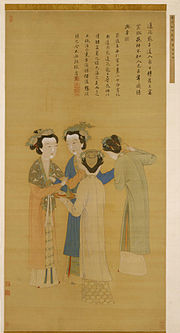
"此時一別何時見 遍撫兒身舐兒面"
Around Mother's Day last year, I received through e-mail a touching
story entitled "母親用心良苦----車票". The story had stayed with me
for a long time. It again came to my mind recently when I happened
to come across this poem "賣子歎" written by 馬柳泉 in the Ming
Dynasty. Both stories were about maternal instinct, love and sacrifice.
First, the poem of the Ming Dynasty period:
《賣子歎》馬柳泉 (四溟詩話)
貧家有子貧亦嬌,骨肉恩重那能拋?饑寒生死不相保,割腸賣兒為奴曹。
此時一別何時見?遍撫兒身舐兒面。有命豐年來贖兒,無命九泉抱長怨。
驚兒切莫憂爺娘,憂思成病誰汝將。抱頭頓足哭聲絕,悲風颯颯天茫茫。
Now the e-mail touching story:
【車票 】
我從小就怕過母親節,因為我生下不久,就被母親遺棄了。
每到母親節,我就會感到不自然,因為母親節前後,
電視節目全是歌頌母愛的歌,電台更是如此,即使做個餅乾廣告,
也都是母親節的歌。
對我 而言,每一首這種歌曲都是消受不了的。
我生下一個多月,就被人在新竹火車站發現了我,
車站附近的警察們慌作一團地替我餵奶,這些大男生找到一位 會餵奶
的婦人,要不是她,我恐怕早已哭出病來了。
等到 我吃飽了奶,安詳睡去,
這些警察伯伯輕手輕腳地將我送到了新竹縣寶山鄉的德蘭中心,
讓那些成天笑嘻嘻的天主教修女傷腦筋。
我沒 有見過我的母親,小時候只知道修女們帶我長大。
晚上,其他的大哥哥、大姊姊都要唸書, 我無事可做,
只好纏著修女,她們進聖堂唸晚課,我跟 著進去,
有時鑽進了祭台下面玩耍,有時對著在祈禱的 修女們做鬼臉,
更常常靠著修女睡著了,好心的修女會 不等晚課唸完,
就先將我抱上樓去睡覺,我一直懷疑她 們喜歡我,
是因為我給她們一個溜出聖堂的大好機會。
我們雖然都是家遭變故的孩子,可是大多數都仍有家,
過年、過節叔叔伯伯甚至兄長都會來接,只有我,
連家在那裡,都不知道。
也就因為如此,修女們對我們這些真正無 家可歸的孩子們特別好,
總不准其他孩子欺侮我們。
我從 小功課不錯,修女們更是找了一大批義工來做我的家教。
屈指算來,做過我家教的人真是不少,他 們都是交大、清大的研究生
和教授,工研院、園區內廠 商的工程師。
教我 理化的老師,當年是博士班學生,現在已是副教授了。
教我英文的,根本就是位正教授,難怪我從小英文就很好 了。
修女也壓迫我學 琴,小學四年級,我已擔任聖堂的電風琴手,
彌撒中, 由我負責彈琴。
由於我在教會裡所受的薰陶,所以,我的口齒比較清晰,
在學校裡,我常常參加演講比賽,有一次還擔任畢業生致答詞 的代表。
可是我從來不在慶祝母親節的節目中擔任重要的角色。
我雖 然喜歡彈琴,可是永遠有一個禁忌,我不能彈母親節的歌。
我想除非有人強迫我彈,否則我絕不會自已去彈的。
我有 時也會想,我的母親究竟是誰,看了小說以後,我猜自己是 個
私生子。
爸爸 始亂終棄,年輕的媽媽只好將我遺棄了。
大概因為我天資不錯,再加上那些熱心家教的義務幫忙,
我順利地考上了新竹省中,大學聯招也考上了成功大學土木系。
在大學的時候,我靠工讀完成了學業,帶我長大的孫修女有時會來
看我, 我的那些大老粗型的男同學,一看到她,馬上變得文雅 得
不得了。
很多同學知道我的身世以後都會安慰我,說我是修女們帶大的,
怪不得我的氣質很好。
畢業那天,別人都有爸爸媽媽來,我的唯一親人是孫修女 ,
我們的系主任還特別和她照相。
服役期間,我回德蘭中心玩,這次孫修女忽然要和我談一件嚴肅的事,
她從一個抽屜裡拿出一個信封,請我看看信封的內容。
信封裡有二張車票,孫修女告訴我,當警察送我來的時候,
我的衣服裡塞了這兩張車票,
顯然是我的母親用這些車票從她住的地方 到新竹車站的,
一張公車票從南部的一個地方到屏東市 。
另一張火車票是從屏 東到新竹,這是一張慢車票,我立刻明白我的
母親應該不是有錢人 。
孫修女告訴我,她們通常並不喜歡去找出棄嬰的過去身世,
因此她們一直保留了這兩張車票,等我長大了再說。
她們 觀察我很久,最後的結論是我很理智,應該有能力處理這件事了。
她們曾經去過這個小城,發現小城人極少,如果我真要找出我的親人,
應該不是難事。
我一直想和我的父母見一次面,可是現在拿了這兩張車票 ,
我卻猶豫不決了。
我現在活得好好的,有大學文憑,甚至也 有一位快要談論終生大事的
女朋友,為什麼我要走回過 去,去尋找一個完全陌生的過去?
何況十有八九,找到的恐怕是不愉快的事實。
孫修女卻仍鼓勵我去,她認為我已有光明的前途,
沒有理由讓我的身世之謎永遠成為心的陰影,
她一直勸我要有最壞的打算,既使發現的事實不愉快,
應該不至於動搖我對自己前途的信心。
我終於去了。這個我過去從未聽過的小 城,是個山城,
從屏東市要坐一個多小時的公車,才能到達。
雖是南部,因為 是冬天,總有一家派出所、一家鎮公所、
一所國民小學 、一所國民中學,然後就什麼都沒有了。
我在派出所和鎮公所裡來來回回地跑,終於讓我找到了兩筆與我似乎有
關的資料,第一筆是一個小男孩的出生資料,第二個是這小男生家人來
申報遺失的資料,遺失就在我被遺棄的第二天,出 生在一個多月以前。
據修女們的記錄 ,我被發現在新竹車站時,只有一個多月大。
看來我找到我的出生資料了。
問題是:我的父 母都已去世了,母親幾個月以前去世的。
我有一個哥哥,這個哥哥早已離開小城,不知何處去了。
畢竟這個小城, 誰都認識誰,派出所的一位老警員告訴我,
我的媽媽一 直在那所國中裡做工友,他馬上帶我去看國中的校長。
校長是位女士,非常熱忱地歡迎我。
她說的確我的媽 媽一輩子在這裡做工友,是一位非常慈祥的老太太,
我 的爸爸非常懶,別的男人都去城裡找工作,只有他不肯走,
小城做些零工,小城根本沒有什麼零工可做,因此他一輩子靠 我的媽媽
做工友過活。
因為不做事,心 情也就不好,只好借酒澆愁,喝醉了,
有時打我的媽媽 ,有時打我的哥哥。
事後雖然有些後 悔,但積習難改,媽媽和哥哥被鬧了一輩子,
哥哥在國 中二年級的時後,索性離家出走,從此沒有回來。
這位老媽媽的確有過第二位兒子,可是一個月大以後, 神秘地失蹤了。
校長問了我很多 事,我一一據實以告,當她知道我在北部的孤兒院長大
以後。 她忽然激動了起 來,在櫃子裡找出了一個大信封,這個大信封是
我母親去世以後,在她枕邊發現的,校長認為裡面的東西一定有意義,
決定留了 下來,等他的親人來領。
我以顫抖的手, 打開了這個信封,發現裡面全是車票,
一套一套從這個南部小城到新竹縣寶山鄉的來回車票,
全部都保存得好好的。
校長告訴我,每 半年我的母親會到北部去看一位親戚,大家都不知道
這親戚是誰,只感到她回來的時候心情就會很好。
母親晚年信了佛教,她最得意的事是說服了一些信佛教的有錢 人,
湊足了一百萬台幣,捐給天主教辦的孤兒院,捐贈 的那一天,
她也親自去了。
我想起來了,
有一次一輛大型遊覽車帶來了一批南部到北部來進香的善男信女。
他們帶了一張一百萬元的支票,捐給我們德蘭中 心。
修女們感激之餘,召集所有的小孩子 和他們合影,我正在打籃球,
也被抓來,老大不情願地 和大家照了一張像。
現在我居然在信裡找 到了這張照片,我也請人家認出我的母親,
她和我站得 不遠。
更使我感動的是我畢業那一年的畢 業紀念冊,有一頁被影印了以後
放在信封裡,那是我們 班上同學戴方帽子的一頁,我也在其中。
我的媽媽,雖然遺棄了我,仍然一直來看我,
她甚至可能也參加了我大學的畢業典禮。
校長的聲音非常平靜,她說︰「你應該感謝你的母 視,她遺棄了你,
是為了替你找一個更好生活環境,你 如留在這裡,最多只是國中畢業
以後去城裡做工,我們 這裡幾乎很少人能進高中的。
弄得不好, 你吃不消你爸爸的每天打罵,說不定也會像你哥哥那樣
離家出走,一去不返。」
校長索性找了其他的老師來,告訴了他們有關我 的故事,
大都恭喜我能從國立大學畢業,有一位老師說 ,
他們這裡從來沒有學生可以考取國立大學的。
我忽然有一個衝 動,我問校長校內有沒有鋼琴,
她說她們的鋼琴不是很 好的,可是電風琴卻是全新的。
我打開了琴蓋,對著窗外的冬日夕陽,我一首一首地彈母親節的歌,
我要讓人知道, 我雖然在孤兒院長大,可是我不是孤兒。
因為我一直有那 些好心而又有教養的修女們,
像母親一般地將我撫養長 大,
我難道不該將她們看成自己的親母親嗎?
更何況,我的生 母一直在關心我,是她的果斷和犧牲使我能有一個
良好的生長環境,和光明的前途。
我的禁忌消失了,我不僅可以彈所有母親節歌曲,我還能輕輕地唱,
校長和老師們也跟著我唱,琴聲傳出了校園,山谷裡一定充滿 了我的
琴聲,在夕陽裡,小城的居民們一定會問,為什 麼今天有人要彈
母親節的歌?
對我而言,今天是母親節,這個塞滿車票的信 封,使我從此以後,
再也不怕過母親節了。
Such an inspirational and heart touching story!
Yeh Tze
Tuesday, June 30, 2009

Monday, June 29, 2009
Uncertainty and Turning Point

峰迴路轉
Uncertainty and Turning Point
Through the passage of time in our life, there are always moments
of uncertainty and turning points.They are crossroads, or decisive
moments. They lead to either positive or negative changes.Turning
point is a psychological term, and has literary meaning as well.
The ancient poets had wriiten poems describing the moments of
uncertainty in people's lifes, but they were mostly optimistic.The
uncertainty situation often turned into positive, desirable outcome:
青山繚繞疑無路 忽見千帆隱映來 (王安石)
菰蒲深處疑無地 忽有人家笑語聲 (秦觀)
山重水復疑無路 柳暗花明又一村 (陸游)
溪回谷轉愁無路 忽有梅花一兩枝 (楊萬里)
十年寒窗無人問 一舉成名天下知 (高明)
or
舟行若窮 忽又無際 (柳宗元)
Yeh Tze
Sunday, June 28, 2009
Accidental Discovery and Nobel Prize
Accidental Discovery and Nobel Prize
While our NTUMC68 classmates are offering their opinions on a
topic posted in our class website: "A Life Saved Twice", which is
a story about two families, the Fleming and Churchill, I recall I
have also posted an article "80 years ago, Moldy and Goody" last
year in regard to the discovery of Penicillin by Alexander Fleming :
MOLDY BUT GOODY
In the new issue of Smithonian, there is another short note, "Moldy
but Goody" in the section of "This Month In History":
"Scottish bacteriologist Alexander Fleming returns to St. Mary
Hospital in London from a holiday on September 3, 1928, to find
mold growing on one of his staphylococcus cultures. Noting that no
staphylococci are growing near the mold, Fleming investigates. He
names the "mould juice" penicillin, for the penicillium mold that
produces it. Fleming publishes his discovery in 1929, but it will be
a decade before Oxford scientists Howard Florey and Ernst Boris
Chain isolate and purify it for use as an antibiotic. Fleming dies in
1955 at age 73."
A great scientist made the discovery and had saved myriad people's
lives ! He shared the Nobel Prize in Physiology and Medicine in 1945
with Howard Walter Florey and Ernst Boris Chain.
The story is rather similar to the "discovery" of "Australian Antigen"
by Baruch Blumberg.
Blumberg was a genetic scientist. In the early 1960s he was
examining blood samples from widely diverse populations in an
attempt to determine why the members of different ethnic and
national groups vary widely in their responses and susceptibility to
disease. In 1963 he discovered in the blood serum of an Australian
aborigine an antigen that he later (1967) determined to be part of a
virus that causes hepatitis B, which was not what he was originally
looking for.
He was the recipient of the 1976 Nobel Prize in Medicine for
"discoveries concerning new mechanisms for the origin and
dissemination of infectious diseases", despite the fact that he
was not even a virologist or an infectious disease specialist.
Another thought.
The Fleming story could also be compared to the "Discovery of
America" by Christopher Columbus.
In order to find a short path to the orient, Columbus, in 1492, set
sail across the Atlantic Ocean in search of the East Indies. He
"accidentally discovered" the New World, America.
No Nobel Prize then though.
Yeh Tze
While our NTUMC68 classmates are offering their opinions on a
topic posted in our class website: "A Life Saved Twice", which is
a story about two families, the Fleming and Churchill, I recall I
have also posted an article "80 years ago, Moldy and Goody" last
year in regard to the discovery of Penicillin by Alexander Fleming :
MOLDY BUT GOODY
In the new issue of Smithonian, there is another short note, "Moldy
but Goody" in the section of "This Month In History":
"Scottish bacteriologist Alexander Fleming returns to St. Mary
Hospital in London from a holiday on September 3, 1928, to find
mold growing on one of his staphylococcus cultures. Noting that no
staphylococci are growing near the mold, Fleming investigates. He
names the "mould juice" penicillin, for the penicillium mold that
produces it. Fleming publishes his discovery in 1929, but it will be
a decade before Oxford scientists Howard Florey and Ernst Boris
Chain isolate and purify it for use as an antibiotic. Fleming dies in
1955 at age 73."
A great scientist made the discovery and had saved myriad people's
lives ! He shared the Nobel Prize in Physiology and Medicine in 1945
with Howard Walter Florey and Ernst Boris Chain.
The story is rather similar to the "discovery" of "Australian Antigen"
by Baruch Blumberg.
Blumberg was a genetic scientist. In the early 1960s he was
examining blood samples from widely diverse populations in an
attempt to determine why the members of different ethnic and
national groups vary widely in their responses and susceptibility to
disease. In 1963 he discovered in the blood serum of an Australian
aborigine an antigen that he later (1967) determined to be part of a
virus that causes hepatitis B, which was not what he was originally
looking for.
He was the recipient of the 1976 Nobel Prize in Medicine for
"discoveries concerning new mechanisms for the origin and
dissemination of infectious diseases", despite the fact that he
was not even a virologist or an infectious disease specialist.
Another thought.
The Fleming story could also be compared to the "Discovery of
America" by Christopher Columbus.
In order to find a short path to the orient, Columbus, in 1492, set
sail across the Atlantic Ocean in search of the East Indies. He
"accidentally discovered" the New World, America.
No Nobel Prize then though.
Yeh Tze
Friday, June 26, 2009
“Caught In The Act” Poems
“Caught In The Act” Poems

孤舟簑笠翁 獨釣寒江雪
 天蒼蒼,野茫茫,風吹草低見牛羊 。( tw.yahoo.com)
We have seen scenes caught in the act in videos or photos, and felt
the real meaning of “spontaneous” or “natural”.
The ancient poets had also often captured scenes in the act, and
they wrote poems to describe or “picture” the moments.
However, we can only “see” those “caught in act” scenes described
in their poems through our imagination.
Of course, we start the ones written by 白居易:
侍兒扶起嬌無力
回眸一笑百媚生
千呼萬喚始出來
猶抱琵琶半遮面
Then the others:
小舟從此逝 江海寄餘生
月落烏啼霜滿天
風吹草低見牛羊
竹喧歸浣女 蓮動下漁舟
西塞山前白鷺飛
雲破月來花弄影
兩個黃鸝鳴翠柳 一行白鷺上青天
拂牆花影動 疑是玉人來
牧童歸去橫牛背 短笛無腔信口吹
青箬笠 綠簑衣 斜風細雨不須歸
枯藤老樹昏鴉
孤舟簑笠翁 獨釣寒江雪
風明兩岸葉 月照一孤舟
當時明月在 曾照彩雲歸
桑柘影斜春社散 家家扶得醉人歸
晨興理荒穢 帶月荷鋤歸
清明時節雨紛紛 路上行人欲斷魂
落霞與孤鶩齊飛
舉杯邀明月 對影成三人
寒波淡淡起 白鳥悠悠下
Even in this “humanized” poem "新晴" by 宋 劉攽 ,
“南風” (South Wind), was "caught in the act":
青苔滿地初晴後, 綠樹無人晝夢餘 ;
唯有南風舊相識, "偷開門戶又翻書"。
Yeh Tze
孤舟簑笠翁 獨釣寒江雪
We have seen scenes caught in the act in videos or photos, and felt
the real meaning of “spontaneous” or “natural”.
The ancient poets had also often captured scenes in the act, and
they wrote poems to describe or “picture” the moments.
However, we can only “see” those “caught in act” scenes described
in their poems through our imagination.
Of course, we start the ones written by 白居易:
侍兒扶起嬌無力
回眸一笑百媚生
千呼萬喚始出來
猶抱琵琶半遮面
Then the others:
小舟從此逝 江海寄餘生
月落烏啼霜滿天
風吹草低見牛羊
竹喧歸浣女 蓮動下漁舟
西塞山前白鷺飛
雲破月來花弄影
兩個黃鸝鳴翠柳 一行白鷺上青天
拂牆花影動 疑是玉人來
牧童歸去橫牛背 短笛無腔信口吹
青箬笠 綠簑衣 斜風細雨不須歸
枯藤老樹昏鴉
孤舟簑笠翁 獨釣寒江雪
風明兩岸葉 月照一孤舟
當時明月在 曾照彩雲歸
桑柘影斜春社散 家家扶得醉人歸
晨興理荒穢 帶月荷鋤歸
清明時節雨紛紛 路上行人欲斷魂
落霞與孤鶩齊飛
舉杯邀明月 對影成三人
寒波淡淡起 白鳥悠悠下
Even in this “humanized” poem "新晴" by 宋 劉攽 ,
“南風” (South Wind), was "caught in the act":
青苔滿地初晴後, 綠樹無人晝夢餘 ;
唯有南風舊相識, "偷開門戶又翻書"。
Yeh Tze
Tuesday, June 23, 2009
Compare, Contrast and Similarity
Compare, Contrast and Similarity
蟬噪林逾靜,鳥鳴山更幽。 王籍 入若耶溪
茅簷相對坐終日,一鳥不鳴山更幽。 王安石 鍾山即事
Either“鳥鳴”or “鳥不鳴” would make “山更幽”.
They both make good sense, depending upon how we elaborate
the 意境 of “幽”.
人閑桂花落,夜靜春山空。 王維 鳥鳴澗
雨中山果落,燈下草蟲鳴。 王維 秋夜獨坐
王維 sensed 桂花落 because of 人閑 and 夜靜, and he heard 山果落
and 草蟲鳴 while he was having a nice quiet “秋夜獨坐”.
人生得意須盡歡,莫使金樽空對月。 李白 將進酒
人生有酒須當醉,一滴何曾到九泉。 高菊瞷 清明
Talking about life, 李白 felt "人生得意須盡歡 ", He would drink
“一盃一盃復一盃” until “我醉欲眠卿且去”. 高菊瞷 also encouraged
“人生有酒須當醉 ”.
不識廬山真面目,只緣人在此山中。 蘇軾 題西林壁
不畏浮雲遮望眼,自緣身在最高層。 王安石 登飛來峰
蘇軾 gave a hint for the meaning of “當局者迷”, whereas 王安石
emphasized "旁觀者凊" and being able to “高瞻遠矚”.
And more comparison:
江雪 柳宗元
千山鳥飛絕,萬徑人蹤滅。
孤舟蓑笠翁,獨釣寒江雪。
獨坐敬亭山 李白
眾鳥高飛盡,孤雲獨去閑。
相看兩不厭,只有敬亭山。
Yeh Tze
蟬噪林逾靜,鳥鳴山更幽。 王籍 入若耶溪
茅簷相對坐終日,一鳥不鳴山更幽。 王安石 鍾山即事
Either“鳥鳴”or “鳥不鳴” would make “山更幽”.
They both make good sense, depending upon how we elaborate
the 意境 of “幽”.
人閑桂花落,夜靜春山空。 王維 鳥鳴澗
雨中山果落,燈下草蟲鳴。 王維 秋夜獨坐
王維 sensed 桂花落 because of 人閑 and 夜靜, and he heard 山果落
and 草蟲鳴 while he was having a nice quiet “秋夜獨坐”.
人生得意須盡歡,莫使金樽空對月。 李白 將進酒
人生有酒須當醉,一滴何曾到九泉。 高菊瞷 清明
Talking about life, 李白 felt "人生得意須盡歡 ", He would drink
“一盃一盃復一盃” until “我醉欲眠卿且去”. 高菊瞷 also encouraged
“人生有酒須當醉 ”.
不識廬山真面目,只緣人在此山中。 蘇軾 題西林壁
不畏浮雲遮望眼,自緣身在最高層。 王安石 登飛來峰
蘇軾 gave a hint for the meaning of “當局者迷”, whereas 王安石
emphasized "旁觀者凊" and being able to “高瞻遠矚”.
And more comparison:
江雪 柳宗元
千山鳥飛絕,萬徑人蹤滅。
孤舟蓑笠翁,獨釣寒江雪。
獨坐敬亭山 李白
眾鳥高飛盡,孤雲獨去閑。
相看兩不厭,只有敬亭山。
Yeh Tze
Monday, June 22, 2009
Poems Similarities
Poems Similarities
Although two poems were written by two poets in different time
periods, we occasionally noticed the similarity between them, either
the hidden feeling, or the message they tried to convey.
Here are the examples:
香嚴閒禪師 唐 李忱
千巖萬壑不辭勞,遠看方知出處高。
溪澗豈能留得住,終歸大海作波濤。
桂源鋪 南宋 楊萬里
萬山不許一溪奔,攔得溪聲日夜喧,
到得前頭山腳盡,堂堂溪水出前村。
or
詔問山中何所有賦詩以答 南北朝,陶弘景
山中何所有?嶺上多白雲;
只可自怡悅,不堪持贈君。
秋登蘭山寄張五 唐 孟浩然
北山白雲裡,隱者自怡悅。
相望試登高,心隨雁飛滅。
Yeh Tze
Although two poems were written by two poets in different time
periods, we occasionally noticed the similarity between them, either
the hidden feeling, or the message they tried to convey.
Here are the examples:
香嚴閒禪師 唐 李忱
千巖萬壑不辭勞,遠看方知出處高。
溪澗豈能留得住,終歸大海作波濤。
桂源鋪 南宋 楊萬里
萬山不許一溪奔,攔得溪聲日夜喧,
到得前頭山腳盡,堂堂溪水出前村。
or
詔問山中何所有賦詩以答 南北朝,陶弘景
山中何所有?嶺上多白雲;
只可自怡悅,不堪持贈君。
秋登蘭山寄張五 唐 孟浩然
北山白雲裡,隱者自怡悅。
相望試登高,心隨雁飛滅。
Yeh Tze
Sunday, June 21, 2009
優哉!游哉!吾將終老於其間。
優哉!游哉!吾將終老於其間。

有竹千竿
Are you looking for a nice place to retire?
Read this poem:
知足常樂詩 唐 白居易
十畝之宅,五畝之園;有水有池,有竹千竿。
勿謂土狹,勿謂地偏;可以容膝,可以息肩。
有堂有庭,有橋有船;有書有酒,有歌有絃。
有叟在中,白髮飄然;識分知足,外無求焉。
如鳥擇木,始務巢安;如龜居坑,不知海寬。
靈鶴怪石,紫菱白蓮;皆吾所好,盡在眼前。
時飲一杯,或吟一篇;妻孥熙熙,雞犬閒閒。
優哉!游哉!吾將終老於其間。
The ancient poet, 白居易, or 白樂天, was not only “樂天”, but also
found himself being “居易”. He had found a place where he could be
“優哉游哉” and “終老於其間”.
What a great place for him to retire!
Can you find a place better than this?
For me, a 2,000 sq. ft. 宅 or 堂; half an acre of 園 or 庭; a few pots
of 竹; shelves of 書; and bottles of nice 酒 would just give me plenty
of satisfaction. As a matter of fact, I don’t need 池, 橋, 船, or 絃
( I don’t sing or play any music instrument). I don’t mind 土狹 or 地偏.
I love to 時飲一杯,或吟一篇; and see 髮妻熙熙,貓犬閒閒。
I will be 優哉游哉, and 吾將終老於其間.
Yeh Tze
有竹千竿
Are you looking for a nice place to retire?
Read this poem:
知足常樂詩 唐 白居易
十畝之宅,五畝之園;有水有池,有竹千竿。
勿謂土狹,勿謂地偏;可以容膝,可以息肩。
有堂有庭,有橋有船;有書有酒,有歌有絃。
有叟在中,白髮飄然;識分知足,外無求焉。
如鳥擇木,始務巢安;如龜居坑,不知海寬。
靈鶴怪石,紫菱白蓮;皆吾所好,盡在眼前。
時飲一杯,或吟一篇;妻孥熙熙,雞犬閒閒。
優哉!游哉!吾將終老於其間。
The ancient poet, 白居易, or 白樂天, was not only “樂天”, but also
found himself being “居易”. He had found a place where he could be
“優哉游哉” and “終老於其間”.
What a great place for him to retire!
Can you find a place better than this?
For me, a 2,000 sq. ft. 宅 or 堂; half an acre of 園 or 庭; a few pots
of 竹; shelves of 書; and bottles of nice 酒 would just give me plenty
of satisfaction. As a matter of fact, I don’t need 池, 橋, 船, or 絃
( I don’t sing or play any music instrument). I don’t mind 土狹 or 地偏.
I love to 時飲一杯,或吟一篇; and see 髮妻熙熙,貓犬閒閒。
I will be 優哉游哉, and 吾將終老於其間.
Yeh Tze
Father’s Day or " 爸爸節 "
Father’s Day or " 爸爸節 "
As a father, I don't intend to emphasize this day, the Father’s Day.
As a matter of fact, I am just like many of the fathers around the
world who happen to be working today.
Father's Day is a day honoring fathers, celebrated on the third Sunday
of June in 52 of the world's countries and on other days elsewhere.
It complements Mother's Day, the celebration honoring mothers.
Mrs. John B. Dodd, of Washington, first proposed the idea of a
"father's day" in 1909. Mrs. Dodd wanted a special day to honor her
father, William Smart. William Smart, a Civil War veteran, was
widowed when his wife (Mrs. Dodd's mother) died in childbirth with
their sixth child. Mr. Smart was left to raise the newborn and his
other five children by himself on a rural farm in eastern Washington
State. It was after Mrs. Dodd became an adult that she realized the
strength and selflessness her father had shown in raising his children
as a single parent. She approached her own minister and others in
Spokane about having a church service dedicated to fathers on June
5, her father's birthday. That date was too soon for her minister to
prepare the service, so he spoke a few weeks later on June 19th.
From then on, the state of Washington celebrated the third Sunday
in June as Father's Day.
In 1924 President Calvin Coolidge supported the idea of a national
Father's Day. Finally in 1966 President Lyndon Johnson signed a
presidential proclamation declaring the 3rd Sunday of June as
Father's Day.
However, the Father’s Day or 爸爸節 in Taiwan is on August 8, which
seems to be due to the fact that 8 8 and 爸爸 sound the same. But the
origin of “父親節” in Taiwan was said to be something like this:
“1945年的8月8日,正值我國對日抗戰達到白熱化,上海部份愛國人士
為了激勵全國同胞奮發圖強、團結力量,以期早日消滅日本侵略者。
於是,發起“父親節”來頌揚紀念在戰場上為國捐軀的父親們。"
I prefer the third Sunday of June as the Father’s Day or 父親節,
or I don't mind to have Father's Day celebrtated on both days.
Happy Father's Day to all the wonderful fathers around the world.
Yeh Tze
As a father, I don't intend to emphasize this day, the Father’s Day.
As a matter of fact, I am just like many of the fathers around the
world who happen to be working today.
Father's Day is a day honoring fathers, celebrated on the third Sunday
of June in 52 of the world's countries and on other days elsewhere.
It complements Mother's Day, the celebration honoring mothers.
Mrs. John B. Dodd, of Washington, first proposed the idea of a
"father's day" in 1909. Mrs. Dodd wanted a special day to honor her
father, William Smart. William Smart, a Civil War veteran, was
widowed when his wife (Mrs. Dodd's mother) died in childbirth with
their sixth child. Mr. Smart was left to raise the newborn and his
other five children by himself on a rural farm in eastern Washington
State. It was after Mrs. Dodd became an adult that she realized the
strength and selflessness her father had shown in raising his children
as a single parent. She approached her own minister and others in
Spokane about having a church service dedicated to fathers on June
5, her father's birthday. That date was too soon for her minister to
prepare the service, so he spoke a few weeks later on June 19th.
From then on, the state of Washington celebrated the third Sunday
in June as Father's Day.
In 1924 President Calvin Coolidge supported the idea of a national
Father's Day. Finally in 1966 President Lyndon Johnson signed a
presidential proclamation declaring the 3rd Sunday of June as
Father's Day.
However, the Father’s Day or 爸爸節 in Taiwan is on August 8, which
seems to be due to the fact that 8 8 and 爸爸 sound the same. But the
origin of “父親節” in Taiwan was said to be something like this:
“1945年的8月8日,正值我國對日抗戰達到白熱化,上海部份愛國人士
為了激勵全國同胞奮發圖強、團結力量,以期早日消滅日本侵略者。
於是,發起“父親節”來頌揚紀念在戰場上為國捐軀的父親們。"
I prefer the third Sunday of June as the Father’s Day or 父親節,
or I don't mind to have Father's Day celebrtated on both days.
Happy Father's Day to all the wonderful fathers around the world.
Yeh Tze
Friday, June 19, 2009
乾坤日夜浮 消遙不計年
乾坤日夜浮 消遙不計年
日月遞參差 ( 阮籍)
乾坤日夜浮 (杜甫)
往來成古今 (孟浩然)
消遙不計年 (李白)
How did the ancient poets feel or think about the “heaven and earth”
or “time and life” ?
阮籍 was a sky observer.
杜甫 watched them through the Great Lake and River.
孟浩然 thought them from a historical point of view.
And, obviously, 李白 didn’t care about them, as long as he
had access to his favorite “美酒”:
對酒不覺瞑
落花盈我衣
醉起步溪月
鳥還人亦稀
Yeh Tze
日月遞參差 ( 阮籍)
乾坤日夜浮 (杜甫)
往來成古今 (孟浩然)
消遙不計年 (李白)
How did the ancient poets feel or think about the “heaven and earth”
or “time and life” ?
阮籍 was a sky observer.
杜甫 watched them through the Great Lake and River.
孟浩然 thought them from a historical point of view.
And, obviously, 李白 didn’t care about them, as long as he
had access to his favorite “美酒”:
對酒不覺瞑
落花盈我衣
醉起步溪月
鳥還人亦稀
Yeh Tze
Thursday, June 18, 2009
Sympathy Poems
Sympathy Poems
While ancient poets often wrote poems on nature and beauty,
there were also sympathy poems or 詩歌 depicting life hardship,
bitterness, human pain and suffering:
農父 唐 張碧
運鋤耕劚侵星起,隴畝豐盈滿家喜。
到頭禾黍屬他人,不知何處拋妻子。
憫農 唐 李坤
春種一粒粟, 秋收萬顆子;
四海無閒田, 農夫猶餓死。
田家 唐 聶夷中
父耕原上田,子斸山下荒。
六月禾未秀,官家已修倉。
憫蠶婦 宋 張俞
昨夜入城市,歸來淚滿巾。
遍身羅綺者,不是養蠶人。
赤日炎炎歌 明 施耐庵
赤日炎炎似火燒,野田禾稻半枯焦。
農夫心內如煮湯,公子王孫把扇搖。
漁家 清 鄭板橋
賣得鮮魚二百錢,米糧炊飯放歸船。
拔來濕葦燒難著,晒在垂楊古岸邊。
童謠 清 民歌
大雪紛紛下,柴米都漲價,烏鴉滿地飛,板凳當柴燒,嚇得床兒怕。
Yeh Tze
While ancient poets often wrote poems on nature and beauty,
there were also sympathy poems or 詩歌 depicting life hardship,
bitterness, human pain and suffering:
農父 唐 張碧
運鋤耕劚侵星起,隴畝豐盈滿家喜。
到頭禾黍屬他人,不知何處拋妻子。
憫農 唐 李坤
春種一粒粟, 秋收萬顆子;
四海無閒田, 農夫猶餓死。
田家 唐 聶夷中
父耕原上田,子斸山下荒。
六月禾未秀,官家已修倉。
憫蠶婦 宋 張俞
昨夜入城市,歸來淚滿巾。
遍身羅綺者,不是養蠶人。
赤日炎炎歌 明 施耐庵
赤日炎炎似火燒,野田禾稻半枯焦。
農夫心內如煮湯,公子王孫把扇搖。
漁家 清 鄭板橋
賣得鮮魚二百錢,米糧炊飯放歸船。
拔來濕葦燒難著,晒在垂楊古岸邊。
童謠 清 民歌
大雪紛紛下,柴米都漲價,烏鴉滿地飛,板凳當柴燒,嚇得床兒怕。
Yeh Tze
Wednesday, June 17, 2009
River Merchant’s Wife
River Merchant’s Wife

長干行 李白
妾發初覆額。折花門前劇。
郎騎竹馬來。繞床弄青梅。
同居長干裡。兩小無嫌猜。
十四為君婦。羞顏未嘗開。
低頭向暗壁。千喚不一回。
十五始展眉。願同塵與灰。
常存抱柱信。豈上望夫臺。
十六君遠行。瞿塘灩澦堆。
五月不可觸。猿聲天上哀。
門前遲行跡。一一生綠苔。
苔深不能掃。落葉秋風早。
八月胡蝶來。雙飛西園草。
感此傷妾心。坐愁紅顏老。
早晚下三巴。預將書報家。
相迎不道遠。直至長風沙。
李白’s 長干行, one of the most delicate Chinese classical poems,
had been translated into English by many poets.
“ River Merchant’s Wife” is one of the English Version translated
by Ezra Pound, an American poet:
River Merchant’s Wife
While my hair was still cut straight across my forehead
I played about the front gate, pulling flowers.
You came by on bamboo stilts, playing horse,
You walked about my seat, playing with blue plums.
And we went on living in the village of Chokan:
Two small people, without dislike or suspicion.
At fourteen I married My Lord you.
I never laughed, being bashful.
Lowering my head, I looked at the wall.
Called to, a thousand times, I never looked back.
At fifteen I stopped scowling,
I desired my dust to be mingled with yours
Forever and forever and forever.
Why should I climb the lookout?
At sixteen you departed,
You went into far Ku-to-en, by the river of swirling eddies,
And you have been gone five months.
The monkeys make sorrowful noise overhead.
You dragged your feet when you went out.
By the gate now, the moss is grown, the different mosses,
Too deep to clear them away!
The leaves fall early this autumn, in wind.
The paired butterflies are already yellow with August
Over the grass in the West garden;
They hurt me. I grow older.
If you are coming down through the narrows of the river Kiang,
Please let me know beforehand,
And I will come out to meet you
As far as Cho-fo-Sa.
-- Ezra Pound --
There were other classical poems of “ Merchant’s Wife ” or
"商人婦":
琵琶行 白居易
門前冷落車馬稀,老大嫁作商人婦。
商人重利輕別離,前月浮梁買茶去。
去來江口守空船,繞船月明江水寒。
夜深呼夢少年事,夢啼妝淚紅闌干。
羅嗊曲三首 劉采春 *
不喜秦淮水,生憎江上船。載兒夫婿去,經歲又經年。
借問東園柳,枯來得幾年。自無枝葉分,莫怨太陽偏。
莫作商人婦,金釵當卜錢。朝朝江口望,錯認幾人船。
那年離別日,只道住桐廬。桐廬人不見,今得廣州書。
昨日勝今日,今年老去年。黃河清有日,白髮黑無緣。
昨日北風寒,牽船浦里安。潮來打纜斷,搖櫓始知難。
( * 劉采春 was a woman poet of the Tang dynasty period)
夢江南 溫庭筠
千萬恨,恨極在天涯。山月不知心裡事,水風空落眼前花。
搖曳碧雲斜。
梳洗罷,獨倚望江樓。過盡千帆皆不是,斜暉脈脈水悠悠。
腸斷白蘋洲。
江南曲 李益
嫁得瞿塘賈,朝朝誤妾期。
早知潮有信,嫁與弄潮兒。
喜春來(閨怨) 徐再思
妾身悔作商人婦。妾命當逢薄倖夫。別時只說到東吳。
三載餘。卻得廣州書。
They all described the repressed emotion and unspoken feelings
of the 商人婦, when they were thinking of their traveling merchant
husbands, the feelings of worries, loneliness, isolation, insecurity,
expectation, disappointment, frustration, and even regret or remorse.
Yeh Tze
長干行 李白
妾發初覆額。折花門前劇。
郎騎竹馬來。繞床弄青梅。
同居長干裡。兩小無嫌猜。
十四為君婦。羞顏未嘗開。
低頭向暗壁。千喚不一回。
十五始展眉。願同塵與灰。
常存抱柱信。豈上望夫臺。
十六君遠行。瞿塘灩澦堆。
五月不可觸。猿聲天上哀。
門前遲行跡。一一生綠苔。
苔深不能掃。落葉秋風早。
八月胡蝶來。雙飛西園草。
感此傷妾心。坐愁紅顏老。
早晚下三巴。預將書報家。
相迎不道遠。直至長風沙。
李白’s 長干行, one of the most delicate Chinese classical poems,
had been translated into English by many poets.
“ River Merchant’s Wife” is one of the English Version translated
by Ezra Pound, an American poet:
River Merchant’s Wife
While my hair was still cut straight across my forehead
I played about the front gate, pulling flowers.
You came by on bamboo stilts, playing horse,
You walked about my seat, playing with blue plums.
And we went on living in the village of Chokan:
Two small people, without dislike or suspicion.
At fourteen I married My Lord you.
I never laughed, being bashful.
Lowering my head, I looked at the wall.
Called to, a thousand times, I never looked back.
At fifteen I stopped scowling,
I desired my dust to be mingled with yours
Forever and forever and forever.
Why should I climb the lookout?
At sixteen you departed,
You went into far Ku-to-en, by the river of swirling eddies,
And you have been gone five months.
The monkeys make sorrowful noise overhead.
You dragged your feet when you went out.
By the gate now, the moss is grown, the different mosses,
Too deep to clear them away!
The leaves fall early this autumn, in wind.
The paired butterflies are already yellow with August
Over the grass in the West garden;
They hurt me. I grow older.
If you are coming down through the narrows of the river Kiang,
Please let me know beforehand,
And I will come out to meet you
As far as Cho-fo-Sa.
-- Ezra Pound --
There were other classical poems of “ Merchant’s Wife ” or
"商人婦":
琵琶行 白居易
門前冷落車馬稀,老大嫁作商人婦。
商人重利輕別離,前月浮梁買茶去。
去來江口守空船,繞船月明江水寒。
夜深呼夢少年事,夢啼妝淚紅闌干。
羅嗊曲三首 劉采春 *
不喜秦淮水,生憎江上船。載兒夫婿去,經歲又經年。
借問東園柳,枯來得幾年。自無枝葉分,莫怨太陽偏。
莫作商人婦,金釵當卜錢。朝朝江口望,錯認幾人船。
那年離別日,只道住桐廬。桐廬人不見,今得廣州書。
昨日勝今日,今年老去年。黃河清有日,白髮黑無緣。
昨日北風寒,牽船浦里安。潮來打纜斷,搖櫓始知難。
( * 劉采春 was a woman poet of the Tang dynasty period)
夢江南 溫庭筠
千萬恨,恨極在天涯。山月不知心裡事,水風空落眼前花。
搖曳碧雲斜。
梳洗罷,獨倚望江樓。過盡千帆皆不是,斜暉脈脈水悠悠。
腸斷白蘋洲。
江南曲 李益
嫁得瞿塘賈,朝朝誤妾期。
早知潮有信,嫁與弄潮兒。
喜春來(閨怨) 徐再思
妾身悔作商人婦。妾命當逢薄倖夫。別時只說到東吳。
三載餘。卻得廣州書。
They all described the repressed emotion and unspoken feelings
of the 商人婦, when they were thinking of their traveling merchant
husbands, the feelings of worries, loneliness, isolation, insecurity,
expectation, disappointment, frustration, and even regret or remorse.
Yeh Tze
Tuesday, June 16, 2009
唐寅, the Chinese Hugh Hefner.
唐寅, the Chinese Hugh Hefner.
《桃花庵歌》 唐寅
桃花塢裏桃花庵,桃花庵下桃花仙。
桃花仙人種桃樹,又摘桃花換酒錢。
酒醒只在花前坐,酒醉還來花下眠。
半醉半醒日復日,花落花開年復年。
但願老死花酒間,不願鞠躬車馬前。
車塵馬足顯者事,酒盞花枝隱士緣。
若將顯者比隱士,一在平地一在天。
若將花酒比車馬,彼何碌碌我何閑。
別人笑我太瘋癲,我笑他人看不穿。
不見五陵豪傑墓,無花無酒鋤作田。
唐寅, better known by his “courtesy” name, 唐伯虎 “, was the
Chinese Hugh Hefner. Both of them are 桃花痴. They pursued a life
pleasure and admired feminine beauty. Hefner created the
“ Playboy Mansion”, 唐寅 built his 桃花庵 . Hefner has been
surrounded by those cute “ Rabbit girls”, or his “girl friends”,
唐寅 mingled with all his 俏婢女, including 秋香 . While Hefner
promoted mature “adult” products, 唐寅 earned his living by selling
his unique art works, mainly 丹青 or paintings including the 春宮畫,
besides his famous 山水畫 and 人物畫.
I wander if 唐寅 also wore pajama most of the time in his 桃花庵
just as Hefner often did inside the "Playboy Mansion".
PS
Some of the famous 山水畫 by 唐寅 :
 Yeh Tze

《桃花庵歌》 唐寅
桃花塢裏桃花庵,桃花庵下桃花仙。
桃花仙人種桃樹,又摘桃花換酒錢。
酒醒只在花前坐,酒醉還來花下眠。
半醉半醒日復日,花落花開年復年。
但願老死花酒間,不願鞠躬車馬前。
車塵馬足顯者事,酒盞花枝隱士緣。
若將顯者比隱士,一在平地一在天。
若將花酒比車馬,彼何碌碌我何閑。
別人笑我太瘋癲,我笑他人看不穿。
不見五陵豪傑墓,無花無酒鋤作田。
唐寅, better known by his “courtesy” name, 唐伯虎 “, was the
Chinese Hugh Hefner. Both of them are 桃花痴. They pursued a life
pleasure and admired feminine beauty. Hefner created the
“ Playboy Mansion”, 唐寅 built his 桃花庵 . Hefner has been
surrounded by those cute “ Rabbit girls”, or his “girl friends”,
唐寅 mingled with all his 俏婢女, including 秋香 . While Hefner
promoted mature “adult” products, 唐寅 earned his living by selling
his unique art works, mainly 丹青 or paintings including the 春宮畫,
besides his famous 山水畫 and 人物畫.
I wander if 唐寅 also wore pajama most of the time in his 桃花庵
just as Hefner often did inside the "Playboy Mansion".
PS
Some of the famous 山水畫 by 唐寅 :

看泉聽風圖


山路松聲圖 台北故宫博物院
Sunday, June 14, 2009
Simplified Chinese Makes 李白 Cry
Simplified Chinese Makes 李白 Cry
李白 wrote this poem more than a thousand years ago:
獨坐敬亭山
眾鳥高飛盡,孤雲獨去閒。相看兩不厭,只有敬亭山。
but, he did not expect this:
独坐敬亭山
众鸟高飞尽。孤云独去闲。相看两不厌。只有敬亭山。
It would make 李白 cry if he was to learn that his poems were to be
"simplified" later.
Recently, the Taiwan Ma encouraged the usage of Chinese Simplified
characters. I however have a great concern. If this is to happen, then
all the factories (工廠) in Taiwan will lose all the 設備 because "工廠"
turns into "工厂", ( which means 廠 has nothing under its roof), and
even the chimney " ' " on the roof is gone.
Yeh Tze
.
李白 wrote this poem more than a thousand years ago:
獨坐敬亭山
眾鳥高飛盡,孤雲獨去閒。相看兩不厭,只有敬亭山。
but, he did not expect this:
独坐敬亭山
众鸟高飞尽。孤云独去闲。相看两不厌。只有敬亭山。
It would make 李白 cry if he was to learn that his poems were to be
"simplified" later.
Recently, the Taiwan Ma encouraged the usage of Chinese Simplified
characters. I however have a great concern. If this is to happen, then
all the factories (工廠) in Taiwan will lose all the 設備 because "工廠"
turns into "工厂", ( which means 廠 has nothing under its roof), and
even the chimney " ' " on the roof is gone.
Yeh Tze
.
Friday, June 12, 2009
Poet’s Mood
Poet’s Mood
【清明】 唐 杜牧
清明時節雨紛紛, 路上行人欲斷魂。
借問酒家何處有, 牧童遙指杏花村。
【越調 小桃紅】 元 愛山
一溪流水水溪雲,雨霽山光潤,野鳥山花破愁悶。
樂閒身,拖條藜杖家家問。
問誰家有酒,見青簾高掛,高掛在楊柳岸杏花村。
Poetry reveals poet’s mood. These two poems said the same
purpose, “借酒消愁”, but in a different mood.
In 【清明】, 杜牧 mentioned “雨紛紛” and “欲斷魂”, which is
rather depressing. 愛山, quite to the contrary, depicted an
entirely different scene, “雨霽山光潤”and “野鳥山花破愁悶”.
Yeh Tze
【清明】 唐 杜牧
清明時節雨紛紛, 路上行人欲斷魂。
借問酒家何處有, 牧童遙指杏花村。
【越調 小桃紅】 元 愛山
一溪流水水溪雲,雨霽山光潤,野鳥山花破愁悶。
樂閒身,拖條藜杖家家問。
問誰家有酒,見青簾高掛,高掛在楊柳岸杏花村。
Poetry reveals poet’s mood. These two poems said the same
purpose, “借酒消愁”, but in a different mood.
In 【清明】, 杜牧 mentioned “雨紛紛” and “欲斷魂”, which is
rather depressing. 愛山, quite to the contrary, depicted an
entirely different scene, “雨霽山光潤”and “野鳥山花破愁悶”.
Yeh Tze
Thursday, June 11, 2009
自娛 與 自樂

Self-Amusement and Self-Enjoyment
自娛 與 自樂
〔山中問答〕 唐 李白
問余何事栖碧山,笑而不答心自閒。
桃花流水窅然去,別有天地非人間。
〔詔門山中何所有賦詩以答〕 南朝 陶弘景
山中何所有?嶺上多白雲。
只可自怡悅,不堪持贈君。
〔雙調•蟾宮曲‧自樂〕 元 孫周卿
草團標正對山凹,山竹炊粳,山水煮茶。
山芋山薯,山蔥山韭,山果山花。
山溜響冰敲月牙,掃山雲驚散林鴉。
山色元佳,山景堪誇。山外晴霞,山下人家。
註:
"草團標 means 茅舍, 粳 is one kind of rice, 山溜 is mountain spring,
冰敲月牙 depicts the cold spring water hitting the reflection of the
new moon."
Although 李白, in his 〔山中問答〕, preferred 〝笑而不答心自閒〞,
most poets would not normally like to be the lone enjoyer of their
poetic instincts. They are bound to invite the others to share them.
陶弘景 of 南朝 dynasty had found 嶺上白雲 very amusing, and in
the 元 dynasty, 孫周卿 self-enjoyed all the stuff he had found in the
mountain.
In our life, we all should appreciate what we have, and enjoy them
as 陶弘景 and 孫周卿 did themselves.
Yeh Tze
Wednesday, June 10, 2009
把酒對月
把酒對月

The ancient poet and drinker, 李白, had written quite a few
famous “把酒對月” poems, such as:
把酒問月
青天有月來幾時,我今停盃一問之。
人攀明月不可得,月行卻與人相隨。
皎如飛鏡臨丹闕,綠煙滅盡清暉發。
但見宵從海上來,寧佑曉向雲間沒,
白兔擣藥秋復春,嫦娥孤棲與誰鄰。
今人不見古時月,今月曾經照古人。
古人今人若流水,共看明月皆如此。
唯願當歌對酒時,月光長照金樽裏。
月下獨酌
花間一壺酒,獨酌無相親;
舉杯邀明月,對影成三人。
將進酒
人生得意須盡歡,莫使金樽空對月。
His good friend, 杜甫, in his “飲中八仙歌” poem, portrayed him as:
李白一斗詩百篇,長安市上酒家眠,
天子呼來不上船,自稱臣是酒中仙。
唐寅, of the Ming Dynasty period, very much respected 李白’s
poetic talent and drinking spirit. When he saw “萬樹桃花月滿天”
from his “姑蘇城外一茅屋”(?桃花庵), he also wrote a "把酒對月"
poem, or “把酒對月歌”, which was more like a 白話打油詩:
把酒對月歌
李白前時原有月,惟有李白詩能說。
李白如今已仙去,月在青天幾圓缺。
今人猶歌李白詩,明月還如李白時。
我學李白對明月,月與李白安能知。
李白能詩復能酒,我今百杯復千首。
我愧雖無李白才,料應月不嫌我醜。
我也不登天子船,我也不上長安眠。
姑蘇城外一茅屋,萬樹桃花月滿天。
PS
唐寅, AKA 唐伯虎, was a painter, calligrapher, and poet of the Ming
Dynasty period. He had earned the title “江南四大才子”, and was also
known as “風流才子” for his being “放浪不羈”. His poetic works often
不拘成法 , 不避口語, and were, in most cases, 信手拈來 . His another
poem “言志” had well revealed his unique personality and character.
言志詩
不煉金丹不坐禪,不為商賈不耕田。
閑來寫就青山賣, 不使人間造孽錢。

Yeh Tze

The ancient poet and drinker, 李白, had written quite a few
famous “把酒對月” poems, such as:
把酒問月
青天有月來幾時,我今停盃一問之。
人攀明月不可得,月行卻與人相隨。
皎如飛鏡臨丹闕,綠煙滅盡清暉發。
但見宵從海上來,寧佑曉向雲間沒,
白兔擣藥秋復春,嫦娥孤棲與誰鄰。
今人不見古時月,今月曾經照古人。
古人今人若流水,共看明月皆如此。
唯願當歌對酒時,月光長照金樽裏。
月下獨酌
花間一壺酒,獨酌無相親;
舉杯邀明月,對影成三人。
將進酒
人生得意須盡歡,莫使金樽空對月。
His good friend, 杜甫, in his “飲中八仙歌” poem, portrayed him as:
李白一斗詩百篇,長安市上酒家眠,
天子呼來不上船,自稱臣是酒中仙。
唐寅, of the Ming Dynasty period, very much respected 李白’s
poetic talent and drinking spirit. When he saw “萬樹桃花月滿天”
from his “姑蘇城外一茅屋”(?桃花庵), he also wrote a "把酒對月"
poem, or “把酒對月歌”, which was more like a 白話打油詩:
把酒對月歌
李白前時原有月,惟有李白詩能說。
李白如今已仙去,月在青天幾圓缺。
今人猶歌李白詩,明月還如李白時。
我學李白對明月,月與李白安能知。
李白能詩復能酒,我今百杯復千首。
我愧雖無李白才,料應月不嫌我醜。
我也不登天子船,我也不上長安眠。
姑蘇城外一茅屋,萬樹桃花月滿天。
PS
唐寅, AKA 唐伯虎, was a painter, calligrapher, and poet of the Ming
Dynasty period. He had earned the title “江南四大才子”, and was also
known as “風流才子” for his being “放浪不羈”. His poetic works often
不拘成法 , 不避口語, and were, in most cases, 信手拈來 . His another
poem “言志” had well revealed his unique personality and character.
言志詩
不煉金丹不坐禪,不為商賈不耕田。
閑來寫就青山賣, 不使人間造孽錢。

A Fisher in Autumn, by 唐寅, 1523 AD.
Yeh Tze
Tuesday, June 9, 2009
Global Warming ?
Global Warming ?
In the year 2003, we visited Athabasca Glacier of Columbia
Icefield in the Canadian Rockies, and in 2007 we took a boat tour
on the Colorado River.
Global warming ?
These two photos tell the truth:
Glacial Retreat
 The Athabasca Glacier has retreated one-third of a mile (0.5 km) in
the last 60 years and has thinned dramatically since the 1950s-60s.
“Bathtub Ring”

The white 'bathtub ring' on the rocks along the Colorado River is from
mineral deposits left by higher levels of water. A seven year drought
and increased water demand spurred by explosive population growth
in the Southwest has caused the water level to drop over 100 feet to
its lowest level since the 1960s.
Yeh Tze
In the year 2003, we visited Athabasca Glacier of Columbia
Icefield in the Canadian Rockies, and in 2007 we took a boat tour
on the Colorado River.
Global warming ?
These two photos tell the truth:
Glacial Retreat
 The Athabasca Glacier has retreated one-third of a mile (0.5 km) in
the last 60 years and has thinned dramatically since the 1950s-60s.
“Bathtub Ring”
The white 'bathtub ring' on the rocks along the Colorado River is from
mineral deposits left by higher levels of water. A seven year drought
and increased water demand spurred by explosive population growth
in the Southwest has caused the water level to drop over 100 feet to
its lowest level since the 1960s.
Yeh Tze
Sunday, June 7, 2009
It Is More Blessed To Give Than To Receive. 小巷內的小醫師
It is more blessed to give than to receive. 小巷內的小醫師
Bible, Acts 20:35 (King James Version):
“I have shewed you all things, how that so labouring ye ought to
support the weak, and to remember the words of the Lord Jesus,
how he said, It is more blessed to give than to receive.”
For more than a quarter of century, 陳安泰, a "小巷內的小醫師",
has set up a scholarship for the undergraduate students at National
Taiwan University. One student was selected from each college to
receive total of NT$ 800,000.00 scholarship each year.
He had once said “ 我覺得 give (施) 比 gain (receive) (受) 還快樂.”,
or in Christian words “施比受更有福”, although he is not a Christian.
(I understand he is a Buddhist)
Dr. 陳安泰 is my classmate in the NTUMC (台大醫學院) class
(1961-1968). He was an extremely shy student from Southern
Taiwan. In school, he often tried to shun away from the crowd.
He considered himself as to suffer from “社會人群恐懽症”, and he
did have some tough time during the school years. He however
had made every effort to overcome it.
After graduation, he went into training in psychiatry specialty at
NTU Hospital and later started his solo private practice in a small
alley in Taipei City. He called himself a 小巷內的小醫師, but his
patients have come from all different places in Taiwan, which
had certainly boosted his confidence and made him work even
harder. He then began to think that there was an obligation for
him to give back (回饋) to the society. He set up scholarships at
NTU. For more than a quarter of century, numerous students
have been benefited by his scholarship aids, many of them are
doing very well and some even are now college professors.
It is more blessed to give than to receive. 陳安泰, a 小巷內的小醫師,
has continued to enjoy“施比受更有福”
I am so proud to be one of his classmates.
Yeh Tze
Bible, Acts 20:35 (King James Version):
“I have shewed you all things, how that so labouring ye ought to
support the weak, and to remember the words of the Lord Jesus,
how he said, It is more blessed to give than to receive.”
For more than a quarter of century, 陳安泰, a "小巷內的小醫師",
has set up a scholarship for the undergraduate students at National
Taiwan University. One student was selected from each college to
receive total of NT$ 800,000.00 scholarship each year.
He had once said “ 我覺得 give (施) 比 gain (receive) (受) 還快樂.”,
or in Christian words “施比受更有福”, although he is not a Christian.
(I understand he is a Buddhist)
Dr. 陳安泰 is my classmate in the NTUMC (台大醫學院) class
(1961-1968). He was an extremely shy student from Southern
Taiwan. In school, he often tried to shun away from the crowd.
He considered himself as to suffer from “社會人群恐懽症”, and he
did have some tough time during the school years. He however
had made every effort to overcome it.
After graduation, he went into training in psychiatry specialty at
NTU Hospital and later started his solo private practice in a small
alley in Taipei City. He called himself a 小巷內的小醫師, but his
patients have come from all different places in Taiwan, which
had certainly boosted his confidence and made him work even
harder. He then began to think that there was an obligation for
him to give back (回饋) to the society. He set up scholarships at
NTU. For more than a quarter of century, numerous students
have been benefited by his scholarship aids, many of them are
doing very well and some even are now college professors.
It is more blessed to give than to receive. 陳安泰, a 小巷內的小醫師,
has continued to enjoy“施比受更有福”
I am so proud to be one of his classmates.
Yeh Tze
Thursday, June 4, 2009
Ancient Poetic Wedding Wishes
Ancient Poetic Wedding Wishes
《詩經。周南。桃夭》
桃之夭夭,灼灼其華。之子于歸,宜其室家。
桃之夭夭,有蕡其實。之子于歸,宜其家室。
桃之夭夭,其葉蓁蓁。之子于歸,宜其家人。
註: 夭夭 depicts 美而盛, 灼灼 indicates 美而艷, 華 is flower or 花,
之子 means “this girl”, 蕡 describes fruit 渾圓,
and 蓁蓁 portrays 茂盛.
Generosity and Bridal hope are the traditional meaning and
symbolism of peach blossom flower. The attributes of peach
blossoms include beauty, delicacy, dainty and sweetness.
These are all feminine traits, and therefore the ancient Chinese
poet applied “Peach Blossom” to wish a young lady’s marriage.
The essence of this ancient Chinese classical poem of wedding wishes
( from 詩經 ) still applies well to an young lady’s marriage in modern
days.
The other day, this poem again reflects the feeling I had felt at my
younger daughter’s wedding.
Yeh Tze
《詩經。周南。桃夭》
桃之夭夭,灼灼其華。之子于歸,宜其室家。
桃之夭夭,有蕡其實。之子于歸,宜其家室。
桃之夭夭,其葉蓁蓁。之子于歸,宜其家人。
註: 夭夭 depicts 美而盛, 灼灼 indicates 美而艷, 華 is flower or 花,
之子 means “this girl”, 蕡 describes fruit 渾圓,
and 蓁蓁 portrays 茂盛.
Generosity and Bridal hope are the traditional meaning and
symbolism of peach blossom flower. The attributes of peach
blossoms include beauty, delicacy, dainty and sweetness.
These are all feminine traits, and therefore the ancient Chinese
poet applied “Peach Blossom” to wish a young lady’s marriage.
The essence of this ancient Chinese classical poem of wedding wishes
( from 詩經 ) still applies well to an young lady’s marriage in modern
days.
The other day, this poem again reflects the feeling I had felt at my
younger daughter’s wedding.
Yeh Tze
Subscribe to:
Posts (Atom)