A good introductory paragraph in the opening chapter of a book, mostly novel, is often compelling and persuasive (引人入勝). It attracts the readers' attention and makes them want to continue reading.
Some of the authors of the Chinese classical novels had done well in this regard.
"三國演義" by 羅貫中
"話說天下大勢.分久必合,合久必分:周末七國分爭,并入於秦。及秦滅之後,楚、漢分爭,又并入於漢。漢朝自高祖斬白蛇而起義,一統天下。後來光武中興,傳至獻帝,遂分為三國。推其致亂之由,殆始於桓、靈二帝。桓帝禁錮善類,崇信宦官。及桓帝崩,靈帝即位,大將軍竇武、太傅陳蕃,共相輔佐。時有宦官曹節等弄權,竇武、陳蕃謀誅之,作事不密,反為所害。中涓自此愈橫。………. ."
"老殘遊記" by 劉鶚
"話說山東登州府東門外有一座大山,名叫蓬萊山。山上有個閣子,名叫蓬萊閣。這閣造得畫棟飛雲,珠簾捲雨,十分壯麗。西面看城中人戶,煙雨萬家;東面看海上波濤,崢嶸千里。所以城中人士往往於下午攜尊挈酒,在閣中住宿,準備次日天來明時,看海中出日,習以為常。
這且不表。卻說那年有個遊客,名叫老殘。此人原姓鐵,單名一個英字,號補殘。因慕懶殘和尚煨芋的故事,遂取這「殘」字做號。大家因他為人頗不討厭,契重他的意思,都叫他老殘。不知不覺,這「老殘」二字便成了個別號了。……… ."
In his book, "A Sand County Almanac: And Sketches Here and There", Aldo Leopold began the first chapter "January Thaw":
"Each year, after the midwinter blizzards, there comes a night of thaw when the tinkle of dripping water is heard in the land. It brings strange stirrings, not only to creatures abed for the night, but to some who have been asleep for the winter. The hibernating Skunk, curled up in his deep den, uncurls himself and ventures forth to prowl the wet world, dragging his belly in the snow. His track marks one of the earliest datable events in that cycle of beginnings and ceasings which we call a year.
The track is likely to display an indifference to mundane affairs uncommon at other seasons; it leads straight across-country, as if it's maker had hitched his wagon to a star and dropped the reins. I follow, curious to deduce his state of mind and appetite, and destination if any.…….. ."
In the Introduction of his book, "The Singing Wilderness", Sigurd Olson wrote:
"The singing wilderness has to do with the calling of the loons, northern lights, and the great silences of a land lying northwest of Lake Superior. It is concerned with the simple joys, the timelessness and perspective found in a way of life that is close to the past. I have heard the singing in many places, but I seem to hear it best in the wilderness ........... ."
Yeh Tze
Thursday, July 31, 2014

Wednesday, July 16, 2014
Walking Among The Mighty Giants
Walking Among The Mighty Giants
" It was not a bear. Having shot and wounded one, Augustus T. Dowd was tracking the beast and surveying the forest at ground level. But the objects in front of him disoriented him – defied his normal vision. Only when he tipped his head back, and then more, and then a little more did he begin to comprehend the sheer magnitude of what he saw. For a moment he felt as if he were dreaming: The world was confusedly out of scale, and he had, without warning, shrunk to insect-like insignificance. Awestruck, Dowd hurried back to camp to tell his companions about his extraordinary discovery." Dowd’s story, SEQUOIA, Smithsonian Books
It was in the spring of 1852, Calaveras Grove, Sierra Nevada.
What had overwhelmed Dowd were Sierra redwoods (subsequently referred to as “Big Trees” or Sequoias) conifers that grow more than 300 feet high, 30 feet in diameter, and millennium-old.
They flourished only in small groves in the Sierra Nevada Mountains of California.
Today, thanks to the efforts by the early conservationists and the establishment of National Parks, we can easily go into the forests, leisurely stroll through these giant sequoia groves and appreciate the magnificent scale of nature's creation.
Being "dwarfed" ( or even “shrunk” to insect-like insignificance, as depicted in the "Dowd’s story"; or "minimized" to "寄蜉蝣於天地, 哀吾生之須臾", said 蘇軾 in his "前赤壁賦" ) by the Earth’s most massive, long-lived ancient trees, we were filled with wonder, astonishment and delight.


 Walking among the mighty giants in the Sequoia National Forest, especially with our grandchildren, is one of the most unforgettable experiences in my life.
Yeh Tze
" It was not a bear. Having shot and wounded one, Augustus T. Dowd was tracking the beast and surveying the forest at ground level. But the objects in front of him disoriented him – defied his normal vision. Only when he tipped his head back, and then more, and then a little more did he begin to comprehend the sheer magnitude of what he saw. For a moment he felt as if he were dreaming: The world was confusedly out of scale, and he had, without warning, shrunk to insect-like insignificance. Awestruck, Dowd hurried back to camp to tell his companions about his extraordinary discovery." Dowd’s story, SEQUOIA, Smithsonian Books
It was in the spring of 1852, Calaveras Grove, Sierra Nevada.
What had overwhelmed Dowd were Sierra redwoods (subsequently referred to as “Big Trees” or Sequoias) conifers that grow more than 300 feet high, 30 feet in diameter, and millennium-old.
They flourished only in small groves in the Sierra Nevada Mountains of California.
Today, thanks to the efforts by the early conservationists and the establishment of National Parks, we can easily go into the forests, leisurely stroll through these giant sequoia groves and appreciate the magnificent scale of nature's creation.
Being "dwarfed" ( or even “shrunk” to insect-like insignificance, as depicted in the "Dowd’s story"; or "minimized" to "寄蜉蝣於天地, 哀吾生之須臾", said 蘇軾 in his "前赤壁賦" ) by the Earth’s most massive, long-lived ancient trees, we were filled with wonder, astonishment and delight.
Yeh Tze
Monday, July 14, 2014
SEQUOIA
When we think of ancient history, the ancient monuments such as the cathedrals of Europe, the pyramids of Egypt, the Great Wall of China and other sacred Old World artifacts often come to our minds.
Lacking an ancient history, Americans turned to the landscape (nature) for signs of a durable heritage.
“Sequoia: The Heralded Tree in American Art and Culture” was published by Smithsonian Books in 2004.
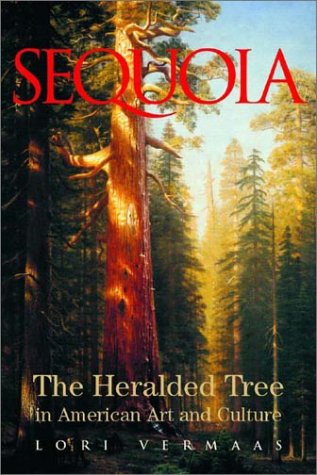
In the book, the author, Lori Vermaas, reveals how Americans have seen nature as an inspiration, a natural resource, and a national treasure.
"Because they were ancient, the sequoias acquired cultural meaning as historic landmarks - as artifacts of living history whose exclusive existence on native soil bolstered American pretensions about the nation's cultural wealth." Lori Vermaas
Inspired by the trees’ notoriety and grandeur, artists and illustrators since the nineteenth century have depicted these giants in masterful landscapes.
Admiring the majesty and beauty of the sequoias, Yeh Tze loved to have his picture taken under the mighty giants.


Yeh Tze
Lacking an ancient history, Americans turned to the landscape (nature) for signs of a durable heritage.
“Sequoia: The Heralded Tree in American Art and Culture” was published by Smithsonian Books in 2004.
In the book, the author, Lori Vermaas, reveals how Americans have seen nature as an inspiration, a natural resource, and a national treasure.
"Because they were ancient, the sequoias acquired cultural meaning as historic landmarks - as artifacts of living history whose exclusive existence on native soil bolstered American pretensions about the nation's cultural wealth." Lori Vermaas
Inspired by the trees’ notoriety and grandeur, artists and illustrators since the nineteenth century have depicted these giants in masterful landscapes.
Admiring the majesty and beauty of the sequoias, Yeh Tze loved to have his picture taken under the mighty giants.
Under the mighty giants.
Yeh Tze
Friday, July 11, 2014
上窮天文下地理 國男玲根展天賦
上窮天文下地理 國男玲根展天賦
The other day, I came across a writing entitled "地球科學的革命者" in the recent issue of "建中校友會刊".
In that article, 劉玲根, a Taiwan Geophysicist/Mineralogist, shared his academic "心路歷程" and told the story about his discovery of "玲根石", or "Lingunite".
It reminds me of "建中高中四班".
Over half a century ago in Taiwan, there was a high school entrance examination called "高中聯考", which was the only single test conducted each year that would decide your fate and place you in a school according to your choice of priority.
And every year there was a so called "狀元班" at 建中. Our class "高一四班" was the one in the year of 1958, when we entered the high school.
Not surprisingly, the students graduated from this class have done quite well later in their lives. Among many of the outstanding achievers, "劉玲根" and "廖國男" have been well known internationally for their works and accomplishments in the field of Earth Science”.

劉玲根 paid his interest to the mysteries of the deep layers beneath the earth surface, the "deep interior". He discovered a new mineral there and he made a name for himself, "玲根石", officially "Lingunite" by the International Mineralogy Society. (see comment below)

Photo Image of K N Liou Homepage
廖國男 found his fun place in the airy layers and floating clouds surrounding the earth, and from there he had done his numerous research works on "Climate Modeling", "Green House Warming"……….. . Among the countless recognitions and awards he has received, he shared the Nobel Peace Prize bestowed upon the intergovernmental panel on climate change for his substantial contribution to the work of IPPC, 2007.
While Liou (廖) was 雲遊天際 doing his climate study, Liu (劉) 攢透十八層地殼 and found a precious rock.
I am proud of being one of their classmates, and one of the formal students in the 建中高中四班 class (1958-1961) as well.
Yeh Tze
The other day, I came across a writing entitled "地球科學的革命者" in the recent issue of "建中校友會刊".
In that article, 劉玲根, a Taiwan Geophysicist/Mineralogist, shared his academic "心路歷程" and told the story about his discovery of "玲根石", or "Lingunite".
It reminds me of "建中高中四班".
Over half a century ago in Taiwan, there was a high school entrance examination called "高中聯考", which was the only single test conducted each year that would decide your fate and place you in a school according to your choice of priority.
And every year there was a so called "狀元班" at 建中. Our class "高一四班" was the one in the year of 1958, when we entered the high school.
Not surprisingly, the students graduated from this class have done quite well later in their lives. Among many of the outstanding achievers, "劉玲根" and "廖國男" have been well known internationally for their works and accomplishments in the field of Earth Science”.
劉玲根 paid his interest to the mysteries of the deep layers beneath the earth surface, the "deep interior". He discovered a new mineral there and he made a name for himself, "玲根石", officially "Lingunite" by the International Mineralogy Society. (see comment below)
Photo Image of K N Liou Homepage
廖國男 found his fun place in the airy layers and floating clouds surrounding the earth, and from there he had done his numerous research works on "Climate Modeling", "Green House Warming"……….. . Among the countless recognitions and awards he has received, he shared the Nobel Peace Prize bestowed upon the intergovernmental panel on climate change for his substantial contribution to the work of IPPC, 2007.
While Liou (廖) was 雲遊天際 doing his climate study, Liu (劉) 攢透十八層地殼 and found a precious rock.
I am proud of being one of their classmates, and one of the formal students in the 建中高中四班 class (1958-1961) as well.
Yeh Tze
Wednesday, July 9, 2014
"Looking Back"
《海鷗》- 翁倩玉 (YouTube video)
When we were young, we were more like 海鷗:
海鷗 飛在 藍藍 海上 不怕 狂風巨浪
揮著 翅膀 看著 遠方 不會 迷失方向
飛的越高 看的越遠 它在找尋理想 ……..
作詞:孫儀 作曲:劉家昌
Reminiscing, or looking back, often makes me feel nostalgic.
It is natural to feel nostalgic about significant parts of our past.
Reminiscence is not just recall, it is a reflection.
When does the time come in life when you begin to look back affectionately at things gone by?
I like to reminisce, and I have done that quite often. My spouse thinks I am getting old, and perhaps having some indication of "mental deterioration".
As a matter of fact, reminiscence can be used as a therapy to “improve psychological well-being”, or “maintain good mental health”, especially for the "old" people.
That is another reason why I have been keeping a "journal", often with photos attached, on my personal blog. In a way, when I am becoming “really old” and without depending on my "autobiographical memory", I can look my life path inward and back to the past. It is like a "time- map" of my world. And if I draw and document the journal entries accurately (with day, month, year and place), I shall know when and where I am then.
What were the states of mind of the ancient Chinese poets when they were reminiscing about their past life experiences?
"行到水窮處,坐看雲起時。" 王維
"回首向來蕭瑟處,歸去,也無風雨也無晴。" 蘇軾
Yeh Tze
Saturday, July 5, 2014
Fourth of July
It is Independence Day, or commonly known as the "Fourth of July".
Today, all across the United States, people are wishing each other a happy Fourth of July.
Small towns, like the one in our valley, are great places to find old-fashioned fun, food and fireworks on the Fourth of July.
This evening, we came to downtown in the valley to join the crowd and watch the small town fireworks displays.
 We parked our car behind the First Presbyterian Church, a historic church built in 1874 in the Neo-Gothic style.


Today, all across the United States, people are wishing each other a happy Fourth of July.
Small towns, like the one in our valley, are great places to find old-fashioned fun, food and fireworks on the Fourth of July.
This evening, we came to downtown in the valley to join the crowd and watch the small town fireworks displays.
New- fashioned fun
Walked to "Riverfront"
Found a nice spot to sit
It is getting dark,
and darker.
Finally,
That is all you can get, yet a big deal in a small town
While we were strolling in the crowd, we came across a few Mandarin speaking visitors. It reminded me of "唐人自何處來", a chapter in the【雅舍小品】written by 梁實秋. He mentioned in his writing that he was once asked "唐人自何處來" by a "老者", a former Chinese railroad worker, when he stopped at Cheyenne, Wyoming, on his way to Denver/Colorado Springs, Colorado by train. (see comment below)
Yeh Tze
Subscribe to:
Posts (Atom)