星垂平野闊,月湧大江流。 (唐•杜甫•旅夜書懷)
The ancient poets had their intense personal and poetic vision
of nature scenes. They often saw and thought what we don’t.
“星垂平野闊,月湧大江流” by 杜甫 is one of the good examples.
In the vastness of the plain, he saw the night sky with stars
hanging low, and the moon swaying as the great river flowed.
He also had an excellent use of the keywords,“垂” and “湧”, which
were quite creative and descriptive. These two words brought up
the “realm” of the scenes, or “境界全出”.
While appreciating the same scenery, we all generally have different
point of view or perception. ( 所見不同). This reminds me of a story
in the 世說新語:
"詠絮之才”
謝太傅寒雪日內集,與兒女講論文義,
俄而雪驟,
公欣然曰:「白雪紛紛何所似?」
兄子胡兒曰:「撒鹽空中差可擬。」
兄女曰:「未若柳絮因風起。」
公大笑樂。
即公大兄無奕女,左將軍王凝之妻也。
Yeh Tze
Wednesday, May 20, 2009

Monday, May 18, 2009
月出驚山鳥,時鳴春澗中
王維 〈鳥鳴澗〉
人閑桂花落,夜靜春山空;
月出驚山鳥,時鳴春澗中。
It is the “最高境界” of “山水詩篇” in the Chinese poetry history.
No wander he was often called "田園詩人", and his poetry works
praised as “詩中有畫”.
With the feeling of absolute peace, he could sense the flower falling.
In that serene spring night, he experienced the emptiness of
mountains. Then the rising moon quickly came to disturb and scare
the already nicely resting birds, whose intermittent cries echoed
along the quiescent mountain creek.
This is one of my most favorite Chinese classical poems.
Yeh Tze
人閑桂花落,夜靜春山空;
月出驚山鳥,時鳴春澗中。
It is the “最高境界” of “山水詩篇” in the Chinese poetry history.
No wander he was often called "田園詩人", and his poetry works
praised as “詩中有畫”.
With the feeling of absolute peace, he could sense the flower falling.
In that serene spring night, he experienced the emptiness of
mountains. Then the rising moon quickly came to disturb and scare
the already nicely resting birds, whose intermittent cries echoed
along the quiescent mountain creek.
This is one of my most favorite Chinese classical poems.
Yeh Tze
Sunday, May 17, 2009
天意憐幽草,人間重晚晴

Senior Pass (beginning January 1, 2007)*

登樂遊原 李商隱
向晚意不適,驅車登古原。
夕陽無限好,只是近黃昏。
晚晴 李商隱
深居俯夾城,春去夏猶清。
天意憐幽草,人間重晚晴。
並添高閣迥,微注小窗明。
越鳥巢乾後,歸飛體更輕。
In his "登樂遊原", 李商隱 wrote "夕陽無限好", which was rather
positive and optimistic, but he then continued with "只是近黃昏",
which certainly had a negative spirit.
However, in his other poem "晚晴", he reflected a positive thinking,
"人間重晚晴".
I consider “晚晴” to be equivalent to “Golden Age”, which is what
we used to refer to "old age".
A Golden Age usually refers to a time in a specific society, when
cultural advancements and enlightenment were at their highest point.
A Golden Age can also refer to a time when a specific thing (including
human) reaches a high point, before finally encountering a decline.
The U.S. National Parks Service has done a good job to enhance the
meaning of “人間重晚晴”. It presents any U.S. citizens or permanent
residents age 62 or over with a card called “Golden Age Passport”.
After a one-time $10.00 fee, the "Golden Age Passport" provides
them with a lifetime entrance pass to national parks, monuments, and
historic sites.
*The "Golden Age Passport" card has been replaced by "Senior Pass"
since January 1, 2007. I however have continued to keep the
"Golden Age Passport" because I like the name "Golden Age" better than "Senior" .
Yeh Tze
Friday, May 15, 2009
當時明月在,曾照彩雲歸
當時明月在,曾照彩雲歸。(宋•晏幾道•臨江仙)
Although “當時明月在,曾照彩雲歸。” had a different meaning in
the romantic, yet sentimental poem “臨江仙” written by 晏幾道
in the 宋 dynasty, it is an unique moment and natural beauty.
Once in a while, during the late spring or summer, while we were
experiencing the glory of the setting sun and the colorful evening
clouds, we saw the bright full moon started to rise from the other
side of the horizon. And the 明月 was right there to 照彩雲 and
see 彩雲歸.
Life can have more meaning if we stop and stare at the setting sun
and rising moon while we are also enjoying the colorful evening
clouds.
Therefore, when there is a full moon, try to appreciate the 彩雲 in
the western sky right after sunset, and then turn around anticipating
the 明月 to rise from the eastern horizon. You and the 明月 would then
一起 目送 彩雲歸.
PS
臨江仙 晏幾道
夢後樓台高鎖,酒醒簾幕低垂。
去年春恨卻來時,落花人獨立,微雨燕雙飛。
記後小蘋初見,兩重心字羅衣。
琵琶絃上說相思。
當時明月在,曾照彩雲歸。
Yeh Tze
Although “當時明月在,曾照彩雲歸。” had a different meaning in
the romantic, yet sentimental poem “臨江仙” written by 晏幾道
in the 宋 dynasty, it is an unique moment and natural beauty.
Once in a while, during the late spring or summer, while we were
experiencing the glory of the setting sun and the colorful evening
clouds, we saw the bright full moon started to rise from the other
side of the horizon. And the 明月 was right there to 照彩雲 and
see 彩雲歸.
Life can have more meaning if we stop and stare at the setting sun
and rising moon while we are also enjoying the colorful evening
clouds.
Therefore, when there is a full moon, try to appreciate the 彩雲 in
the western sky right after sunset, and then turn around anticipating
the 明月 to rise from the eastern horizon. You and the 明月 would then
一起 目送 彩雲歸.
PS
臨江仙 晏幾道
夢後樓台高鎖,酒醒簾幕低垂。
去年春恨卻來時,落花人獨立,微雨燕雙飛。
記後小蘋初見,兩重心字羅衣。
琵琶絃上說相思。
當時明月在,曾照彩雲歸。
Yeh Tze
Thursday, May 7, 2009
“長跪問” 不如 “賞巴掌”
“長跪問” 不如 “賞巴掌”
漢樂府 〈上山採蘼蕪〉
上山採蘼蕪,下山遇故夫。長跪問故夫:「新人復何如?」
「新人雖言好,未若故人姝,顏色類相似,手爪不相如。」
「新人從門入,故人從閣去。」 「新人工織縑,故人工織素。
織縑日一疋,織素五丈餘。將縑來 比素,新人不如故。」
I have read this poem a few times in the past, and each time after
reading it, I feel the need to say something and “打抱不平” for the
woman in the poem.
The women in ancient Chinese culture had tough life. They were
humbled and often humiliated before men. They were told to follow
the Confucius rule, “三從 四德 “.
As you can see in this ancient Chinese classical poem, this woman was
likely “divorced” or “休了” by her husband and became a “ 棄婦 “,
due to the fact that she was unable to bear an offspring for him.
Sadly enough, she was still trying to seek the “fertility” remedy
“ 蘼蕪 “in the mountain in order to become a “real woman” and thus
to be accepted by the society again.
More sadly, when she happened to bump into her ex-husband (故夫)
on her way home (冤家路狹), she even had to “ 長跪 “ in front of him,
and humbly asked about his “ 新人 “. And this man, who had
obviously treated his spouses like slave labers and indulged his
selfish “pride”, and compared their work skills and work products
instead of thinking about their souls and feelings.
The following are my suggestions to the woman in the poem:
1). There was no need for her to make effort to “上山“ for the purpose
of seeking “ 蘼蕪 “.
2). She could have just avoided the direct contact with him, or simply
said “ Hi “ to him as a courtesy.
Or
3). She could, like the modern woman nowadays, slap his face
( 嘗個大巴掌 ) and teach him a lesson.
After all, in the ancient man’s world,
“ 但見新人笑,哪聞舊人哭。”
It was a sad culture then !
Yeh Tze
漢樂府 〈上山採蘼蕪〉
上山採蘼蕪,下山遇故夫。長跪問故夫:「新人復何如?」
「新人雖言好,未若故人姝,顏色類相似,手爪不相如。」
「新人從門入,故人從閣去。」 「新人工織縑,故人工織素。
織縑日一疋,織素五丈餘。將縑來 比素,新人不如故。」
I have read this poem a few times in the past, and each time after
reading it, I feel the need to say something and “打抱不平” for the
woman in the poem.
The women in ancient Chinese culture had tough life. They were
humbled and often humiliated before men. They were told to follow
the Confucius rule, “三從 四德 “.
As you can see in this ancient Chinese classical poem, this woman was
likely “divorced” or “休了” by her husband and became a “ 棄婦 “,
due to the fact that she was unable to bear an offspring for him.
Sadly enough, she was still trying to seek the “fertility” remedy
“ 蘼蕪 “in the mountain in order to become a “real woman” and thus
to be accepted by the society again.
More sadly, when she happened to bump into her ex-husband (故夫)
on her way home (冤家路狹), she even had to “ 長跪 “ in front of him,
and humbly asked about his “ 新人 “. And this man, who had
obviously treated his spouses like slave labers and indulged his
selfish “pride”, and compared their work skills and work products
instead of thinking about their souls and feelings.
The following are my suggestions to the woman in the poem:
1). There was no need for her to make effort to “上山“ for the purpose
of seeking “ 蘼蕪 “.
2). She could have just avoided the direct contact with him, or simply
said “ Hi “ to him as a courtesy.
Or
3). She could, like the modern woman nowadays, slap his face
( 嘗個大巴掌 ) and teach him a lesson.
After all, in the ancient man’s world,
“ 但見新人笑,哪聞舊人哭。”
It was a sad culture then !
Yeh Tze
Wednesday, May 6, 2009
Ancient Poems, Childhood Memories
Ancient Poems, Childhood Memories

Reading Chinese classical poems often brings back childhood
memories for me.
For example:
今夜偏知春意暖,蟲聲新透綠窗紗。 (唐•劉方平•夜月)
The house where I grew up was surrounded by rice paddles and
grassy fields. Late spring and early summer were the “ 蟲聲競奏
的時節 “. The crickets' chirping would begin as soon as it became
dark and often lasted throughout the night.
竹外桃花三兩枝,春江水暖鴨先知。 (宋•蘇軾•春江晚景)
There was a good-sized pond beyond our backyard. We raised ducks
which loved to swim in the pond. They loved water and dunked
their head under the water every so often.
青箬笠,綠簑衣,斜風細雨不須歸。 (唐•張志和•漁歌子)
Some of our neighbors were farmers. Despite the “斜風細雨 “, they
often stayed working in the rice fields with their brown(not green)
“箬笠 “ and “簑衣 “ on. It was a picturesque scene.
穿花蛺蝶深深見,點水蜻蜓款款飛。 (唐•杜甫•曲江)
Various kinds of beautiful butterflies and dragonflies were the
common insect creatures around the pond. “蜻蜓點水 “ was the most
unique, “touching” scene.
晨興理荒穢,帶月荷鋤歸。 (東晉•陶淵明•歸園田居其三)
This was the usual daily routine for one of my remote relatives.
無可奈何花落去,似曾相識燕歸來。 (宋•晏殊•浣溪沙)
Probably because of the poem “舊時王謝堂前燕,飛入尋常百姓家。“
by 唐•劉禹錫 , most people thought the swallows would bring wealth
to you if they built a nest under the roof of your house. My next
-door neighbor had swallows returning back every year. They indeed
were quite rich, but got rich through inheritance.
黃梅時節家家雨,青草池塘處處蛙。 (宋•趙師秀•約客)
During the monsoon season, frogs were everywhere around the pond,
or near the rice fields. We had fun chasing them.
稻花鄉裡說豐年,聽取蛙聲一片。 (宋•辛棄疾•西江月)
The distinctive frog mating calls (or chorus) could be heard at night
during their mating season. It was quite a unique nature's chorus.
Yeh Tze
Reading Chinese classical poems often brings back childhood
memories for me.
For example:
今夜偏知春意暖,蟲聲新透綠窗紗。 (唐•劉方平•夜月)
The house where I grew up was surrounded by rice paddles and
grassy fields. Late spring and early summer were the “ 蟲聲競奏
的時節 “. The crickets' chirping would begin as soon as it became
dark and often lasted throughout the night.
竹外桃花三兩枝,春江水暖鴨先知。 (宋•蘇軾•春江晚景)
There was a good-sized pond beyond our backyard. We raised ducks
which loved to swim in the pond. They loved water and dunked
their head under the water every so often.
青箬笠,綠簑衣,斜風細雨不須歸。 (唐•張志和•漁歌子)
Some of our neighbors were farmers. Despite the “斜風細雨 “, they
often stayed working in the rice fields with their brown(not green)
“箬笠 “ and “簑衣 “ on. It was a picturesque scene.
穿花蛺蝶深深見,點水蜻蜓款款飛。 (唐•杜甫•曲江)
Various kinds of beautiful butterflies and dragonflies were the
common insect creatures around the pond. “蜻蜓點水 “ was the most
unique, “touching” scene.
晨興理荒穢,帶月荷鋤歸。 (東晉•陶淵明•歸園田居其三)
This was the usual daily routine for one of my remote relatives.
無可奈何花落去,似曾相識燕歸來。 (宋•晏殊•浣溪沙)
Probably because of the poem “舊時王謝堂前燕,飛入尋常百姓家。“
by 唐•劉禹錫 , most people thought the swallows would bring wealth
to you if they built a nest under the roof of your house. My next
-door neighbor had swallows returning back every year. They indeed
were quite rich, but got rich through inheritance.
黃梅時節家家雨,青草池塘處處蛙。 (宋•趙師秀•約客)
During the monsoon season, frogs were everywhere around the pond,
or near the rice fields. We had fun chasing them.
稻花鄉裡說豐年,聽取蛙聲一片。 (宋•辛棄疾•西江月)
The distinctive frog mating calls (or chorus) could be heard at night
during their mating season. It was quite a unique nature's chorus.
Yeh Tze
Tuesday, May 5, 2009
" 回來就好 "
" 回來就好 "
Many years ago, I used to see a TV commercial ad on the Chinese
television channel. I forgot what it was about in term of advertising,
but I was quite impressed by the conversation between a husband
and his wife. It showed that a husband came home from work and
as soon as he opened the door, he, with a relaxed smile, said :
“老婆, 我回來了“, and his wife, who was busy in the kitchen, gave a
calm, yet assuring and caring reply : “回來就好“.
Although it was a very simple and plain home scene, and interchange
of conversation was rather ordinary, but then I thought it meant a
lot. We could imagine that there were a lot of meanings or hidden
messages behind their conversations.
First, on the husband side: “老婆, 我回來了.“, it could mean:
1. I am home. (Home Sweet Home)
2. I am hungry.
3. I am late. (due to an unexpected extended work hours).
4. I am tired. (after a long hours hard work)
5. I have done my work for the day. (now time to relax)
6. Any mails for me? (He means personal mails)
7. Has anybody called? (calls from special individual or friend)
8. Any nice foods for dinner? (with expectation)
9. I am home OK. (home safely)
10. I am home and have stories to share. (good and bad ?)
And …………
Then on the wife’s side: “回來就好.“, it could also mean:
1. It is all right. (一切盡在不言中)
2. Dinner is ready.
3. You are finally home!
4. Relax, or do your work.
5. Hope your work was Ok for the day.
6. There was no personal mail for you.
7. No body has called you.
8. Don’t expect too much for the dinner.
9. Hope nothing unpleasant happened to you.
10. I need to ask you something. (that I have been waiting all day
up to now.)
And …………
Yeh Tze
Many years ago, I used to see a TV commercial ad on the Chinese
television channel. I forgot what it was about in term of advertising,
but I was quite impressed by the conversation between a husband
and his wife. It showed that a husband came home from work and
as soon as he opened the door, he, with a relaxed smile, said :
“老婆, 我回來了“, and his wife, who was busy in the kitchen, gave a
calm, yet assuring and caring reply : “回來就好“.
Although it was a very simple and plain home scene, and interchange
of conversation was rather ordinary, but then I thought it meant a
lot. We could imagine that there were a lot of meanings or hidden
messages behind their conversations.
First, on the husband side: “老婆, 我回來了.“, it could mean:
1. I am home. (Home Sweet Home)
2. I am hungry.
3. I am late. (due to an unexpected extended work hours).
4. I am tired. (after a long hours hard work)
5. I have done my work for the day. (now time to relax)
6. Any mails for me? (He means personal mails)
7. Has anybody called? (calls from special individual or friend)
8. Any nice foods for dinner? (with expectation)
9. I am home OK. (home safely)
10. I am home and have stories to share. (good and bad ?)
And …………
Then on the wife’s side: “回來就好.“, it could also mean:
1. It is all right. (一切盡在不言中)
2. Dinner is ready.
3. You are finally home!
4. Relax, or do your work.
5. Hope your work was Ok for the day.
6. There was no personal mail for you.
7. No body has called you.
8. Don’t expect too much for the dinner.
9. Hope nothing unpleasant happened to you.
10. I need to ask you something. (that I have been waiting all day
up to now.)
And …………
Yeh Tze
Sunday, May 3, 2009
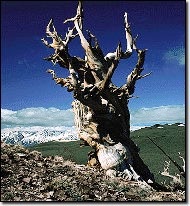
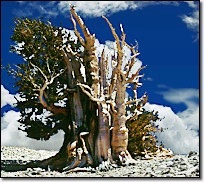
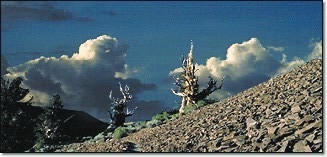
蒼松古柏 , 美其老也
 |
|
"Ancient Sentinels"
(from "The Bristlecone site" by Leonard Miller )
"The capacity of these trees to live so fantastically
long may, when we come to understand it fully,
perhaps serve as a guidepost on the road to the
understanding of longevity in general."
-Edmund Schulman
For eons the bristlecones (Pinus longaeva &
aristata) have flourished atop the arid mountains
of the Great Basin, from Colorado to California,
enduring extreme hardships and silently adjusting
to their environment.
Many of the bristlecone pines have lived up to
3000-4000 years. In 1957, "Methuselah" was
found to be 4,723 years old and remains today the
world's oldest known living tree.
宋 郭熙 《林泉高致》
一切花竹,皆貴少年。 蒼松古柏,美其老也。
Yeh Tze

聽徹松風晝夜聲
松下聽泉圖 軸 明 文徵明
While I mentioned that I often enjoyed “雲破月來花弄影” in my
backyard in the spring night, my classmate J.H., responding to my
“雲月花影”, brought up:
山隨平野盡,江入大荒流。 (唐•李白•渡荊門送別)
星垂平野闊,月湧大江流。 (唐•杜甫•旅夜書懷)
and suggested me to “see” them in my imaginary land by closing my
eyes, as these scenes are not readily available for me to experience
and admire.
In the painting "松下聽泉圖 軸", 明 文徵明 added these writings:
一雨垂垂兩日連,坐令五月意蕭然。
置身如在重巖底,耳聽松風眼看泉。
In the 北宋 dynasty, 曾公亮, while 宿甘露寺僧舍, he wrote
枕中雲氣千峰近,床底松聲萬壑哀。
要看銀山拍天浪,開窗放入大江來。
He was personally there to experience and admire the majesty of nature.
More practically, 魏必復 in the 元 dynasty recommended:
築閣依山月露清,簷牙軒豁拂雲平。
昔人大好吟詩處,聽徹松風晝夜聲。
Yeh Tze

While I mentioned that I often enjoyed “雲破月來花弄影” in my
backyard in the spring night, my classmate J.H., responding to my
“雲月花影”, brought up:
山隨平野盡,江入大荒流。 (唐•李白•渡荊門送別)
星垂平野闊,月湧大江流。 (唐•杜甫•旅夜書懷)
and suggested me to “see” them in my imaginary land by closing my
eyes, as these scenes are not readily available for me to experience
and admire.
In the painting "松下聽泉圖 軸", 明 文徵明 added these writings:
一雨垂垂兩日連,坐令五月意蕭然。
置身如在重巖底,耳聽松風眼看泉。
In the 北宋 dynasty, 曾公亮, while 宿甘露寺僧舍, he wrote
枕中雲氣千峰近,床底松聲萬壑哀。
要看銀山拍天浪,開窗放入大江來。
He was personally there to experience and admire the majesty of nature.
More practically, 魏必復 in the 元 dynasty recommended:
築閣依山月露清,簷牙軒豁拂雲平。
昔人大好吟詩處,聽徹松風晝夜聲。
Yeh Tze
Friday, May 1, 2009
雲月花影

七言絕句 雲月花影
行雲有影月含羞 ,(吳文英 浣溪沙)
雲破月來花弄影 。(張先 天先子)
月移花影上欄杆 ,(王安石 春夜)
多情只有春庭月 。( 張泌 寄人)
This is a poem about cloud, moon, flower and shadow I put together
by choosing one verse from each of the poems written by four ancient
Chinese poets. The scene is one I have often experienced while I was
wandering in my yard and garden at night in the spring.
Yeh Tze
The Beauty of 五言 Poems
The beauty of 五言 poems

(Berkeley Art Museum/Pacific Film Archive)
When we read the ancient Chinese classical poems, especially the
五言絕句 or 五言律詩, the Five-Syllables poems, we see the
simplicity, yet philosophical, and harmony of spirit. I also notice the
same unique pattern of the poems and the endings of verses nicely
rhymed with either an adjective or verb, which are the keywords
and show the spirit of the scenes, or let "境界全出", such as:
潮平兩岸闊,風正一帆懸。 (唐•王灣•次北固山下)
大漠孤煙直,長河落日圓。 (唐•王維•使至塞上)
星垂平野闊,月湧大江流。 (唐•杜甫•旅夜書懷)
人閑桂花落,夜靜春山空。 (唐•王維•鳥鳴澗)
山隨平野盡,江入大荒流。 (唐•李白•渡荊門送別)
海闊憑魚躍,天高任鳥飛。 (唐•僧•雲覽)
綠樹村邊合,青山郭外斜。 (唐•孟浩然•過故人莊)
蟬噪林逾靜,鳥鳴山更幽。 (南朝•王籍•入若耶溪)
草枯鷹眼疾,雪盡馬蹄輕。 (唐•王維•觀獵)
露從今夜白,月是故鄉明。 (唐•杜甫•月夜憶舍弟)
明月松間照,清泉石上流。 (唐•王維•山居秋暝)
拂牆花影動,疑是玉人來。 (唐•元稹•明月三五夜)
空山松子落,幽人應未眠。 (唐•韋應物•秋夜寄邱員外)
Yeh Tze
(Berkeley Art Museum/Pacific Film Archive)
When we read the ancient Chinese classical poems, especially the
五言絕句 or 五言律詩, the Five-Syllables poems, we see the
simplicity, yet philosophical, and harmony of spirit. I also notice the
same unique pattern of the poems and the endings of verses nicely
rhymed with either an adjective or verb, which are the keywords
and show the spirit of the scenes, or let "境界全出", such as:
潮平兩岸闊,風正一帆懸。 (唐•王灣•次北固山下)
大漠孤煙直,長河落日圓。 (唐•王維•使至塞上)
星垂平野闊,月湧大江流。 (唐•杜甫•旅夜書懷)
人閑桂花落,夜靜春山空。 (唐•王維•鳥鳴澗)
山隨平野盡,江入大荒流。 (唐•李白•渡荊門送別)
海闊憑魚躍,天高任鳥飛。 (唐•僧•雲覽)
綠樹村邊合,青山郭外斜。 (唐•孟浩然•過故人莊)
蟬噪林逾靜,鳥鳴山更幽。 (南朝•王籍•入若耶溪)
草枯鷹眼疾,雪盡馬蹄輕。 (唐•王維•觀獵)
露從今夜白,月是故鄉明。 (唐•杜甫•月夜憶舍弟)
明月松間照,清泉石上流。 (唐•王維•山居秋暝)
拂牆花影動,疑是玉人來。 (唐•元稹•明月三五夜)
空山松子落,幽人應未眠。 (唐•韋應物•秋夜寄邱員外)
Yeh Tze
Subscribe to:
Posts (Atom)