Thursday, December 30, 2010
Auld Lang Syne
The Anglicized version of 'auld lang syne' means old long-since,
old long-ago, old long past, or times gone by.
The best-known use of the phrase is Robert Burns' poem Auld lang
syne, the words of which are sung in English-speaking countries
around the world each New Year's Eve, to a tune that Burns said he
transcribed from an old man's singing of it. (From The Phrase Finder)
Robert Burns' poem Auld lang syne (1788):
And for auld lang syne, my jo,
For auld lang syne,
We'll take a cup o' kindness yet,
For auld lang syne,
Should auld acquaintance be forgot,
And never brought to mind?
Should auld acquaintance be forgot,
And days o' auld lang syne.
And surely ye'll be your pint-stowp!
And surely I'll be mine!
And we'll tak a cup o' kindness yet,
For auld lang syne.
We twa hae run about the braes
And pu'd the gowans fine;
But we've wander'd mony a weary foot
Sin auld lang syne.
We twa hae paidl'd i' the burn,
Frae mornin' sun till dine;
But seas between us braid hae roar'd
Sin auld lang syne.
And there's a hand, my trusty fiere!
And gie's a hand o' thine!
And we'll tak a right guid willy waught,
For auld lang syne.
Standard English Translation
Old Long Past
And for old long past, my joy (sweetheart),
For old long past,
We will take a cup of kindness yet,
For old long past,
Should old acquaintance be forgot,
And never brought to mind?
Should old acquaintance be forgot,
And days of old long past.
And surely you will pay for your pint-vessel!
And surely I will pay for mine!
And we will take a cup of kindness yet,
For old long past.
We two have run about the hillsides
And pulled the wild daisies fine;
But we have wandered many a weary foot
Since old long past.
We two have paddled in the stream,
From morning sun till noon;
But seas between us broad have roared
Since old long past.
And there is a hand, my trusty friend!
And give me a hand of yours!
And we will take a right good-will drink,
For old long past.
Happy New Year !
Yeh Tze

Monday, December 27, 2010
California Central Coast
Many people consider California Central Coast the most scenic drive
in the world. We often drove, as most people did, much of the Pacific
Coast Highway (California Hwy 1) one way as part of a trip between
San Francisco and Los Angeles for the good reason.
During this Christmas Holidays, we made a trip to Piedras Blancas and
San Simeon with our children, and grandchildren who their parents
thought would be amused in watching those big-nose bull Elephant
Seals and their newborn pups. For us, our first tour to Hearst Castle
was more than 30 years ago, and for our children, they had yet to see
this national historic landmark mansion.
While Hearst built the great American show off in San Simeon, a
prehistoric legacy, the elephant seals, once considered extinct, have
made an epic reappearance and claimed the beaches in Piedras
Blancas, making the rookery a rival attraction in the neighborhood.
December to March is the birthing and breeding time for the Elephant
Seals. Beginning in mid-December the pregnant females arrive to give
birth. Researchers estimated the total population for Piedras Blancas
rookery at the turn of the 21st century to be around 8000.
On the way driving down the coast from Monterey Bay, we were lucky
to spot a California condor, the largest flying land bird in North
America, soaring on the Big Sur coastline. According to U.S. Fish and
Wildlife Service, population of California condors today has grown to
more than 381. Of those, about 125 live in the wild at Big Sur.
Yeh Tze
Sunday, December 19, 2010
冬”至”, the “Arrival” of Winter
冬”至”, the “Arrival” of Winter
The shortest day and the longest night of the year, the winter solstice,
or “冬至”, falls on December 21 this year. During my childhood, it was
also the day when everyone tried to get together with their families
"冬至團圓吃湯圓".
Although it has often been marked as First Day of Winter, it is actually
the middle of winter. 冬至 means "winter (冬) extreme (至)", instead of
"the arrival of winter".
My memory of “冬至” during my childhood was that our siblings
would all get together and help our mother make ”圓仔”, the sweet
sticky glutinous rice balls. We often competed among ourselves to
make the most perfect ”圓仔” and our mother would be the judge. She
told us that we would all become one year older after we ate “湯圓”.
It is one of my most memorable childhood experiences. I miss those
sweet old days.
According to 《台灣府志》(一六九六)卷七記載:
冬至,人家作米丸祀眾神及祖先,舉家團圞而食之,謂之『添歲』;
即古所謂『亞歲』也。門扉器物各粘一丸其上,謂之『餉耗』。是日,
長幼祀祖、賀節,略如元旦。
按:
"在台灣冬至的湯圓有紅白兩色,另有較大的湯圓,內包有芝泺、花生、
或鮮肉等內餡。在中國,人們從冬至開始數九,以九天為一九,九九
八十一天,寒冬就會過去,稱為九九數盡。"
The ancient Chinese poets had also noticed the seasonal significance
of this particular 時節:
杜甫, in his poems “至後", said: “冬至至後日初長”, and in "小至",
"冬至陽生春又來".
In the poems about “冬至夜”, 白居易 wrote: “一年冬至夜偏長”, and
“何堪最長夜 俱作獨眠人”。
Yeh Tze
Thursday, December 16, 2010
From Nest Building to Empty Nest
Nest building requires team work and is a hard work. In most species,
the female does all or most of the nest construction, arrangement and
decoration, though the male “often” helps. Much of the same holds
true for us.
We had our first nest built in the early 70s in Taipei, but we did not
"lay eggs". We “abandoned” it without completion. We then together
flew to the New World, where we re-built our nest and started to lay
eggs, one and two and three. They hatched, they grew. Then, when
their "羽毛" 已豐, they left the old nest one by one and "各奔前程" ........ .
Although we have been the "empty-nesters" for many years, our
children have continued to come back to visit the old nest with their
young families. As a matter of fact, they are coming back again this
holiday season. The old nest will be "熱鬧一番" and full of joy.
Yeh Tze
Sunday, December 12, 2010
Friday, December 10, 2010
古今多少事 都付笑談中
The other day, my NTUMC68 classmate, Dr. J.N. Lin and his wife
visited their daughter in the Bay Area. We drove to San Francisco
to see them and spent an afternoon together with them in the
arboretum at Golden Gate Park. It was a typical late autumn cold,
misty, murky day. While strolling through this exquisite, serene
garden, we talked and laughed, 古今多少事,都付笑談中.
He often sent me books, his own ("愛的再造") included, by mail from
Taiwan. “李敖回憶錄” and "李敖快意恩仇錄" were two of them, as he
probably knew that “李敖” was one of the writers and historians I
admired during our college years. 李敖 has 深厚學問 and always "引經
據典" when he writes, yet some of his his writings were often “嬉笑
怒罵", "不按牌理出牌". Critics had therefore termed him an intellectual
narcissist, or "文化太保" then.
Although I feel nowadays 李敖 is not the same person I used to know,
I still like to read his books written in the 1960s. “胡適評傳” is one of
the “文星” series he wrote in 1964. As a matter of fact, I still have it
kept on my bookshelf, and once in a while, I would take it down and re
-read it. I admired him for his ability and capacity, at age of 29, to
write such a comprehensive and detailed biography of someone else's
life. No wonder 胡適 once said to him: "李先生,你簡直比我胡適之還了解胡適之."
“胡適評傳” was one of a few of my favorite books I brought with me
when I came to the States in 1972. According to my own note written
on the inner back cover page, I bought it at 重慶南路 "文星書店" in City
of Taipei on April 10, 1968, two months before I graduated from NTUMC.
按:
1948年李家舉家來台,定居在台中。1950年15歲的李敖就讀初中三年級,
和趙天儀等人合辦了《初三上甲組報》。從16歲起,李敖開始參加各類
論文比賽,屢次獲得第一名。1954年李敖高中畢業,考入臺灣大學法律
系,不過,沒有讀滿一年就自動退學,同一年他再度考入台灣大學,就讀
歷史系。
1957年李敖在當時台灣著名的雜誌《自由中國》上發表《從讀〈胡適文
存> 說起》,引起胡適注意。大學畢業服完兵役後,他擔任蒙元史專家
姚從吾先生的助手,並且考入台大歷史研究所。
1961年11月李敖在《文星》雜誌發表《老年人和棒子》,揭開了20世紀
60年代臺灣「中西文化論戰」的序幕。1963年李敖自動從歷史研究所休
學,此後他出任《文星》總主筆,陸續發表《播種者胡適》、《給談中西
文化的人看看》等著名作品。
Yeh Tze
Friday, December 3, 2010
“billions and billions”
“Twinkle Twinkle Little Stars” from youtube
I used to watch “Twinkle Twinkle Little Stars” youtube videos on
the computer together with my grandchildren sitting on my lap.
When they were watching, they sang as well. To them, the number
of stars in the sky is too many and countless, and to me the number
of stars in the universe is a “天文數字“, “billions and billions”, as
what I have learned.
In his “Cosmos" TV mini-series, Carl Sagan, an American astronomer
and cosmologist, used to say “billions and billions". When he was
imaging the total number of stars in the universe, he rhapsodized
about “billions upon billions”.
A recent new study suggests there are 300 sextillions of them,
three times as many as scientists had previously calculated. That is
a 3 followed by 23 zeros, or 3 trillion times 100 billion. Get it ?
It is 300,000,000,000,000,000,000,000.
It is only a huge “天文數字“ to me anyway. Charlie Conroy, a Harvard
astrophysicist, however found the number to be fun, because it gets
you thinking about these large numbers. He said the number of stars
in the universe “ is equal to all the cells in the humans on Earth”,
noting there are 50 trillion or so cells in an average human body and
there are 6 billion people on Earth. Multiplying 50 trillion by 6
billion, he came up with about 300 sextillions.
No matter how large the number is, it is another “天文數字“ to me.
I however still enjoy watching those "visible" stars twinkling or
glittering in the night sky.
Star (星) was a favorite subject for many of the ancient Chinese poets:
“星垂平野闊 月湧大江流” in “旅夜書懷” by 杜甫 was a notable poetic verse.
李白, in his poem “夜宿山寺”, wrote:
危樓高百尺 手可摘星辰
不敢高聲語 恐驚天上人
Yeh Tze
Sunday, November 28, 2010
“笑靜婉備”
Mozart-greensleeves (from youtube by Xuaster)
Recently I received an e-mail ”Fwd “ from a friend. It is a “four words
of wisdom ”, or 四字"箴"言, for the older generation, advising them
to practice “笑靜婉備” if they want to “孝敬晚輩”.
“笑” 常掛著笑的老人
“靜” 不要隨便開口
“婉” 口頭要委婉
“備” 隨時準備聽從使喚差遣
It reminds me of some the ancient Chinese poems:
酬張少府 唐 王維
晚年惟好靜,萬事不關心。
自顧無長策,空知返舊林。
松風吹解帶,山月照彈琴。
君問窮通理,漁歌入浦深。
四塊玉 • 閑適 元 關漢卿
適意行,安心坐。渴時飲飢時餐醉時歌,
睏來時就向莎茵臥。
日月長,天地闊,閒快活。
The older generations need to practice “晚年惟好靜, 萬事不關心”,
"適意行", "安心坐" , live a quiet, peaceful, humble life, and be
"閒快活".
Yeh Tze
Saturday, November 27, 2010
"山中何所有?嶺上多白雲。"
Huangshan (from youtube by JohnnyNK)
陶弘景(456-536 AD), a multitalented ancient Chinese poet, was
also a calligrapher, herbalist, philosopher, religionist (Daoist)
and naturalist.
Like 陶淵明 (365-427 AD), another 陶先生, he quit a government
job and took an early retirement at age of 36. He retired to a
mountain retreat at 茅山(江蘇) and devoted himself to the study of
Daoism (修道).
He knew how to enjoy his tranquil retirement living and appreciate
the beauty of nature. In his “答謝中書書”, he wrote:
“山川之美,古來共談。高峰入雲,清流見底。兩岸石壁,五色交輝。
青林翠竹,四時具備。曉霧將歇,猿鳥亂鳴;夕日欲頹,沉鱗競躍。
實是慾界之仙都。自康樂以來,未復有能與其奇者。”
The Emperor (梁武帝) sent him a “詔書” and asked him “山中何所有?”.
Showing his “高節” integrity, he simply replied:
”山中何所有? 嶺上多白雲。只可自怡悅, 不堪持贈君。”.
Learn to enjoy what you have, even the clouds over your home.
Yeh Tze
Wednesday, November 24, 2010
"Poet of the Fields", 田園詩人
"寂靜山林" (from youtube)
"Poet of the Fields", 田園詩人
Ancient Chinese poets had often written about peasant scenes and
idyllic pastoral life. 陶淵明, however, had lived it first-hand, and
therefore had written the best poems of the kind, in which he shared
his country living experiences and expressed his own personal
feelings as well.
Here are some of the verses in his "Returning to Live in the Country"
poems, (or 歸園田居詩s).
方宅十餘畝 草屋八九間
榆柳蔭後簷 桃李羅堂前
時復墟里人 披草夸來往
想見無雜言 但道桑麻長
種豆南山下 草盛豆苗稀
道狹草木長 夕露沾我衣
悵恨獨策還 崎嶇歷榛曲
山澗清且淺 遇以濯吾足
And the best of all, in one of his “飲酒詩s”,
採菊東籬下 悠然見南山
山氣日夕佳 飛鳥相與還
Yeh Tze
Wednesday, November 17, 2010
晨興理荒穢, 帶月荷鋤歸.
World of Rain (Carlos Nakai)
陶淵明 (陶潛), an ancient Chinese poet (365-427 AD), has been
most notably known as “田園詩人”or “隱逸詩人” 之祖.
Refusing to “為五斗米折腰” (bow like a servant in return for five
bushels of grain), he quit a government job and took an early
retirement at age of 41, an age that might have not been considered
to be "early" then.
He returned to his hometown of 潯陽柴桑 and started a new life as a
farmer, "開荒南野際, 守拙歸園田". He lived in retirement for his last 22 years.
His retirement living was quite simple. Everyday at dawn, he
"晨興理荒穢" , and late in the evening after sunset, he "帶月荷鋤歸".
He often "寄情於酒". Most of his writings were poems or essays, which
depict an idyllic pastoral life of farming and drinking. In one of
his “飲酒詩s”, he wrote:
結盧在人境 而無車馬喧
問君何能爾 心遠地自偏
採菊東籬下 悠然見南山
山氣日夕佳 飛鳥相與還
此還有真意 欲辨已忘言
陶淵明 really knew how to enjoy his tranquil retirement living and appreciate nature.
白居易(772-846 AD) admired his "高尚人格" and once visited 陶淵明's
柴桑故里. In his poem “訪陶公舊宅”, he wrote:
柴桑古村落 栗里舊山川
不見籬下菊 空餘墟里煙
子孫雖無聞 族氏猶未遷
每逢陶姓人 使我心依然
Yeh Tze
Tuesday, November 16, 2010
"不足為外人道也", a matter of trust.
"Hidden Mountain" (from youtube by Simeon Wood)
In his work, “Story of the Peach Blossom Valley" (桃花源記), 陶淵明
depicted an imaginary remote and secluded hideaway utopia of
great beauty and peacefulness.
A 武陵 fisherman was so lucky to be accidently getting into this
Shangri-La through a “一山小口” while being wandering in a grove
of 桃花林. He was warmly greeted by the villagers there and was
treated quite well. Upon leaving, he was told "不足為外人道也",
a humble and polite gesture for the villagers to ask him not to tell
anyone else about the place.
However, on his way back home, he purposely “處處誌之”, and then
even went to "郡下", "詣太守,說如此.”. 南陽劉子驥,a “高尚士”, also
heard of it.
When trying to return to the paradise by “尋向所誌”, they either
“遂迷” or “未果”, and therefore “不復得路”. Accordingly, “後遂無問
津者” since.
Obviously, the villagers could not trust the outsiders, this 武陵人
included. I presume they followed him and quietly removed all the
“誌s” that had been installed by him.
The story also stressed the matter of “trust and betrayal”.
《桃花源記》陶淵明 原文
晉太元中,武陵人,捕魚為業,緣溪行,忘路之遠近;忽逢桃花林,
夾岸數百步,中無雜樹,芳草鮮美,落英繽紛;漁人甚異之。復前行,
欲窮其林。林盡水源,便得一山。山有小口,彷彿若有光,便舍船,
從口入。
初極狹,纔通人;復行數十步,豁然開朗。土地平曠,屋舍儼然。
有良田、美池、桑、竹之屬,阡陌交通,雞犬相聞。其中往來種作,
男女衣著,悉如外人;黃髮垂髫,並佁然自樂。見漁人,乃大驚,
問所從來;具答之。便要還家,設酒、殺雞、作食。村中聞有此人,
咸來問訊。自云:「先世避秦時亂,率妻子邑人來此絕境,不復出焉;
遂與外人間隔。」問「今是何世?」乃不知有漢,無論魏、晉!
此人一一為具言所聞,皆歎惋。餘人各復延至其家,皆出酒食。
停數日,辭去。此中人語云:「不足為外人道也。」
既出,得其船,便扶向路,處處誌之。及郡下,詣太守,說如此。
太守即遣人隨其往,尋向所誌,遂迷不復得路。南陽劉子驥,
高尚士也,聞之,欣然規往,未果,尋病終。後遂無問津者。
Yeh Tze
Sunday, November 14, 2010
聲在樹間
"Wind in the pines" from youtube by Lorendad, 松濤 (or 松風)
In an autumn night, while having been 方夜讀書, 歐陽子(歐陽修)
heard sounds coming from the southwest and thought it “異哉 !".
He described the sounds as:
“初淅瀝以蕭颯,忽奔騰而砰湃;如波濤夜驚,風雨驟至。其觸於物也,
鏦鏦錚錚,金鐵皆鳴;又如赴敵之兵,銜枚疾走,不聞號令,但聞人馬
之行聲。"
He asked his 童子:"此何聲也? 汝出視之。" 童子 came back and said:
" 星月皎潔,明河在天,四無人聲,聲在樹間。"
Early this morning, I, 葉子(Yeh Tze) woke up to an autumn wind,
that sounded “淒淒切切,呼號憤發”. Instead of asking a “童子”, I came
out of the house myself and "出視之".
I noticed the wind in the trees was rising in a hurry. The trees tried
to argue, but they could not detain the wind. They compromised with
their stalks swaying and their branches waving, making a unique
autumn sound, or "秋聲".
The autumn air is crisp and can be '淅瀝'. The acoustics of autumn
are often “淒淒切切” and “呼號憤發”.
Autumn Wind (By Haiku)
Touched by spirit wind
Tempered by the silent sound
Approaching winter
Touched by spirit wind
Caressed by tree song, embraced
By warm sunlit days
Finally, autumn
Leaves turning gold and crimson,
Maples in my soul.
Empty trees, bare bones
Dancing skeletons caper
Hear the howling wind.
Yeh Tze
Wednesday, November 10, 2010
曉霧妝成野外, 晨霜染就荒郊.
"Misty Morning" from youtube.
曉霧妝成野外, 晨霜染就荒郊
I once noticed these two poetic scenery descriptions: “曉霧妝成野外”
and “晨霜染就荒郊", in a Chinese classical novel, 章回小說 “拍案驚奇“.
As a matter of fact, I have also experienced these beautiful nature
scenes in our valley during the late autumn season, and they remind
me of those nature descriptive words as well the as traditional
Chinese paintings, “水墨畫“.
The early morning scene in our area during this time of year is often
misty and murky, especially after a rain overnight, and when 天色將
曉, I see “曉霧妝成野外 “.
Occasionally, when the ground surface temperature falls below
freezing point during the night, I wake up to a crispy and frosty
morning the next day, and 到來朝,天色已曉, I see “晨霜染就荒郊“.
I often get disappointed when the sun rises and gradually erases all
those lovely paintings that nature created. They, however, gracefully
return for another display the following morning.
One Misty, Moisty Morning (An English Nursery Rhyme)
One misty, moisty morning,
When cloudy was the weather,
I chanced to meet an old man
Clothed all in leather:
He began to compliment,
And I began to grin–
“How do you do?” and “How do you do?”
And “How do you do?” again!
Yeh Tze
Sunday, October 31, 2010
秋風帶走讀書聲
"Autumn Leaves" from youtube.
“楓城” has been the nickname for NTUMC (臺大醫學院) campus,
but we did not seem to have the name “楓城” while we were there
some 40 years ago. Yesterday, I made a telephone consultation
with my classmate professor 陳定信 in Taipei, as he was the former
Dean of NTUMC and must be very familiar with the NTUMC 大小事s.
He indicated to me that “楓城” became the nickname for NTUMC
campus years after we graduated from there in 1968. The maple trees
(楓香樹 , Liquidambar formosana) on the NTUMC campus were
originally planted by Ex-Dean 杜聰明. Many of them, however, were
moved to 台北木柵動物園 about 20 years ago, when NTUMC campus
had a major new construction project underway.
Many years ago, during one of my family trip back to Taipei, I revisit
the NTUMC campus. I saw an entirely different scene, which led me
to write a 打油詩 “憶楓城” expressing my “melancholic” feeling then.
It was printed in the August 1994 issue of "景福醫訊" , a monthly
NTUMC Alumni Bulletin:
憶楓城
楓林景緻眼前休,此地曾是楓葉城;
如今鋼筋做硬體,增填老漢一生愁。
昔曰秋風落葉天,杏林學子當階坐;
秋風帶走讀書聲,多情落葉競相投。
Yeh Tze
Saturday, October 30, 2010
The Unnoticed “楓情萬種”
"Leaves in the wind" - Ernesto Cortazar
The Unnoticed “楓情萬種”
The “文藝氣息” at NTUMC (台大醫學院) has changed, and changed a
lot, since I left there some 40 years ago. They have long started to
use “楓城”as the nickname for their campus, just as the Stanford
folks call theirs “Farm”.
As a matter of fact, during my five of the seven years there as a
medical student, I did not even know there were 楓樹 standing by
the campus buildings or classrooms. The students were concentrating
on “study”, and many, myself included, overlooked or simply ignored
the “楓情萬種", which was ever surrounding us. Not until a few years
ago when I came across a NTUMC Calendar with pictures of campus
sceneries, I had not been aware of the fact that there were 楓樹 on the
campus and the leaves of the 楓樹 there actually turned red in the fall.
Am I the only one who unobserved and neglected these beautiful
sceneries surrounding us? I have asked many of my classmates and
schoolmates my age, and found that most of them, like me, had also
passed by all these “院裡一片楓香” 的 “楓情" and left them there
unnoticed.
The 楓樹 on our NTUMC campus, however, are not the Japanese
Maples. They are called 楓香樹.
According to the plant expert:
“ 楓香是秋冬時中低海拔常見的紅葉植物,樹型優美,四季各有風情,
樹幹亦是種香菇的優良段木材料,可見零星造林。 紅葉的產生是因為
葉 肉細胞內的葉綠素分解後,其他的色素如胡蘿蔔素和花青素等因而
顯現, 使葉片呈紅色或黃色。楓香和青楓在春夏時, 葉片翠綠,掌狀裂,
又因俗名近似,故常被混淆,其實各屬不同科之植物。”
*楓香 Liquidambar formosana Hance (Formosan sweet gum)
*青楓 Acer serrulatum Hayata
Next time I go back to Taipei and revisit our NTUMC campus,
especially in the autumn season, I will sure be paying more
attention to those lovely 楓香樹 and enjoying the “楓情萬種”.
Yeh Tze
Monday, October 25, 2010
秋風夜雨
The autumn rain came late this year in the Valley.
Last night, I again experienced the familiar nostalgic and melancholic
"秋風夜雨".
It also reminded me of one of my writings "夜來風雨聲", which I had
posted last year around this time:
夜來風雨聲 (Tuesday, October 13, 2009)
First Autumn Rain
Yesterday evening we were expecting the long-anticipated first rain
of the season.
Early this morning I woke up to the sound of rain tapping on the roof
and the sound of wind blowing through the trees, the lovely and
soothing sounds of Nature I had missed for a while.
"風聲雨聲流水聲,聲聲入耳"
Fall rains have finally arrived.
Certainly, the rains are greeted with much pleasure, especially in our
area where water is considered to be the most precious resource.
Rain inspires thought and literary.
"片雲頭上黑 便是雨催詩"
It inspires poets, 中外 alike.
Now some of the rain inspired Chinese classical poetry:
“涼風吹夜雨 蕭瑟動寒林”
“騰雲似湧煙 密雨如散絲”
“微雨池塘見 好風襟袖知”
“細雨魚兒出 微風燕子斜”
“細雨濕衣看不見 閒花落地聽無聲”
"三秋細雨愁楓葉 一夜扁舟宿葦花"
“澗底松搖千尺雨 庭中竹撼一窗秋"
My children, when they were young, used to sing this
Nursery Rhyme Poem :
Rain rain go away,
Come again another day.
Little Johnny wants to play;
Rain, rain, go to Spain,
Never show your face again!
Sidney Lanier (1842 – 1881), an American musician and poet,
wrote this rain poem:
Souls And Rain-Drops
Light rain-drops fall and wrinkle the sea,
Then vanish, and die utterly.
One would not know that rain-drops fell
If the round sea-wrinkles did not tell.
So souls come down and wrinkle life
And vanish in the flesh-sea strife.
One might not know that souls had place
Were't not for the wrinkles in life's face.
And this evening:
"空山新雨後 天氣晚來秋(?冬)"
Yeh Tze
Thursday, October 7, 2010
Nothing Gold Can Stay
Imagism Poetry Project (music: Opus #7 by Dustin O'Halloran)
Recently, some of my NTUMC classmates were having a discussion
on a subject, which had something to do with "old" and "gold".
First, D.J. read a poem written by Robert Frost (1874 - 1963):
Nothing gold can stay
Nature's first green is gold,
Her hardest hue to hold.
Her early leaf's a flower;
But only so an hour.
Then leaf subsides to leaf.
So Eden sank to grief,
So dawn goes down to day.
Nothing gold can stay.
It reminded him of an ancient Chinese poem by 李商隱:
樂游原
向晚意不適 ,驅車登古原。
夕陽無限好 ,只是近黃昏。
He noticed "夕陽無限好, 只是近黃昏" to be both superficial and deep
in it's meaning and sense. He saught opinions from the other
classmates.
W. replied and replaced "Nature's first green is gold" of Frost's poem with "Autumn’s last green is gold", stating: "We are all old, and thus
夕陽無限好, 只是近黃昏."
I thought "行到水窮處, 坐看雲起時" might be a more positive
expression.
Y.M., however, preferred "山窮水盡疑無路, 柳暗花明又一村".
He stated it was his favorite and it reflected his thought,(or,
I presume, his personal real life experience as well?)
Old and Gold, Old is Gold, but nothing gold can stay.
日出扶桑一點紅,光陰催攢白頭翁。
世間多少花花錦,回首江山萬物空。
Yeh Tze
Tuesday, October 5, 2010
Autumn Thought
Autumn Thought
It has been crisp, misty and moist in the morning lately in our area.
Leaves from some of the trees have already started to turn golden
yellow, and the morning sun looks like pale gold.
天階夜色涼如水, 櫚庭多落葉, 慨然知已秋. It is the time of year again.
We have entered the season of autumn, (or often called fall, when
leaves fall from the trees.)
During the freshman year in my high school in Taipei, there were
often "作文比賽". One of my classmates 林姓同學 once got the first
place prize for the topic “時節”. In his writing, he said:
“……… 當楓葉染紅了大地不久, 北風又已在呼呼地長嘯. ……….”
I was quite amazed by his experience, or his imagination of “楓葉
染紅了大地”, as I had never had the chance to witness “染紅大地的
楓葉” in Taiwan then.
秋風蕭瑟天氣涼, 草木搖落露為霜. Autumn is my favorite time of the
year. There are things and themes which are unique during the
autumn season, such as 秋月, 秋風, 秋雨, 秋葉, 秋水, 秋夜, 秋聲,…… .
They were the popular subjects of the ancient Chinese 詩 and 詞.
山居秋暝 (王維)
空山新雨後,天氣晚來秋。
明月松間照,清泉石上流。
秋風詞 (李白)
秋風清,秋月明,落葉聚還散,寒鴉棲復驚,
相思相見知何日,此時此夜難為情。
蘇幕遮(范仲淹 )
碧雲天,黃葉地,秋色連波,波上寒煙翠。
秋夜寄邱員外(韋應物)
懷君屬秋夜,散步詠涼天。
空山松子落,幽人應未眠。
滕王閣序 (王勃)
落霞與孤鶩齊飛,秋水共長天一色。
The sound of autumn is often considered to be sad and lonely. Yet
歐陽修 found "秋聲" quite "異哉", as he described in his "秋聲賦":
歐陽子方夜讀書,聞有聲自西南來者,悚然而聽之,曰:“異哉,”
初淅瀝以蕭颯,忽奔騰而砰湃,如波濤夜驚,風雨驟至。其触於物也,
鏦鏦錚錚,金鐵皆鳴;又如赴敵之兵,銜枚疾走,不聞號令,但聞人馬
之行聲。予謂童子:“此何聲也?汝出視之。 ”童子曰:“星月皎潔,
明河在天,四無人聲,聲在樹間。”
Yeh Tze
Friday, September 24, 2010
畢業感言
Memory
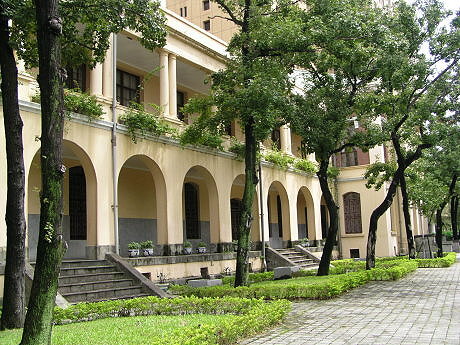
Our NTUMC class graduated in 1968. Many of the classmates left
"畢業感言" in the Graduation Yearbook. Knowing what they are doing
now, I find it rather interesting to see what they had said then.
CLL said: “七年的醫科是經濟,社會,心理,哲學和疾病,死亡交織而成的
一首交響曲.” He has devoted his life to 慈濟醫療志業.
DSC described his graduation as “醒來, 已是離去時” and stated
“ Gutta Cavat Lapidem!” ( Lartin proverb by Ovid, Epistles for
"Constant dripping wears the stone.”) He has spent all his time in
the medical research work after graduation and has received
numerous awards for outstanding achievements and contributions.
He served as the Dean of NTUMC some thirty years later - after
graduation from there.
SNC wrote: “圖書館,傅園, 傅鐘, 教學大樓, 杜鵑花, 水池, 椰林大道,
充滿我心靈, 我永遠熱愛台大.” He loves 台大 so much that he has
stayed at NTUMC as a teaching and research faculty member.
MCL said: "實驗室, 運動場, 音樂, 文學 --- 我雖猶悵然失落的青春,
但將不再後悔未曾追尋的一切." He has continued to pursue and enjoy
his interests, and became a renowned scientist /virologist.
YML was a typical medical student. He depicted his college dorm life
as: “逍遙遊遠道, 寂寞守寒窗.”
Some other 畢業感言s were plain and brief :
“七年? 好久! 七年了! 真快!”,
"The latent period is over !"
“此處不留人, 自有留人處”,
"Popeye !",
“恍然大悟”,
“ 以下空白”,
“也是開始”,
“信心”,
................ .
and even as simple as :
“白”,
"0000000".
I can smile at the old days.
Life was beautiful then.
Yeh Tze
Wednesday, September 22, 2010
秋風詞 (三五七言)
秋風詞 (三五七言) by 李白
秋風清,秋月明; (三言)
落葉聚還散,寒鴉棲復驚。 (五言)
相思相見知何日,此時此夜難為情。 (七言)
秋風辭 by 劉徹
秋風起兮白雲飛,
草木黃落兮雁南歸。
Yeh Tze
Sunday, September 19, 2010
但願人長久 千里共嬋娟
但願人長久 千里共嬋娟
水調歌頭 宋 蘇軾
明月幾時有? 把酒問青天,
不知天上宮闕, 今夕是何年?
我欲乘風歸去, 又恐瓊樓玉宇,
高處不勝寒, 起舞弄清影, 何似在人間。
轉朱閣,低綺戶, 照無眠,不應有恨,
何似長像別時圓, 人有悲歡離合,
月有陰晴圓缺, 自古兩難全,
但願人長久, 千里共嬋娟 !
Poems of 中秋夜 by the ancient poets:
中秋 宋 蘇軾
暮雲收盡溢清寒,銀漢無聲轉玉盤。
此生此夜不長好,明月明年何處看。
八月十五夜月 唐 杜甫
滿月飛明鏡,歸心折大刀。
轉蓬行地遠,攀桂仰天高。
水路疑霜雪,林棲見羽毛。
此時瞻白兔,直欲數秋毫。
秋宵月下有懷 唐 孟浩然
秋空明月懸,光彩露沾濕。
驚鵲棲未定,飛螢卷簾入。
庭槐寒影疏,鄰杵夜聲急。
佳期曠何許!望望空佇立。
月下獨酌 唐 李白
花間一壺酒,獨酌無相親。
舉杯邀明月,對影成三人。
月既不解飲,影徒隨我身。
暫伴月將影,行樂須及春。
我歌月徘徊,我舞影零亂。
醒時同交歡,醉後各分散。
永結無情遊,相期邈雲漢。
十五夜望月 唐 王 建
中庭地白樹棲鴉,冷露無聲濕桂花。
今夜月明入盡望,不知秋思落誰家?
中秋詩 唐 晏殊
十輪霜影轉庭梧,此夕羈人獨向隅。
未必素娥無悵恨,玉蟾清冷桂花孤。
八月十五日夜湓亭望月 唐 白居易
昔年八月十五夜,曲江池畔杏園邊。
今年八月十五夜,湓浦沙頭水館前。
西北望鄉何處是,東南見月幾回圓。
昨風一吹無人會,今夜清光似往年。
海上生明月 天涯共此時 (唐 張九齡)
Of course, we need to mention 嫦娥嫦娥 唐 李商隱
雲母屏風燭影深,
長河漸落曉星沈。
嫦娥應悔偷靈藥,
碧海青天夜夜心。
Yeh Tze
Saturday, September 18, 2010
Autumn Moon, 月到中秋分外明
"Moonlight Sonata" from youtube.
The ancient poets appreciated and celebrated the beauty and enigma
of the moon. They wrote beautiful and sentimental poems:
李白
床前明月光,疑是地上霜。
舉頭望明月,低頭思故鄉。
杜甫
露從今夜白,月是故鄉明。
蘇軾
明月幾時有 ? 把酒問青天。
但願人長久,千里共嬋娟。
張九齡
海上生明月,天涯共此時。
李煜
春花秋月何時了,往事知多少。
王維
明月松間照,清泉石上流。

There were also English moon poems and moon themes by famous
poets:
From The Rime of the Ancient Mariner
The moving Moon went up the sky.
And nowhere did abide;
Softly she was going up,
And a star or two beside-
By Samuel Taylor Coleridge (1772-1834)
To the Moon
Art thou pale for weariness
Of climbing heaven and gazing on the earth,
Wandering companionless
Among the stars that have a different birth,
And ever changing, like a Joyless eye
That finds no object worth its constancy?
By Percy Bysshe Shelley (1792-1822)
My NTUMC1968 classmate D.J. Lee once did an English translation
of the prologue poem of "Romance of the Three Kingdoms".
There was also mention of autumn moon (秋月):
三國演義卷首詞 羅貫中
滾滾長江東逝水,
Rolling water of the Yangtze River flees to the east.
浪花滔盡英雄,
Sprays of waves wash away heroes of the past.
是非成敗轉頭空,
Right, wrong, glory and defeat all soon vanish in the end.
青山依舊在, 幾度夕陽紅。
The same green mountains abide. How many times did the crimson
sun descend?
白髮漁樵江渚上,
There come to the sand bar a fisher and a woodcutter with gray hair.
慣看秋月春風,
They used to witness the coming and going of the autumn moon and
spring air.
一壺濁酒喜相逢,
Happily they meet and carry a kettle of dark wine; and with that
古今多少事, 盡付笑談中。
Many events, past and passing, are subjects of their laughter and chat.
Yeh Tze
Wednesday, September 15, 2010
Globish, the global English
Globish The World Over
In a recent issue of "Bloomberg News”, there is an article entitled
“Japan CEOs Learn 'Globish' to Expand Overseas as Economy Stalls”.
Okie Matsumoto, chief executive of a Japanese trading company,
has a solution to Japan’s stagnant domestic economy: Learn
“globish”.
He holds regular parties at the Tokyo-based company where
employees must speak globish, or global English, a language for
non-native speakers using basic grammar and a vocabulary of
1,500 words.

The term, globish, was created by a French former IBM executive
and amateur linguist Jean-Paul Nerriere, who in 2004 published a
book with the title “Parlez Globish”. This was based on his experience
that non-native English speakers in the Far East communicated more
successfully in English with their Korean and Japanese clients than
competing British or American executives. They were speaking a
stripped-down, simplified version of English, short of idiom, figures
of speech and colloquialisms that can make native speakers hard to
understand.
Globish uses the same standard grammar as English. But when
speaking globish, it is important to use short sentences, and to avoid
humour, metaphor, abbreviation, idioms and cliches. A liberal dose
of hand gestures, body language and facial expressions should also
be used.
In 1972, I came to the States for the first time to start my internship
program. On numerous occasions, when I talked to the chief of our
department in my “broken English”, he often replied to me by
saying “I see what you mean”. He either did not completely
understand what I said, or simply tried to assure me that he did.
Many of my internship colleagues came from South America, Middle
East, and Far East countries such as Korea, Japan and Thailand. We
all seemed to be able to communicate quite well in English. Obviously
we all spoke “globish” then. Although there were also colleagues
came from India, I found that it was hard for me to understand their
Indian English, especially if spoken at speed, which it frequently was.
Indian English is actually a recognized dialect of English. It has a lot
of distinctive pronunciations, syntax, and lexical variation.
I also recall many years ago a Japanese friend of my wife’s, who came
to America with her family and lived in our neighborhood. The
husband was a pilot trainer for the Japan Airline. Every time she and
my wife brought the kids to the school, they always had a long and
pleasant conversation in English, or actually in “globish”. They
seemed to understand each other very well despite the fact that the
teacher, a native English speaker, had hard time to understand her.
Yeh Tze
Saturday, September 4, 2010
Nostalgia for an "Almost Extinct Civilization"
Nostalgia for an "Almost Extinct Civilization"
American Indian, or Native American, has been considered to be
a vanishing race with the notion that “Indians are historical
features of an American landscape, not functioning members in a
modern society”.

This belief was buttressed by one of the scholarly theories:
"Social Darwinism", which assumed that cultures battled with each
other in an evolutionary contest in which one was destined to
triumph and the other to fade into extinction.
Paleoamerican Origins
The traditional theory held that the first Americans crossed the
"land bridge" from Siberia to Alaska around 11,500 years ago.
These early Paleoamericans soon spread throughout the Americas,
diversifying into many hundreds of culturally distinct nations and
tribes. The North American climate finally stabilized by 8000 BCE;
climatic conditions were very similar to today's. This led to
widespread migration, cultivation of crops, and subsequently a
dramatic rise in population all over the Americas.

"Where no one intrudes, many can live in harmony."
--Chief Dan George--
Yeh Tze
Monday, August 23, 2010
Tashunka Witko 'Crazy Horse'
Yellowstone National Park
After three days in Grand Teton and two more days in Yellowstone
National Park in Wyoming, we drove to Rapid City, South Dakota,
where we first revisited the Mount Rushmore National Memorial.
It symbolizes the greatness of this nation through the greatness of
it leaders.

Mount Rushmore National Memorial
Our final stop of the trip is the Crazy Horse Memorial. It is a
mountain monument under construction in the Black Hills of South
Dakota, in the form of Crazy Horse, an Oglala Lakota warrior, riding
a horse and pointing into the distance. (My lands are where my dead
lie buried.) The sculpture's final dimensions are planned to be 641 feet
(195 m) wide and 563 feet (172 m) high. The head of Crazy Horse will
be 87 feet (27 m) high.


"My lands are where my dead lie buried." (Crazy Horse)
Crazy Horse was born on Rapid Creek in the Black Hills of South
Dakota in about 1842. He defended his people and their way of life
in the only manner he knew.
Only after he saw the treaty of 1868 broken, he took up arms against
the U.S. Federal government to fight against encroachments on the
territories and way of life of the Lakota people.
This treaty, signed by the President of the United States, said:
"As long as rivers run and grass grows and trees bear leaves,
Paha Sapa - the Black Hills of Dakota - will forever be the sacred
land of the Sioux Indians."
While at Fort Robinson, Nebraska, under a flag of truce, he was
stabbed in the back by an American soldier and died September
6, 1877, at age of 35.
"My fellow chiefs and I would like the white man to know the red
man has great heroes also," wrote Standing Bear when he invited
Korczak Ziolkoski, a renowned sculptor, to the Black Hill in 1947
to carve Crazy Horse.
"Land of Promise"
“One does not sell the earth upon which the people walk.”
-- Crazy Horse
"They made us many promises, more than I can remember. They
never kept but one; they promised to take our land, and they took it!"
-- Red Cloud, Lakota, 1891
Yeh Tze
Sunday, August 22, 2010
How Mountains Are Supposed To Look
"Grand Teton & Jackson" from youtube
Theodore Roosevelt once said, while touring the Tetons,
"This is how mountains are supposed to look."


1942 photo by Ansel Adams titled "The Tetons and the Snake River"
It was in late June 1978 when I accepted a state job in California.
Moving from the east coast to the west coast, we spent ten days
driving across the country with our two young children.
Our trip to Yellowstone National Park was brief. We stayed there for
only one day and drove straight through the Grand Tetons during the
following night while it was dark. Regrettably, we missed the chance
to enjoy the magnificent scenery of the Tetons.
However, last week some thirty years later, while visiting our
younger daughter’s family in Colorado to see their newborn baby, we
decided to take another trip to Grand Teton National Park. This time
we spent three days enjoying its spectacular landscape, including the
majestic mountains praised by Theodore Roosevelt.
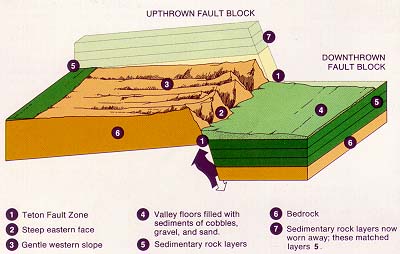
It's been said that Grand Teton is a "symbol of North American
mountaineering" with its archetypal sawtooth peak topping out at
13,770 feet (4,197 meter). The geologic story of the Teton Range is
quite amazing. The Teton fault generated massive earthquakes
causing the mountains to rise while the valley floor dropped. (see
diagram above). The geologic force are still shaping this "youthful"
landscape.
It is one of the most spectacular, awe-inspiring places in America.
Yeh Tze
Wednesday, August 11, 2010
Scientist and Violinist Who Can Count
女高音獨唱:謝青雯。 小提琴:成大賴明詔校長
Albert Einstein, who fancied himself as a violinist, was rehearsing
a Haydn string quartet. When he failed for the fourth time to get
his entry in the second movement, the cellist looked up and said,
"The problem with you, Albert, is that you simply can't count."
Dr. Michael M. Lai is also a scientist and violinist, but he can "count",
as you can see in the video.
賴明詔 (Michael M. Lai) is one of my NTUMC 1968 classmates.
He is one of the very few classmates who went into the field of
Basic Medical Science. He later became a world renowned scientist
and virologist.
In the 畢業感言 of NTU 1968 Year Book, he wrote:
"實驗室, 運動場, 音樂, 文學 --- 我雖猶悵然失落的青春,
但將不再後悔未曾追尋的一切."
Although he might have missed his "失落的青春", he has continued
to pursue and enjoy his interests and hobbies:
"實驗室", "運動場", "音樂" and "文學".
有圖為証 :
實驗室

RNA 病毒的分子生物學及致病機制
運動場

音樂

文學
His numerous published scientific papers are part of his 文學作品.
He is best known for his expertise on coronavirus. 李遠哲博士 once
praised his outstanding work and gave him a title "冠狀病毒之父".
During the “SARS” epidemic, many “SNG” from various TV News
stations, including ABC, CBS and NBC, gathered in front of his
residence in Pasadena California waiting for his expert comment
on "coronavirus epidemic". In our 35th year class reunion in the fall
of 2003, while sharing his “SARS” experience, he said that he was
even interviewed by the “Playboy Magazine” writer. He however
quickly made it very clear to us that he was “fully clothed” while
being interviewed.
What impressed me the most is his determination to return to his
homeland to give a helping hand at the peak of SARS epidemic.
In one of my writings printed in our NTUMC Alumni Bulletin about
our NTUMC1968 classmates, I wrote:
" ...... 這位冠狀病毒之父, 在SARS疫情高峰時刻, 深夜返台, 電視上看到
他背著簡單行李, 獨自一人, 走在那冷凊凊的機場入境走道, 風瀟瀟兮,
易水寒, 為國效命, 正逢其時 ......... ."
I admire him for his integrity, his outstanding academic
achievements, yet so humble and having good sense of humor.
He currently serves as 國立成功大學校長.
Here is his "小檔案":
Education
Taiwan University medical degree (1968)
Ph.D., University of California, Berkeley (1973)
Experience
University of Southern California professor of Excellence
Visiting Professor, Academia Sinica
United States Howard Hughes Medical Institute Fellow
Institute of Molecular Biology, Academia Sinica Distinguished
Research Fellow and Deputy Director
Academic awards, honor matters
Burlington Northern Foundation Distinguished Scholar Award
Academia Sinica
American Academy of Microbiology
University of Southern California Distinguished Professor
Scientific information published by the United States, the most highly
cited papers of researchers
The developing world, Academy of Sciences
And many more ....... .
Yeh Tze
Monday, August 9, 2010
肝炎鬥士
椰林大道
I did not believe that my NTUMC 1968 classmate 陳定信 got 登上
"壹週刊" when I ............ .
A couple of months ago, one of my NTUMC classmates sent me a copy
of a report printed in "壹週刊". The article, entitled "肝的色彩", was
"圖文並茂" with a photo of 陳定信.
It turned out, of course, that the "report" had nothing to do with "爆料"
or even "緋聞". which have been known to often appear in "壹週刊".
It was an article describing the "心路歷程" of his lifelong hepatitis
research work, and why and how he got into this research field.
陳定信 and I were classmates from middle school through college,
and we had our residency training together in the Department of
Internal Medicine at NTUH for three years after graduation.
If I need only one sentence to characterize 陳定信 through my many
years of observation, that is: He was not a "書呆子". As a matter of
fact, he was quite "調皮,淘氣" in the middle school, and he often gave
teachers plenty of minor headaches.

His academic work is best described in the editorial comment by
李遠哲 on the book ”肝炎鬥士-陳定信” published by 遠哲科學教育
基金會:
"台灣有許多科學工作者,具有國際性的知名度,成果廣受肯定;值得
敬佩的是,他們長期在台灣工作,為台灣社會奉獻,而且是在條件艱難
的本土教育與研究環境下,堅毅的一步步開展出傲人的成就。陳定信院
士就是其中的典型例子。
醫師是社會上多數人羨慕的職業,陳定信院士一直沒有停止過為病人服
務的看診工作,但是他放棄成為可以擁有較佳收入的全職醫師,而把更
多的時間花在醫學研 究上。在看病時,他是一個認真的醫師,在從事研
究與教學時,他更是完全投入,鍥而不捨,也因此才能對台灣居民健康
造成重大危害的B型肝炎,找出對策並設法加以防治。這是台灣醫療疾病
與公共衛生史上的一大成就。
陳定信的故事告訴我們,台灣可以培養第一流的本土科學人才,任何第一
流的科學成就,都需靠永恆不斷的艱辛努力,才能完成。 "
名聞國際 著作等身
陳定信 was elected Member of Academia Sinica (the National
Academy of Taiwan) in 1992, Fellow of the Third World Academy
of Sciences in 2001, and Foreign Associate, US National Academy
of Sciences in 2005. He has published more than 600 original articles
in scientific journals, and frequently serves as the reviewer or editor
of major international journals in gastroenterology/hepatology and
hepatitis research.
From 2001 to 2007, he served as Dean of NTU College of Medicine,
where he was a medical student almost half a century ago.
We all are very proud to have been his classmates.
Yeh Tze
Sunday, August 8, 2010
草地囝仔
農村曲
草地囝仔
In Taiwan, we used to call 忠厚樸實, 腳踏實地的鄉下農村人 ”草地人”,
and their children “草地囝仔”.
黃富源 and 陳文龍 are the two “草地囝仔” in our NTUMC1968 class.

黃富源 came from 高雄縣大樹鄉水寮村. As you can see, his original
home address, 大樹鄉水寮村, already tells you that he was a “草地
囝仔”. "農村曲" was one of his favorite Taiwanese folk songs he loved
to sing in the college dorm.

陳文龍 was from 台南安平, a fishing village in southern Taiwan.
Both his father and brother were “ 討海人”. In his "杏林深耕四十年",
he described their uncertain fisherman's life as “三天出海,二天曬網”.
They have been good friends ever since they first met in the college.
and shared the dorm room throughout their NTUMC college years.
They considered themselves to be “難兄難弟”.
In a recent article with the title “老同學” posted in his wife’s Blog,
黃富源 wrote:
“我們兩人,一個是漁夫之子,一個是農夫之子,都是個性純樸直率的台灣
南部人。記得求學時代,除了努力讀書之外,為了貼補生活費,有機會就
抽空當家教。
大二時,我們共同擔任一位公司大老闆兒子的家教;他教化學,我教物理。
不知何故,這位大老闆常常遲發我們薪水,而我們又不敢開口要。可憐兩
個「古意」的年輕人,無可奈何,真是難兄難弟啊!. “
They both acquired great strength while going through a life of
hardship and worked very hard during their school years.
They have been recognized on many occasions for their
outstanding achievements and contributions in the field of health
care service in Taiwan.
Yeh Tze
Saturday, August 7, 2010
爸爸節
The officially recognized date of Father's Day varies from country
to country. It is celebrated on the third Sunday of June in many
countries, including the United States, and on other days elsewhere.
It complements Mother's Day, which is on the second Sunday of May,
the celebration honoring mothers.
In Taiwan, Father’s Day, or 父親節, is celebrated on the 8th day of
August. It has been said that:
“父親節訂於每年的八月八日,是因為「八八」和爸爸音韻相近。
並且,從字形上將「八八」二字連綴後,正如一個「父」字。
因此,訂定八月八日為父親節;又稱為「八八節」(「爸爸節」)。”
Happy 爸爸節 to all the 爸爸 !
"背影" - 朱自清 -

"我與父親不相見已有二年餘了,我最不能忘記的是他的背影。那年冬天,
...........
........... 我說道:「爸爸,你走吧。」他往車外看了看,說,「我買幾個橘子
去。你就在此地,不要走動。」我看那邊月臺的柵欄外有幾個賣東西的等著
顧客。走到那邊月臺,須穿過鐵道,須跳下去又爬上去。父親是一個胖子,
走過去自然要費事些。我本來要去的,他不肯,只好讓他去。我看見他戴著
黑布小帽,穿著黑布大馬褂,深青布棉袍,蹣跚地走到鐵道邊,慢慢探身下
去,尚不大難。可是他穿過鐵道,要爬上那邊月臺,就不容易了。他用兩手
攀著上面,兩腳再向上縮;他肥胖的身子向左微傾,顯出努力的樣子。這時
我看見他的背影,我的淚很快地流下來了。我趕緊拭幹了淚,怕他看見,也
怕別人看見。我再向外看時,他已抱了朱紅的橘子往回走了。過鐵道時,他
先將橘子散放在地上,自己慢慢爬下,再抱起橘子走。到這邊時,我趕緊去
攙他。他和我走到車上,將橘子一股腦兒放在我的皮大衣上。於是撲撲衣上
的泥土,心裡很輕鬆似的,過一會說:「我走了,到那邊來信!」我望著他
走出去。他走了幾步,回過頭看見我,說:「進去吧,裏邊沒人。」等他的
背影混入來來往往的人裡,再找不著了,我便進來坐下,我的眼淚又來了。
........... 。"
I recall the sighting of my father's (and my mother's) back (背影)
at the Taipei International Airport on June 22, 1972, when I was
leaving for the US, was one of my most unbearable moments.
Yeh Tze
Thursday, August 5, 2010
Land of Promise
Land of Promise
"The land is our mother, the rivers our blood.
Take our land away and we die."
- Mary Brave Bird -
"Man's heart away from nature becomes hard. "
- Chief Luther Standing Bear -
人與住屋都得由土地長出來
Land of Promise
大埔徵地

農民抗爭
大埔徵地農婦鬱悶 飲藥自盡
大埔阿嬤走了
【大埔之慟…請停止製造悲傷】
"即將收成的稻米被怪手亂挖破壞,
在大量員警的護航下甚至將一輩子細心養育的泥土運走,
精神損失之大難以言喻。
真要言農民所失去的,只能說是剝奪了他們的「所有」。"
- 聯合報╱劉冠呈/清大農村讀書會成員 -
Yeh Tze
Wednesday, August 4, 2010
Ancient Garden Visited By Two Generations Together
The Lin Family Mansion and Garden
It was during the Christmas time in 1995, when my family,
my wife, three children, and I, visited the Lin Family Garden
(林家花園 or 林本源園邸) in 板橋, my hometown.
Although 林家花園 was my favorite childhood place to hang out,
this time we needed to pay a fee to get in since it had then been
placed on the list of Taiwan’s historic preservation sites.

As a proud dad who had known the place quite well with all his
childhood memories, I told them, throughout the tour, where I
used to play and what I used to do with my childhood friends
back then. I also pointed to an old house, not too far from the
entry gate, where one of my elementary school classmates used to
live. He was one of the offspring of 林本源, the original landlord of
林家花園. He was a very smart kid and was our "班長", or called
"級長" back then. Our children were quite impressed and amazed.
Two generations together enjoyed the ancient luxury, the garden
and culture. The older generation (myself) had sweet memories
brought back, while serving as a special tour guide for the younger
generation (our children).
Yeh Tze
Monday, August 2, 2010
Let Nature Grow My Garden
"English Country Garden"
Let Nature Grow My Garden
I have not spent as much time as I used to doing my gardening or
yard work lately. My wife thinks that I have become lazy, but, as
a matter of fact, I have actually visited my yard and garden more
often; I have simply changed the philosophy of my gardening and
the way I look at nature.
I have tried not to eliminate the “weeds” in my garden or even on
lawn. I consider weeds are plants whose virtues have not been
revealed by most humans. Weeds are flowers too, once you get to
know them. ( A. Milne )

I no longer clean up the fallen leaves under the trees. I let the ever
falling conifers’ leaves, needles lay on the ground. They make soft
nature-woven rugs. They are ancient textures and good underfoot.
It is a unique pleasant feeling to walk on them.
Yeh Tze
Sunday, August 1, 2010
Living the Wisdom of "道"
Beautiful and inspirational pictures set to music by David Hicken
with quotes from The Tao Te Ching by Lao Tze. (from "youtube")

Lao Tze (老子), or “Old Master” in English, was one of the most
famous Chinese philosophers. In his "Tao Te Ching" (道德經), he said:
Tao (道, "the Way") does not change and it is the universal truth.
「道可道,非常道,名可名,非常名。」

The book "Change Your Thoughts - Change Your Life" written by
Dr. Wayne W. Dyer is about "Living the Wisdom of the Tao (道)".
He has reviewed hundreds of translations of the Tao Te Ching and
has written 81 distinct essays on how to apply the ancient wisdom
of Lao-tze to today’s modern world. This work contains the entire
81 verses of the Tao. Each chapter is designed for actually living the
Tao or the Great Way today.
Some of the chapter titles are “Living with Flexibility,” "Living in
Obscurity,” and “Living by Letting Go.” Each of the 81 brief
chapters focuses on living the Tao and concludes with a section
called “Doing the Tao Now.”
"Living in Obscurity":
"Should you want to contain something,
you must deliberately let it expand.
Should you want to weaken something,
you must deliberately let it grow strong.
Should you want to eliminate something,
you must deliberately allow it to flourish.
Should you want to take something away,
you must deliberately grant it access.
The gentle outlasts the strong,
and the obscure outlasts the obvious."
I have applied this principle to my gardening, and there is always
peace and harmony in my garden.
Yeh Tze
Thursday, July 29, 2010
Compost Happens!
Go Green with a Compost Bin
Composting turns household and backyard wastes into valuable
fertilizer and soil organic matter.
I have been composting for years. Although one common theme
is that everyone does it different, all organic matter eventually
decomposes. Compost Happens!
Decomposing organisms consist of bacteria, fungi, and larger
organisms such as worms, sow bugs, nematodes, and numerous
others. Decomposing organisms need four key elements to thrive:
nitrogen, carbon, moisture, and oxygen.


Compost has the ability to help regenerate poor soils.
Using compost can reduce the need for water, fertilizers, and
pesticides. A compost pile meets the three Rs of Green Living,
Reduce, Reuse, Recycle.
"The Poetry of Compost" (from "ECOLOGIST")
Compost, in essence, is very simple:
Dead plant matter rots.
Pile enough of it up together,
mix it up so that air infiltrates the heap,
and the bacteria feeding on it
and making it rot will produce nitrogen and other goodies
that the soil– and your veg – needs to grow healthily.
Your task then is simple:
Chuck enough waste matter of the right kind on your compost heap.
Turn it regularly then leave it for a while –
from a couple of months to a year,
depending on how much of it there is
and what the conditions are.
Then mix the remaining goo into your soil.
I say ‘goo’,
but what you should end up with, according to the books,
is a dark-brown, crumbly substance
that looks a bit like soil and smells ‘sweet’.
Above all, it’s about enjoying yourself.

Yeh Tze
Saturday, July 24, 2010
"Yesterday"
"Yesterday"
NTUMC Campus

NTUMC1968 Class Album Editorial Note by 蘇文博 (Class President)
Yeh Tze
Tuesday, July 20, 2010
Living A Dual Existence
Sounds of Yosemite Rivers
"Living a dual existence"
In his notable essay “Once More to the Lake" (August 1941),
Elwyn Brooks White (American writer 1899-1985) described a
“creepy” sensation when he returned with his son to the lake in
Maine, where his father used to rent a camp and took him there for
the month of August along about 1904.
“When I got back there, with my boy, and we settled into a camp
near a farmhouse and into the summertime I had known, ………….
lying in bed the first morning, smelling the bedroom and hearing
the boy sneak quietly out and go off along the shore in boat. I
began to sustain the illusion that he was I, and therefore, by simple
transposition, that I was my father. …………. I seemed to be living
a dual existence. I would be in the middle of simple act, I would be
picking up a bait box or laying down a table fork, or I would be
saying something, and suddenly it would be not I but my father
who was saying the words or making the gesture………............. .”
A couple of weeks ago, I shared the same experience as Elwyn White
did while we were visiting Yosemite Valley.
When our children were young, we used to take them to Yosemite
Valley, and this time, we revisited our favorite sites with our
children and grandchildren, and we all had a wonderful time.
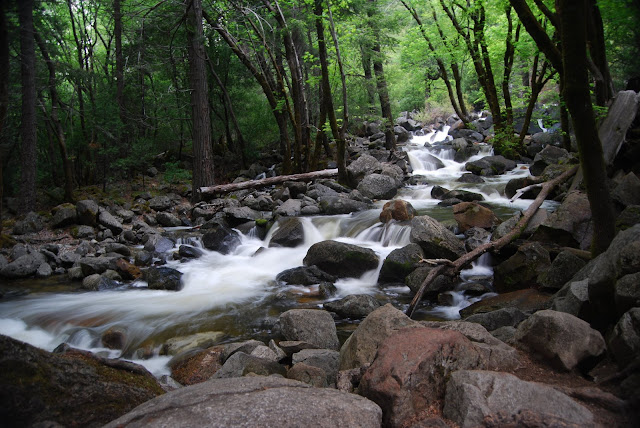
While watching our grandsons crawling on the rocks, touching the
water and chasing the small creatures by the creek, closely and
carefully monitored by their parents, the same image of our children
many years ago instantly came to my mind. I even inadvertently
called my son’s name while trying to advice my grandson to be
careful by the water.
At that moment, I seemed to be living a dual existence.
Yeh Tze
Friday, July 16, 2010
"And now, ...the rest of the story"
And now, ...the rest of the story.
I used to listen to Paul Harvey on the radio while I was driving many
years ago, and loved his "The Rest of the Story" segments.
He was the most listened-to radio personality in America.
"The Rest of the Story" revealed true anecdotes about famous people
or historic incidents, always with a unique twist at the end:
"And now you know… the rest of the story."
黃富源醫師 is one of my NTUMC1968 classmates. After we graduated
from NTUMC and served mandatory military service for one year, we
were still able to be together for the next three years at NTU Hospital,
although we were in different specialty trainings.
In the year 1972, he made a wise move and took a job at 馬偕醫院,
while I left for the US. We have not been in touch often since.

His lovely wife, Lucy, is a dedicated and devoted Christian, teacher
and writer. In her “鹿溪的部落格”, she "書寫她走過人生四季的感人小品"
and "傳遞生活中的真善美". She has also posted many sweet, heart
touching stories about her husband, Dr. Huang. She "分享超越一甲子的
人生感動".
After reading some of the articles, including "馬偕小兒科與我", "老同學",
"紅寶石婚", in her Blog, I was reminded by Paul Harvey of:
"And now you ( I ) know… the rest of the story."
Yeh Tze
Saturday, July 3, 2010
Yosemite, Temple of Nature
Yosemite, Temple of Nature
John Muir was a man who loved the outdoors. He was a naturalist,
conservationist, author and protector of all nature.

Roosevelt and Muir, 1903 historic photo
He helped save Yosemite Valley and Sequoia National Park.
When he came to Yosemite, he climbed the mountains, forged trails
and discovered this place that he called “God’s natural cathedral”.
He said:
“No temple made with hands can compare with Yosemite…..
the grandest of all special temples of Nature.”
He encouraged people:
“Climb the mountains and get their good tidings. Nature’s peace will
flow into you as sunshine flows into trees. The winds will blow own
freshness into you, and the storms their energy, where cares will drop
off like autumn leaves.”
He reminded us:
“In every walk with Nature one receives far more than he seeks.”
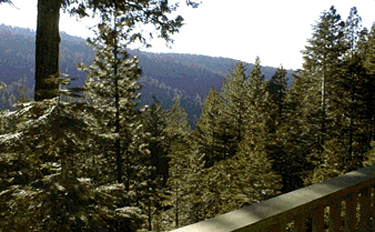
We have visited Yosemite Valley many times in different seasons.
On the first day of July, we had another great trip back to the Valley,
and this time we were with our children and grandchildren. We stayed
overnight in a house at Yosemite West, which was surrounded by
magnificent groves of pine trees.
Although we felt "枕中雲氣千峰近”, we did not have the opportunity
to experience “床底松聲萬壑哀", or "濃濤喧大壑", due to lack of “風”
in the trees. We however enjoyed the incredible view of “萬松青一色”
from the deck, and the true meaning of "高松出眾木, 伴我向天涯 ".

Our two grandsons, aged 2 and 5 respectively, knocked on our door
and came to our room before dawn. We went out and walked together
holding hands under those stately pine trees in the cool misty
morning. It was quite a refreshing and memorable experience.

Yeh Tze
Friday, June 18, 2010
A Moment In Time
A Moment In Time
Many years ago, we had a chance to see our “past”, “present”
and “future” in Golden Gate Park.

Dahlia Garden, Golden Gate Park
We were taking an early morning walk in the Golden Gate Park on a
weekday in the Fall. We came cross the Dahlia Dell, which is tucked
below the Conservatory of Flowers. It is a garden laboratory of
prize winning dahlias of every possible variety. The dahlias were in
full bloom and in an array of diverse colors. After strolling around for
a while, we found a vacant bench and we sat down there continuing
to enjoy this beautiful Dahlia Garden.
While turning my head to the right side, I saw an old couple in their
mid 70's, sitting on the bench next to ours. Together they
concentrated working on their crossword puzzles. I also noticed
another couple, likely in their 80's to 90's, quietly resting on the
other bench to the left. The man was holding a bag of French fries
and putting a single fry one by one into the woman's mouth. I was
very impressed and touched by all of these scenes.
With these images still in my mind, I saw a young couple in their early
20's standing by those beautiful dahlia flowers directly in front of us.
The boy was holding a camera and kept changing his position while
making hand gestures to the girl, obviously trying to seize the best
photo opportunity.
I then switched my attention to my wife and stared at her for a while.
Then I said to her: “Today, I see our future, our past and our present!.”
While the past is long gone and the future has yet to come, I see my
present as being the most precious moment I can ever feel. I shall
live totally in the present and enjoy each and every moment of it.
Yeh Tze
Saturday, June 12, 2010
蕭蕭雙耳聽"桉"風
蕭蕭雙耳聽"桉"風
The wind, in and of itself, is not really that interesting, merely air in
natural motion moving across the earth surface. However, the
ancient Chinese scholars or poets had found it to be pleasant and
enjoyable, especially the wind in the pines. They called it 松風, or
松濤.
They either heard "閣上風來松有聲", or "耳聽松風眼看泉". They
"蕭蕭雙耳聽松風", "聽徹松風晝夜聲" and described the wind in the
pines as "萬松青一色,濃濤喧大壑" , and even "枕中雲氣千峰近,
床底松聲萬壑哀".(北宋曾公亮, 夜宿江蘇甘露寺, 斗室睡臥中.)
This morning, we experienced a different kind of “tree wind”,
that is "桉風", the Eucalyptus wind. (桉樹, Eucalyptus, 又名尤加利樹)

We went on our weekly “gentle” hiking in the nearby Westwood Hills
just after dawn today. It was a windy morning in the Valley. While we
were strolling through the "Eucalyptus Canyon", we heard the roaring,
rustling and occasional creaking sounds coming down from the top of
the grove. Their trunks swayed back and forth, and periodically
struck each other making a unique crispy percussion sound, or the
sound of “tree knocking” (wood knocking).
This was a wonderful scene from nature and an example of nature’s
symphony.
Yeh Tze
Thursday, June 10, 2010
Stop and Smell the Roses
Stop and Smell the Roses
A few years ago, one of my wife's best friends, WDL, whom she had
known since her youth, came from Taiwan and visited us in the
Valley. It was spring time. We took her to see the Bay Area. While
strolling in the Golden Gate Park, we came to the Rose Garden,
where she stopped and started to smell the roses one by one. As she
did this, she had a pleasant smile on her face. Upon seeing this
beautiful action, my wife and I both realized the genius of her
encounter with nature. It allowed her to take time, slow down and
appreciate the beauty and scents of nature, which is a wonderful and
mindful experience that most of us do not take the time to do in our
busy lives. Inspired by her, we did the same thing and it turned out
to be an extremely unique experience for us!
It was a helpful reminder from her that we needed to slow down,
relax, and experience the beauty and essence of nature.
Rose Garden, Golden Gate Park
"Stop and Smell the Roses" by Mac Davis (1974):
Hey Mister, where you going in such a hurry
Don't you think it's time you realized
There's a whole lot more to life than work and worry
All the sweetest things in life are free
And they're right before your eyes
You've got to stop and smell the roses
You've got to count your many blessings everyday
You're gonna find your way to heaven is a rough and rocky road
If you don't stop and smell the roses along the way
............................................
............................................
You've got to stop and smell the roses
.............................................
Yeh Tze
Monday, May 31, 2010
Gentle Hiking
We had our weekly routine “gentle” hiking in Westwood Hills this
morning. It is a hill park less than a mile from our house.
We strolled along the trails which wind through lush coast live oak
groves, eucalyptus-filled canyons, and grassy meadows dotted with
buckeye trees. The paths also lead to ridges with mossy boulders,
and overlooks of the city.

Westwood Hills Park
Yeh Tze
Subscribe to:
Posts (Atom)